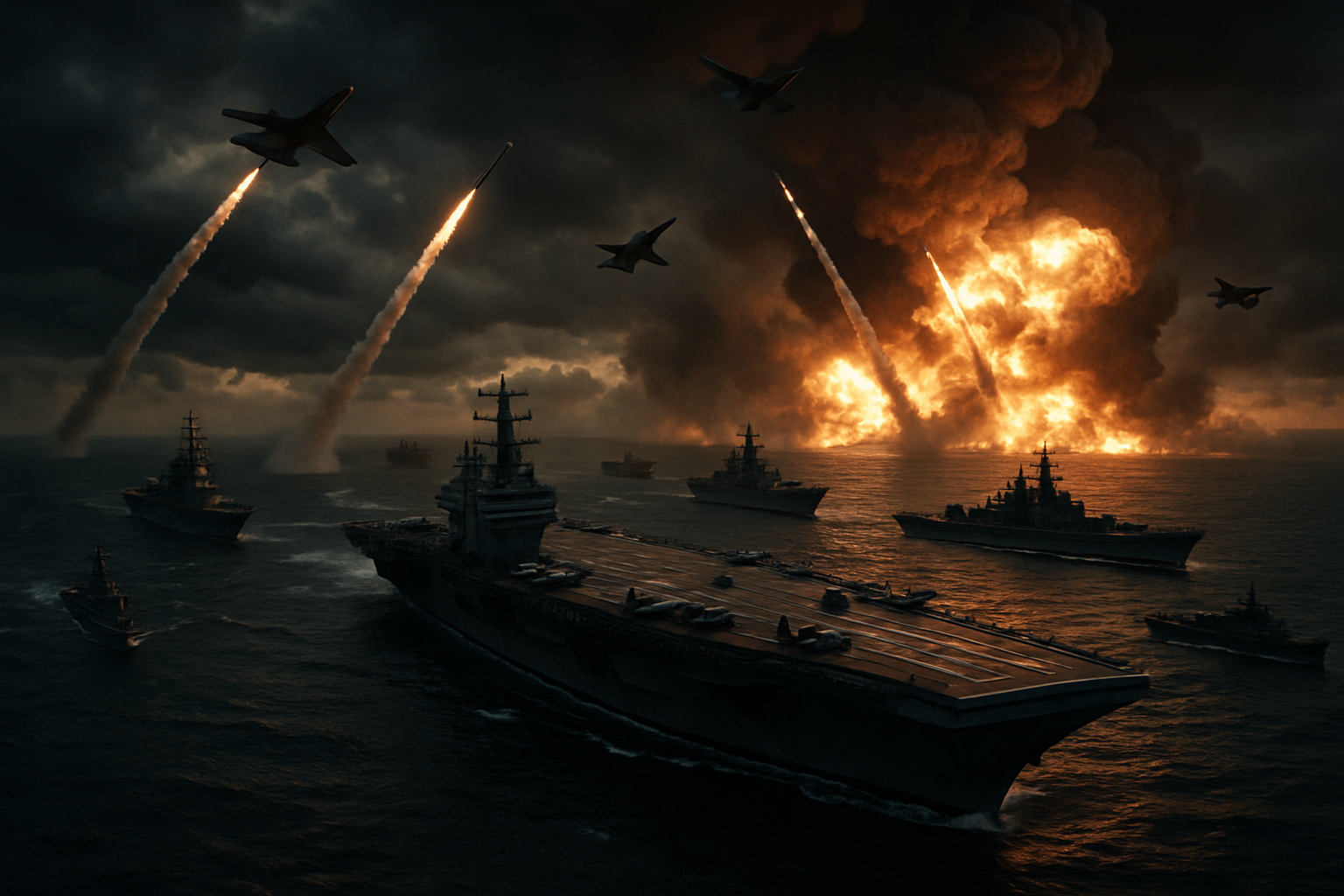
Iran has categorically rejected the latest U.S. peace proposal and outlined five conditions for ending the nearly month-long military conflict with the United States and Israel, as the war enters its fourth week with devastating global consequences.
According to multiple sources, Iran delivered its response through Pakistan, which has emerged as a key mediator alongside Turkey and Egypt in the escalating crisis. The Iranian position, conveyed to Washington through diplomatic channels, represents a hardening of Tehran's stance after weeks of intensive bombing campaigns.
Iran's Five Conditions for Peace
Iranian officials have reportedly set forth five specific demands for any ceasefire agreement. While the complete list remains classified, sources indicate that Iran is linking any peace deal to broader regional issues, including a cessation of Israeli strikes on Hezbollah positions in southern Lebanon. This represents a significant expansion of the conflict's scope beyond the direct U.S.-Israel-Iran confrontation.
The Iranian conditions reportedly include guarantees for the safety of key officials, with the Wall Street Journal reporting that the U.S. and Israel have temporarily removed Iranian Foreign Minister Abbas Araghchi and Parliament Speaker Mohammad Bagher Ghalibaf from their target lists for four to five days to create space for potential negotiations.
Trump Administration's Contradictory Signals
President Donald Trump continues to send mixed messages about Iran's willingness to negotiate. At a White House event Wednesday, Trump claimed that "Iranian leaders want a deal but are reluctant to admit it publicly due to internal and external pressures." The President suggested that Iran's public denials might stem from fear of domestic reprisals.
"We're in negotiations right now. Iran would like to make a deal, and who wouldn't if you were there? Pretty much everything they have is gone."
— President Donald Trump
However, Iranian Foreign Minister Abbas Araghchi has categorically denied any ongoing negotiations, calling U.S. diplomatic outreach a "deceptive scheme" and stating that Iran "does not trust these messages."
Escalating Military Operations
The conflict has witnessed some of its most intensive exchanges yet, with Israel conducting what it describes as "wide-scale strikes" targeting Iranian infrastructure, including facilities in the central city of Isfahan. Iranian retaliation has included missile attacks on Jerusalem and central Israel, with air raid sirens activated across multiple Israeli cities.
The human toll continues to mount, with reports of casualties on both sides. Iranian missile fragments have caused injuries in Israeli population centers, while Israeli strikes have targeted Iranian military installations and energy infrastructure.
Global Economic and Transportation Crisis
The conflict has created unprecedented disruptions to global commerce and transportation. Iran has implemented new rules governing passage through the Strait of Hormuz, effectively controlling 40% of the world's seaborne oil transit. Iranian officials have declared that future transit through this strategic waterway will depend on Tehran's approval.
The aviation industry faces its worst crisis since the COVID-19 pandemic, with over 18,000 flights cancelled worldwide. Eight Middle Eastern countries have closed their airspace simultaneously, severing critical Asia-Europe flight corridors. Dubai International Airport, the world's busiest, remains shuttered due to missile damage.
Oil prices have surged past $100 per barrel, heading toward warnings of $200, as the International Energy Agency has released a record 400 million barrels from strategic reserves – the largest intervention in the agency's 50-year history.
Regional Coalition Under Strain
The unprecedented coalition of Saudi Arabia, UAE, Qatar, and Egypt that initially supported diplomatic efforts is now severely strained as Iranian retaliation has targeted their territories directly. UAE authorities confirmed that two people were killed in Abu Dhabi after missile interception debris struck civilian areas.
Egyptian President Abdel Fattah el-Sisi condemned attacks on "sisterly Arab countries" and warned of "comprehensive chaos" spreading across the region. The fracturing of this regional coalition represents a significant blow to diplomatic efforts to contain the conflict.
Energy Infrastructure Warfare
The conflict has evolved into systematic targeting of energy infrastructure on both sides. Israeli forces have struck Iranian oil storage facilities around Tehran, creating massive fires and toxic black rain affecting millions of residents. Iran has retaliated by attacking Qatar's Ras Laffan facility, which handles approximately 20% of global LNG exports, causing what officials describe as "extensive damage."
Natural gas prices have surged 24% in Europe and 78% in the United States as supply chains face severe disruption. Major shipping companies Maersk and MSC have suspended Persian Gulf operations, leaving over 150 tankers stranded with billions of dollars in cargo.
Nuclear Diplomacy Breakdown
The current military escalation emerged from the complete collapse of nuclear negotiations despite what had been described as the most promising diplomatic opening in years. Geneva talks in February had achieved "broad agreement on guiding principles" – the most significant progress since the 2018 JCPOA collapse.
However, fundamental disagreements over scope proved insurmountable. Iran maintained that ballistic missiles and regional proxies were "red lines" to be excluded from nuclear-only talks, while the U.S. demanded a comprehensive agreement addressing missiles, armed groups, and human rights issues.
Iran continues uranium enrichment at 60% purity with over 400kg of material approaching the 90% weapons-grade threshold. The collapse of diplomatic engagement has raised serious questions about the viability of negotiated solutions to modern nuclear crises.
Congressional Scrutiny and Public Opposition
In Washington, congressional pressure is mounting on the Trump administration to explain its strategy, costs, and potential for ground troop deployment. Senator Richard Blumenthal expressed being "more concerned than ever" about the possibility of American boots on the ground, while the conflict's unpopularity among Americans has reached "almost unprecedented" levels for early-stage military operations, with only 25% public support.
Operation Epic Fury has already cost the Pentagon $11.3 billion in the first week, with officials reportedly preparing for operations extending through September – far beyond the initial 4-6 week timeline presented to Congress.
International Response and Evacuations
The international community has launched the largest coordinated evacuation effort since the Arab Spring of 2011. Australia reports 115,000 nationals trapped in the region, while Germany has 30,000 stranded tourists. The European Union activated its ESTIA evacuation plan for Cyprus for the first time after Iranian drones struck RAF Akrotiri – marking the first attack on European territory since World War II.
UN Secretary-General António Guterres has called the crisis the "greatest test of multilateral cooperation in the modern era," warning that it represents the most dangerous international moment since the end of the Cold War.
Humanitarian Concerns
The humanitarian toll continues to escalate, with Iran's Red Crescent reporting over 787 civilian casualties from U.S.-Israeli strikes. International attention has focused on tragic incidents including the bombing of the Minab elementary school, which killed between 53-85 students and staff during regular school hours.
Human rights organizations have demanded investigations under the Geneva Conventions, with images of children's backpacks and schoolbooks in the rubble becoming symbols of the diplomatic failure's human cost.
Looking Ahead: Template-Setting Crisis
Military analysts and diplomatic experts describe the current crisis as template-setting for 21st-century conflict resolution. The rapid transition from promising diplomatic breakthrough to military escalation demonstrates the fragility of crisis management mechanisms in the multipolar era.
Success in containing the conflict could provide a framework for future nuclear crisis resolution, while failure might accelerate preferences for military solutions over diplomatic engagement, potentially encouraging nuclear proliferation elsewhere and undermining diplomatic credibility for international disputes worldwide.
As the war enters its fourth week, the stakes extend far beyond the Middle East, affecting global energy security, nuclear governance credibility, international law enforcement, and the post-World War II international order. The coming days will be critical in determining whether diplomatic channels can be reopened or if the region faces a prolonged military confrontation with worldwide implications extending decades beyond the current crisis.
The international community watches anxiously as traditional alliance structures are tested, energy markets face unprecedented volatility, and the template for future international crisis management hangs in the balance. With Iran's rejection of current peace proposals and its insistence on expanded conditions including Lebanon, the path to de-escalation appears increasingly complex and uncertain.