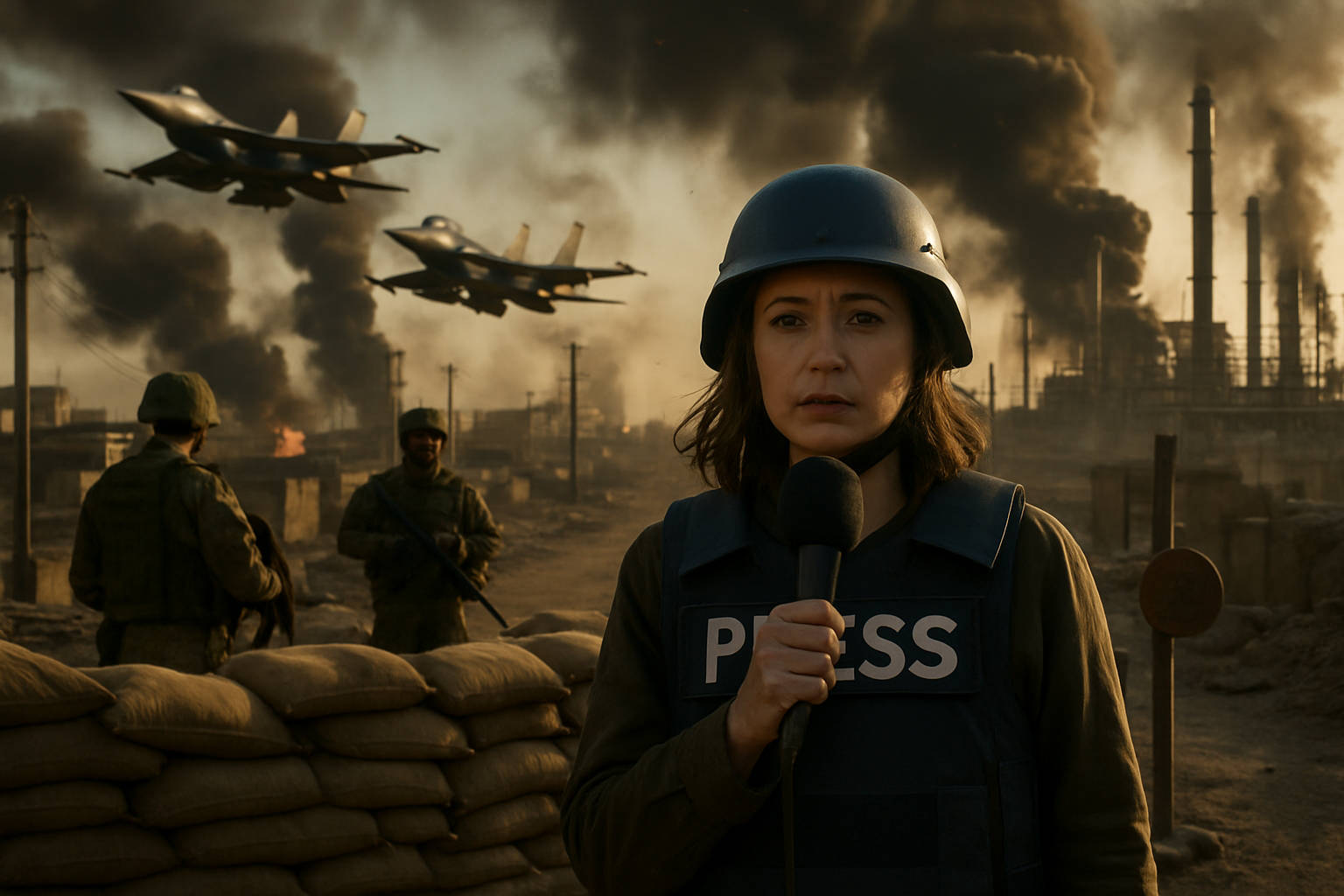
The Middle East war between Iran and US-Israeli forces enters its eleventh day with conflicting signals about the conflict's trajectory, as President Trump predicts the war will end "soon" while Iran's Revolutionary Guard Corps vows to continue fighting until they determine its conclusion.
Speaking from his Mar-a-Lago resort on Monday, Trump declared the war "almost over," suggesting American and Israeli forces had achieved their primary objectives against the Islamic Republic. However, hours later, Iran's Revolutionary Guard issued a stark response, stating "we are the ones who will determine the end of the war" and rejecting any notion of capitulation.
Trump's Contradictory Messaging
The President's public statements have shown remarkable inconsistency over recent days. After initially claiming the war was "practically concluded" on Monday morning, Trump later warned that the United States would strike Iran "20 times harder" if Tehran attempted to disrupt oil flows through the strategic Strait of Hormuz.
"The war will be over soon. We've achieved what we set out to do, but Iran must not test our resolve by blocking critical shipping lanes."
— Donald Trump, US President
The mixed messaging reflects the complex dynamics of a conflict that has already cost the Pentagon $5.6 billion in the first two days alone, according to military sources. Operation Epic Fury, the largest US-Israeli coordinated military campaign since 2003, has struck over 2,000 targets across Iranian territory but faces continued resistance from Tehran.
Iranian Defiance and Regional Escalation
Iran's response has been swift and comprehensive through "Operation True Promise 4," with the Revolutionary Guard declaring "no red lines remain" in their systematic targeting of US and Israeli assets across the region. The most dramatic escalation came with Iranian drone strikes on RAF Akrotiri in Cyprus - the first attack on European territory since World War II.
The Iranian retaliation has caused casualties across multiple Gulf states: one civilian killed in Abu Dhabi, 32 foreign nationals injured in Kuwait airport strikes, and eight wounded in Qatar despite successful Patriot missile interceptions of 65 incoming missiles and 12 drones.
Iranian Foreign Minister Abbas Araghchi told PBS News that Tehran is prepared to continue missile attacks "for as long as necessary," while categorically ruling out negotiations with the current US administration. "We will never have talks with Trump after his declaration that the war with Iran would soon be over," Araghchi stated.
Global Economic Impact Intensifies
The conflict has triggered the most severe global aviation crisis since COVID-19, with over 18,000 flights cancelled worldwide. Eight Middle Eastern countries have simultaneously closed their airspace, while Dubai International Airport - the world's busiest - remains shuttered due to missile damage.
Oil markets have experienced extreme volatility, with prices surging past $100 per barrel before falling back to $93.50 following Trump's predictions of an imminent end to hostilities. Iran's closure of the Strait of Hormuz, which handles 40% of global seaborne oil transit, has stranded over 150 tankers worth billions in cargo.
Airlines worldwide are implementing fuel surcharges, with Australia's Qantas and Air New Zealand announcing fare increases due to jet fuel costs jumping from $85-90 per barrel to $150-200 per barrel. The disruption has forced major carriers including Emirates, Air France-KLM, and Wizz Air to suspend Middle Eastern operations indefinitely.
Succession Crisis in Tehran
The death of Supreme Leader Ali Khamenei on March 1 has created an unprecedented constitutional crisis in Iran. His son, Mojtaba Khamenei, has emerged as the favored successor - representing the first hereditary succession in the Islamic Republic's 47-year history.
US intelligence assessments suggest a Revolutionary Guard member is likely to assume ultimate control, marking a significant shift from clerical to military governance. This transition occurs amid active warfare, with the three-member transitional council struggling to maintain unified command while under sustained attack.
Congressional Pressure Mounts
Despite Trump's optimistic projections, bipartisan concerns are growing on Capitol Hill regarding the conflict's direction and costs. Senator Richard Blumenthal expressed being "more concerned than ever" about the potential deployment of ground troops, while financial markets are emerging as what some analysts call the "ultimate constraint" on further escalation.
The unpopularity of the conflict among Americans has been described as "almost unprecedented" for military operations in their early stages, with only 25% public support according to recent polling. Pakistan's stock market suffered its largest single-day decline in history, falling 8.97%, while global markets continue to react nervously to the ongoing uncertainty.
Naval Coalition Response to European Attack
The Iranian drone strikes on Cyprus have prompted an unprecedented European naval response, with HMS Dragon, Spanish frigates, and vessels from Italy, France, the Netherlands, and Greece deploying to protect European territory. This marks the most significant NATO maritime mobilization in response to Iranian aggression since the organization's founding.
The attack on European soil has fundamentally altered the conflict's scope, transforming what began as a Middle Eastern confrontation into a potential broader international crisis. European Union leaders activated the ESTIA evacuation plan for Cyprus for the first time in the bloc's history.
Nuclear Diplomacy Remains Collapsed
The current military confrontation emerged from the complete breakdown of nuclear negotiations in Geneva, despite what had been described as the most promising diplomatic opening in years. The talks had achieved "broad agreement on guiding principles" - the most significant progress since the 2018 collapse of the Joint Comprehensive Plan of Action (JCPOA).
However, fundamental disagreements over scope proved insurmountable, with Iran excluding ballistic missiles and regional proxy support as "red lines" while insisting on nuclear-only discussions. The United States demanded a comprehensive agreement addressing missiles, armed groups, and human rights issues - the same structural obstacle that has prevented breakthrough for over a decade.
Iran continues to enrich uranium to 60% purity with over 400 kilograms of material, approaching the 90% threshold needed for weapons-grade fuel. Intelligence assessments suggest Tehran now possesses sufficient fissile material for multiple nuclear weapons if the political decision were made to weaponize their program.
Humanitarian Crisis Deepens
The human cost of the conflict continues to mount on both sides. Iran's Red Crescent Society reports over 787 civilian casualties from US-Israeli airstrikes, including the devastating attack on a girls' school in Minab that killed between 53-85 students and staff.
International evacuation efforts represent the largest coordinated operation since the Arab Spring in 2011, with Australia alone having 115,000 nationals trapped in the region and Germany working to extract 30,000 stranded tourists. Multiple countries have ordered immediate evacuations from Iran, citing "extremely uncertain" security conditions.
Looking Ahead: Uncertain Timeline
Despite Trump's predictions of an imminent conclusion, Pentagon officials are reportedly preparing for operations extending through September - far beyond the initial four-to-six week timeline suggested by the White House. The administration's shifting rhetoric on mission duration has raised questions about the actual military objectives and exit strategy.
Some of Trump's advisers are privately urging him to publicly present a plan for disengaging from the conflict, according to sources familiar with the discussions. They suggest emphasizing that the main military objectives have been largely achieved, including the destruction of Iran's missile program and naval capabilities.
However, the White House categorically denied these reports, with Press Secretary Caroline Leavitt calling them "nonsense" and asserting that the President's advisers are "working around the clock" to ensure operational success.
Regional Coalition Under Strain
The unprecedented coalition of Saudi Arabia, UAE, Qatar, and Egypt that had supported diplomatic engagement is now severely strained as Iranian retaliation has directly targeted their territories. Egyptian President Abdel Fattah el-Sisi condemned attacks on "sisterly Arab countries," warning of "comprehensive chaos" spreading across the region.
Gulf states have expressed frustration with how the United States has managed the conflict, particularly the lack of prior warning about the initial February 28 attacks that left them unprepared for Iranian retaliation. Officials from multiple Gulf countries have complained that their defensive capabilities are being rapidly depleted, with one stating their stock of interceptor missiles is "quickly running out."
Template for 21st Century Conflicts
The current crisis represents what UN Secretary-General António Guterres has called "the greatest test of multilateral cooperation and crisis management in the modern era." The rapid transition from diplomatic breakthrough to military confrontation demonstrates the fragility of crisis management in an increasingly multipolar world.
The conflict's outcome will likely establish precedents for international dispute resolution, particularly regarding nuclear proliferation and territorial sovereignty enforcement. Success in containing the crisis could provide a framework for future diplomatic interventions, while failure might accelerate military approaches to international disputes for decades to come.
As the war enters its second week, the international community faces fundamental questions about the effectiveness of traditional diplomatic mechanisms in preventing major power conflicts. The stakes extend far beyond the Middle East, with implications for global energy security, nuclear governance credibility, and the post-World War II international order.
With Trump's optimistic timeline contrasting sharply with Iran's vows to continue fighting, the eleventh day of conflict underscores the unpredictable nature of modern warfare and the complex challenges facing international crisis management in the 21st century.