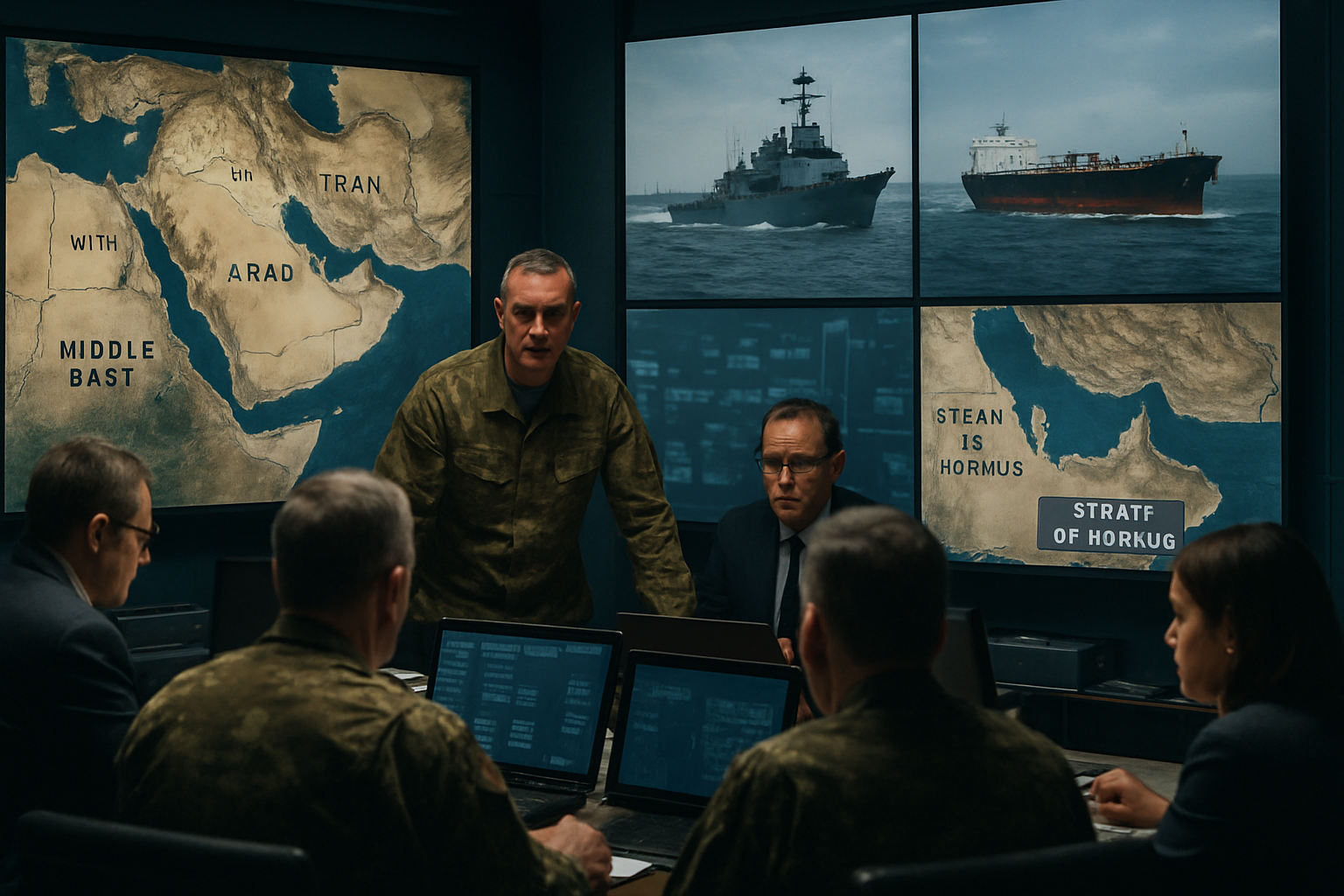
The Iran-US military confrontation has reached its most critical phase since beginning in February 2026, with President Trump issuing explosive ultimatums and Iranian forces conducting strategic bridge strikes as the conflict enters its sixth week with unprecedented global consequences.
Multiple sources confirm that Iran's Revolutionary Guard has maintained its position that Tehran's missile and drone capabilities remain largely intact, directly contradicting White House claims about the effectiveness of Operation Epic Fury. Intelligence assessments suggest that despite intensive bombardment campaigns costing over $27 billion, Iran retains significant capacity for "absolute havoc" according to explosive US intelligence revelations.
Trump's Escalating Threats and Iranian Defiance
President Trump has dramatically escalated rhetoric against Iran, threatening to bomb the country "back to the Stone Ages" over the next two to three weeks. In a series of inflammatory social media posts, Trump warned that "more is to follow" after strikes on what he described as Iran's "biggest bridge," posting video footage of the B1 bridge collapse in Karaj, located 40 kilometers from Tehran.
"The biggest bridge in Iran collapses and will never be used again – And this is just the beginning! It's time for Iran to make a deal before it's too late and there's nothing left of what could still be a great country!" Trump declared, escalating his demands for Iran's "unconditional surrender."
Iranian officials have categorically rejected all negotiation overtures, with Tehran dismissing Trump's claims of productive diplomatic conversations as "fake news" and "psychological warfare." The Iranian position remains that any settlement must exclude ballistic missiles and regional proxy relationships, which they consider "red lines" in any potential agreement.
Strategic Infrastructure Under Attack
The targeting of the Karaj B1 bridge represents a significant escalation in infrastructure warfare, with Iranian state media reporting at least eight deaths and 95 injuries from the attack. The bridge served as a critical transportation link between Karaj and Tehran, and its destruction demonstrates the expanding scope of military operations beyond purely military targets.
Intelligence sources indicate that both sides are now systematically targeting critical infrastructure, with Iran's closure of the Strait of Hormuz through naval mining operations affecting 40% of global oil transit. Over 150 tankers remain stranded in the Persian Gulf, carrying billions of dollars worth of cargo, while oil prices have surged past $110 per barrel with warnings of potential increases to $200.
Global Economic and Humanitarian Impact
The conflict has created the most severe global aviation crisis since the COVID-19 pandemic, with over 18,000 flights cancelled worldwide. Eight Middle Eastern countries maintain simultaneous airspace closures, effectively severing Europe-Asia air corridors and stranding hundreds of thousands of passengers globally.
"This represents the greatest test of multilateral cooperation in crisis management in the modern era."
— UN Secretary-General António Guterres
Dubai International Airport, the world's busiest with 86 million passengers annually, remains completely shut down due to missile damage. Major airlines including Emirates, Air France-KLM, and Wizz Air have suspended all Middle Eastern operations indefinitely, creating unprecedented disruption to international travel and commerce.
Regional Coalition Under Severe Strain
The unprecedented coalition of Saudi Arabia, UAE, Qatar, and Egypt that had backed diplomatic solutions is fracturing under Iranian retaliation campaigns. Egyptian President Abdel Fattah el-Sisi has condemned Iranian attacks on "sisterly Arab countries," warning of "comprehensive chaos" spreading throughout the region.
Regional casualties continue to mount, with the UAE reporting one civilian killed in Abu Dhabi, Kuwait suffering 32 injured in airport drone strikes, and Qatar intercepting 65 missiles and 12 drones using Patriot defense systems, resulting in eight wounded from debris.
European Territory Attacked for First Time Since WWII
In an unprecedented escalation, Iranian drones struck RAF Akrotiri in Cyprus, marking the first attack on European territory since World War II. This has prompted an extraordinary naval coalition response, with HMS Dragon leading British forces alongside Spanish frigates and vessels from Italy, France, Netherlands, and Greece.
The European Union has activated its ESTIA crisis mechanism for the first time in the bloc's history, demonstrating how the conflict has expanded far beyond Middle Eastern boundaries to directly threaten European security interests.
Nuclear Diplomacy Collapse and Succession Crisis
The current military confrontation emerged from the complete breakdown of nuclear negotiations, despite achieving what diplomats described as "broad agreement on guiding principles" - the most significant progress since the JCPOA collapse in 2018. The fundamental disagreement centers on scope: Iran demands nuclear-only discussions excluding missiles and proxies, while the US insists on comprehensive agreements covering missiles, armed groups, and human rights.
Iran continues uranium enrichment at 60% purity with over 400 kilograms of weapons-grade material - sufficient for multiple nuclear weapons if weaponized. The crisis occurs amid the broader nuclear governance breakdown following the New START treaty's expiration in February 2026, marking the first time in 50+ years without US-Russia nuclear constraints.
Historic Succession in Tehran
Following the confirmed death of Supreme Leader Ali Khamenei on March 1, Iran has witnessed its first hereditary succession in the Islamic Republic's 47-year history. Mojtaba Khamenei, the late leader's son, has assumed power amid unprecedented Revolutionary Guard control over governance, marking a fundamental shift from clerical to military leadership during active warfare.
Congressional Opposition and Military Costs
Operation Epic Fury has become increasingly unpopular domestically, with only 25% of Americans supporting continued military action - described by analysts as "almost unprecedented" unpopularity for early-stage operations. Senator Richard Blumenthal has expressed being "more concerned than ever" about potential ground troop deployment.
The Pentagon's operations are planned through September 2026, far beyond the initial 4-6 week timeline presented to the public. Current costs have reached $27 billion, running at approximately $1 billion daily, making this the largest Middle Eastern operation since the 2003 Iraq invasion.
Humanitarian Crisis Mounting
Iran's Red Crescent reports over 787 civilian casualties from US-Israeli strikes, including a devastating elementary school attack in Minab that killed between 165-185 students and staff. The Pentagon has confirmed US responsibility for the school strike, citing "outdated targeting data" in what may constitute Geneva Convention violations.
International evacuations have reached the largest scale since the Arab Spring of 2011, with Australia reporting 115,000 nationals trapped in the region and Germany evacuating 30,000 stranded tourists. Multiple countries have ordered immediate evacuations citing "extremely uncertain" security conditions.
Global Strategic Implications
The rapid transition from diplomatic breakthrough to military confrontation demonstrates the fragility of crisis management mechanisms in the multipolar era. The collapse of intensive negotiations after achieving significant progress raises fundamental questions about the viability of diplomatic solutions for modern nuclear crises.
Energy security has emerged as a critical vulnerability, with the Persian Gulf's role as a trade hub extending far beyond oil to affect manufacturing supply chains, shipping routes, and electronics production dependent on Gulf logistics networks. The crisis has exposed fundamental weaknesses in global economic architecture overly dependent on strategic chokepoints.

Template-Setting Crisis for the 21st Century
March-April 2026 represents a watershed moment in international relations, with outcomes that will establish precedents for diplomatic versus military solutions in future territorial and nuclear disputes globally. The stakes include regional war prevention, global energy security, nuclear governance credibility, and international law enforcement of post-WWII order principles.
Success in containing the crisis could provide a framework for nuclear crisis resolution in the 21st century. However, failure may accelerate preferences for military solutions over diplomatic engagement, potentially reshaping geopolitics for decades while encouraging nuclear proliferation and undermining diplomatic credibility worldwide.
As the conflict enters its critical phase, the international community faces its greatest test of multilateral cooperation in crisis management since the end of the Cold War, with implications extending far beyond the Middle East to affect global governance mechanisms and the sustainability of the international order established after World War II.