Iran's military leadership issued stark warnings of "crushing" and "broader" attacks against the United States and Israel on Thursday, responding to President Donald Trump's most explicit threats yet to intensify military strikes and bomb the Islamic Republic "back to the Stone Ages" over the coming weeks.
The escalating confrontation reached a critical juncture as Trump's administration faces mounting international pressure to resolve the ongoing Strait of Hormuz crisis, which has effectively closed the vital waterway carrying 40% of global oil transit. Oil prices surged past $110 per barrel as markets fear the strategic chokepoint will remain blocked, with Brent crude futures experiencing their biggest daily gains in weeks.
Iran's Defiant Response to Escalating Threats
Speaking through military commanders via Fars News Agency, Iran's operational command warned that retaliation would continue "until the humiliation" of its adversaries, describing planned actions as "more vast and more destructive." The Islamic Revolutionary Guard Corps (IRGC) maintained its position of "no red lines remain" in what it terms Operation True Promise 4.
"The response will be more crushing, broader and more destructive actions following Trump's threats to intensify attacks on the Islamic Republic."
— Iranian Military Spokesperson
Iranian officials dismissed US-Israeli attacks as "insignificant," claiming the two countries possess "incomplete" information about Tehran's military capabilities and equipment. This assessment comes as the conflict, which erupted over a month ago with coordinated US-Israeli strikes on Iran, has spread throughout the Middle East and roiled the global economy.
Trump's 'Stone Ages' Warning Escalates Crisis
In a prime-time televised address to the nation Wednesday evening, President Trump declared the United States was "very close" to achieving its military objectives in Iran while warning of significantly intensified attacks if Tehran fails to reach a negotiated settlement.
"Over the next two to three weeks, we are going to bring them back to the Stone Ages, where they belong," Trump stated in his 19-minute speech from the White House. The president's remarks represented his most direct language yet regarding the month-long military campaign, dubbed Operation Epic Fury.
Trump's address came as his approval ratings have declined amid mounting domestic opposition to the conflict. Only 25% of Americans support the ongoing military operations against Iran, marking what analysts describe as "almost unprecedented" unpopularity for early-stage military action.
Global Oil Crisis Peaks as Hormuz Remains Closed
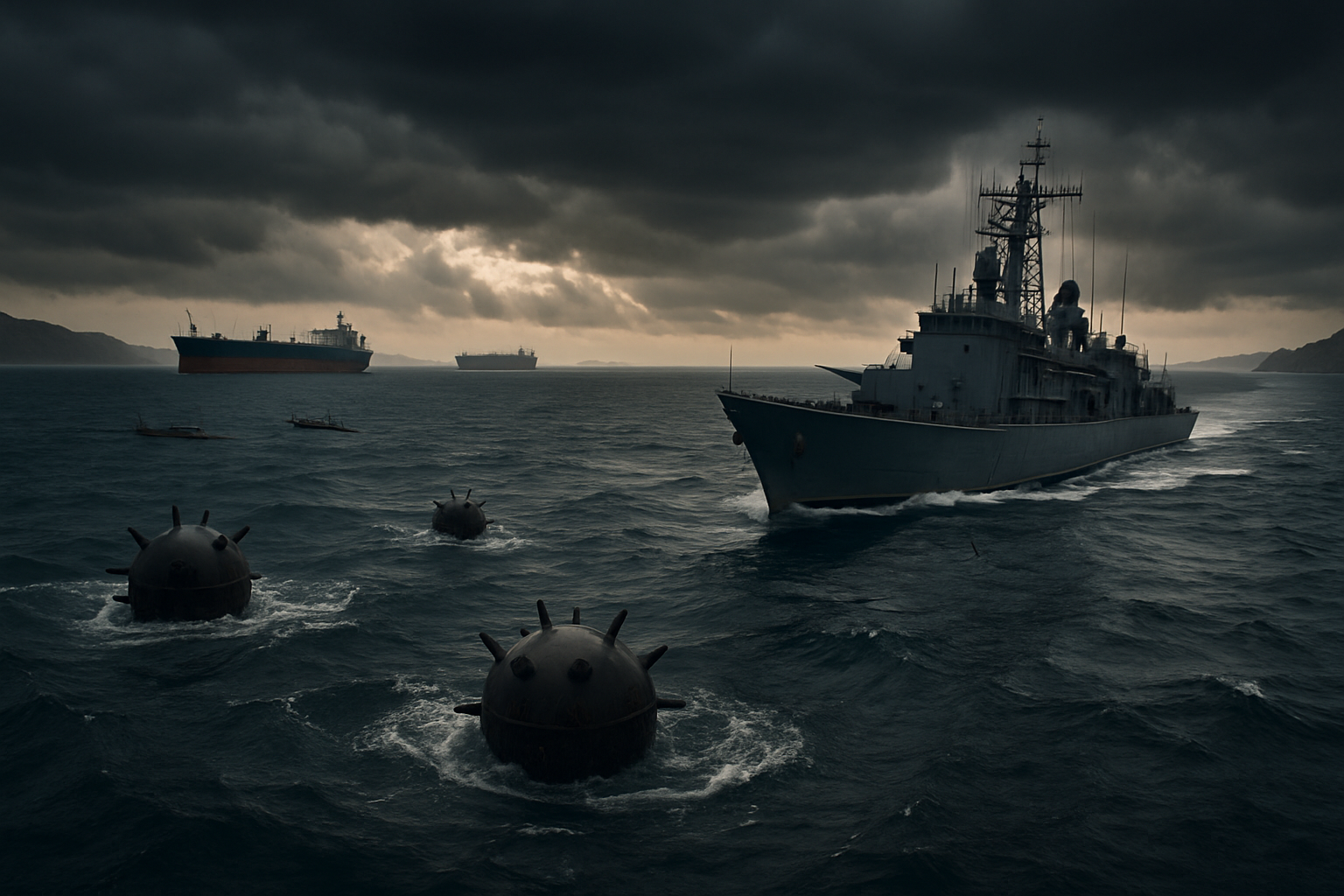
The economic consequences of the Iran crisis have reached historic proportions, with oil markets experiencing their most severe disruption since the 1970s energy shocks. Iran's Revolutionary Guard has deployed an estimated 2,000-6,000 naval mines throughout the Strait of Hormuz, effectively rendering the 21-mile waterway "unsafe for shipping."
The International Energy Agency (IEA) responded with its largest strategic petroleum reserve release in 50 years, coordinating the deployment of 400 million barrels from 32 member countries. This emergency measure more than doubles the previous record release of 182.7 million barrels during the 2022 Ukraine crisis.

Major shipping companies Maersk and Mediterranean Shipping Company (MSC) have suspended all Persian Gulf operations, leaving more than 150 oil and LNG tankers stranded with cargo valued in the billions. Natural gas prices have exploded by 24% in Europe and 78% in the United States, with Qatar's LNG production facilities at Ras Laffan and Mesaid halted due to Iranian attacks.
International Coalition Scrambles for Diplomatic Solution
As military tensions escalate, British Prime Minister Keir Starmer announced that more than 40 countries would participate in virtual discussions aimed at finding diplomatic and political measures to restore the Strait of Hormuz's operational status. The UK-led initiative notably excludes direct US participation, reflecting growing international frustration with American military approaches.
French President Emmanuel Macron declared that using military force to reopen the waterway would be "unrealistic," criticizing what he termed President Trump's "differing daily statements" on the Iran conflict. During a visit to South Korea, Macron emphasized that military liberation of the strait was "never the option we have chosen."
"We have those who advocate for the liberation of the Strait of Hormuz by force through a military operation, a position sometimes expressed by the United States. I say sometimes because it has varied."
— Emmanuel Macron, French President
The diplomatic efforts face significant obstacles, particularly regarding Bahrain's resolution at the United Nations, which has encountered fresh procedural difficulties. Estonia's Foreign Minister Margus Tsahkna, speaking at the UK-led virtual meeting, emphasized that "all measures must be taken to reopen the Strait of Hormuz."
Aviation Industry Faces COVID-Scale Disruption
The Iran crisis has triggered the most extensive global aviation disruption since the COVID-19 pandemic, with over 18,000 flights cancelled worldwide as eight Middle Eastern countries maintain simultaneous airspace closures. The unprecedented shutdown affects Iran, Iraq, Israel, UAE, Qatar, Syria, Kuwait, and Bahrain, effectively severing critical Europe-Asia air corridors.
Dubai International Airport, the world's busiest with 86 million annual passengers, remains completely shuttered due to missile damage from Iranian retaliation strikes. Major carriers including Emirates, Air France-KLM, Wizz Air, and Bulgaria Air have suspended operations indefinitely, stranding hundreds of thousands of passengers globally.
European Territory Under Attack
The conflict's geographic scope expanded dramatically when Iranian drones struck RAF Akrotiri in Cyprus—marking the first attack on European territory since World War II. This unprecedented development prompted an immediate naval coalition response, with HMS Dragon joining Spanish frigates and vessels from Italy, France, the Netherlands, and Greece in protecting European waters.
The European Union activated its ESTIA crisis mechanism for the first time in the bloc's history, coordinating the evacuation of over 2,000 EU nationals from affected regions. The Cyprus attack has fundamentally altered the conflict's trajectory, transforming what began as a Middle Eastern crisis into a direct threat to European security.
Nuclear Diplomacy Collapse Fuels Military Escalation
The current military confrontation emerged from the complete breakdown of promising nuclear negotiations that had achieved significant progress earlier this year. Geneva talks in February produced what Iranian Foreign Minister Abbas Araghchi called "broad agreement on guiding principles"—the most substantial diplomatic breakthrough since the 2018 collapse of the Joint Comprehensive Plan of Action (JCPOA).
However, fundamental disagreements over the scope of any potential agreement proved insurmountable. Iran insisted on excluding its ballistic missile program and regional proxy activities as "red lines," demanding nuclear-only negotiations. The United States, under Secretary of State Marco Rubio's direction, maintained that any comprehensive agreement must address missiles, armed groups, and human rights concerns.
Iran continues uranium enrichment at 60% purity—significantly above the 3.67% limit established under the original JCPOA and approaching the 90% threshold considered weapons-grade. Intelligence assessments indicate Iran possesses over 400 kilograms of enriched uranium, sufficient material for multiple nuclear weapons if weaponized.
Regional Coalition Under Severe Strain
The unprecedented Middle Eastern coalition of Saudi Arabia, UAE, Qatar, and Egypt that initially supported diplomatic efforts now faces severe strain as Iranian retaliation directly targets member territories. Iran's systematic regional targeting under Operation True Promise 4 has resulted in casualties across Gulf states previously united in supporting negotiations.
The United Arab Emirates reported one civilian killed in Abu Dhabi, while Kuwait saw 32 foreign nationals injured in airport drone strikes. Qatar intercepted 65 missiles and 12 drones using Patriot air defense systems, with 8 people wounded despite successful interceptions. Egyptian President Abdel Fattah el-Sisi condemned attacks on "sisterly Arab countries," warning of "comprehensive chaos" if the conflict continues expanding.
Congressional Opposition Mounts
Bipartisan congressional opposition to the Iran conflict has reached unprecedented levels, with lawmakers demanding detailed briefings on strategy, costs, and the potential for ground troop deployment. Democratic Senator Richard Blumenthal expressed being "more concerned than ever" about the possibility of American boots on the ground, following classified Pentagon briefings.
The financial implications of Operation Epic Fury have become a critical constraint, with first-week costs reaching $11.3 billion and operations projected to continue through September—far beyond the initial 4-6 week timeline outlined by the White House. Financial markets have responded negatively, with Pakistan's KSE-100 index experiencing its largest single-day decline in history at -8.97%.
"We are more concerned than ever about the direction this conflict is taking and the potential for ground forces deployment."
— Senator Richard Blumenthal (D-CT)
Nuclear Governance Crisis Broader Context
The Iran crisis unfolds against the backdrop of a broader nuclear governance crisis that began with the February 2026 expiration of the New START treaty—marking the first time in over 50 years that the United States and Russia operate without nuclear arms constraints. This development, combined with China's nuclear expansion and Iran's advancing capabilities, has created what UN Secretary-General António Guterres describes as nuclear risks at their "highest levels in decades."
The collapse of the Geneva framework despite initial progress raises fundamental questions about the viability of negotiated solutions to modern nuclear crises. The template established by this confrontation will likely influence international approaches to nuclear and territorial disputes for decades to come.
Energy Architecture Vulnerabilities Exposed
The Strait of Hormuz crisis has exposed dangerous vulnerabilities in global energy architecture, demonstrating the risks of over-dependence on strategic chokepoints. The 21-mile waterway's closure has revealed it as a single-point failure in modern logistics, with no realistic alternatives for the massive oil and LNG flows it typically handles.
Supply chain disruptions extend far beyond energy, affecting manufacturing in automotive, electronics, and textiles industries dependent on Gulf logistics networks. The Persian Gulf serves as a critical Asia-Europe trade hub, and its compromise has necessitated fundamental reconsideration of global supply chain resilience.
Energy experts warn that strategic petroleum reserves provide only temporary relief for sustained disruptions. The crisis has dramatically accelerated discussions about supply diversification and renewable energy transitions, though such transformations require years or decades to implement fully.
Historical Significance and Global Implications
UN Secretary-General Guterres has characterized the current crisis as "the greatest test of multilateral cooperation and crisis management in the modern era." The rapid transition from diplomatic breakthrough to military escalation demonstrates the fragility of crisis management in the multipolar era, where traditional frameworks struggle to contain complex regional conflicts.
The stakes extend far beyond the immediate Middle Eastern context, encompassing regional war prevention, global energy security, nuclear governance credibility, and international law enforcement. Success in containing the crisis could provide a framework for nuclear dispute resolution in the 21st century, while failure may accelerate military approaches to international conflicts, encouraging proliferation elsewhere and undermining diplomatic credibility worldwide.
March and April 2026 represent a potential watershed moment in international relations, determining whether diplomatic solutions remain viable for modern nuclear crises or if military confrontation becomes the preferred template for resolving 21st-century territorial and sovereignty disputes.
Looking Ahead: Critical Decisions
As President Trump's threats of intensified strikes over the coming weeks loom, the international community faces critical decisions about supporting military solutions versus pursuing diplomatic alternatives. The UK-led coalition of 40+ nations represents perhaps the last coordinated effort to find peaceful resolution before the crisis escalates beyond containment.
Iran's vows of "crushing" retaliation, combined with Trump's "Stone Ages" rhetoric, suggest the conflict may enter an even more dangerous phase. The outcome will not only determine the immediate fate of the Strait of Hormuz and global energy markets but establish precedents for international crisis management that could influence global governance mechanisms for decades to come.
With oil approaching $150 per barrel and global aviation networks paralyzed, the economic and humanitarian costs of continued escalation grow more severe daily. The window for diplomatic resolution appears to be narrowing as both sides double down on military approaches, raising the specter of the most dangerous international conflict since the Cold War's end.