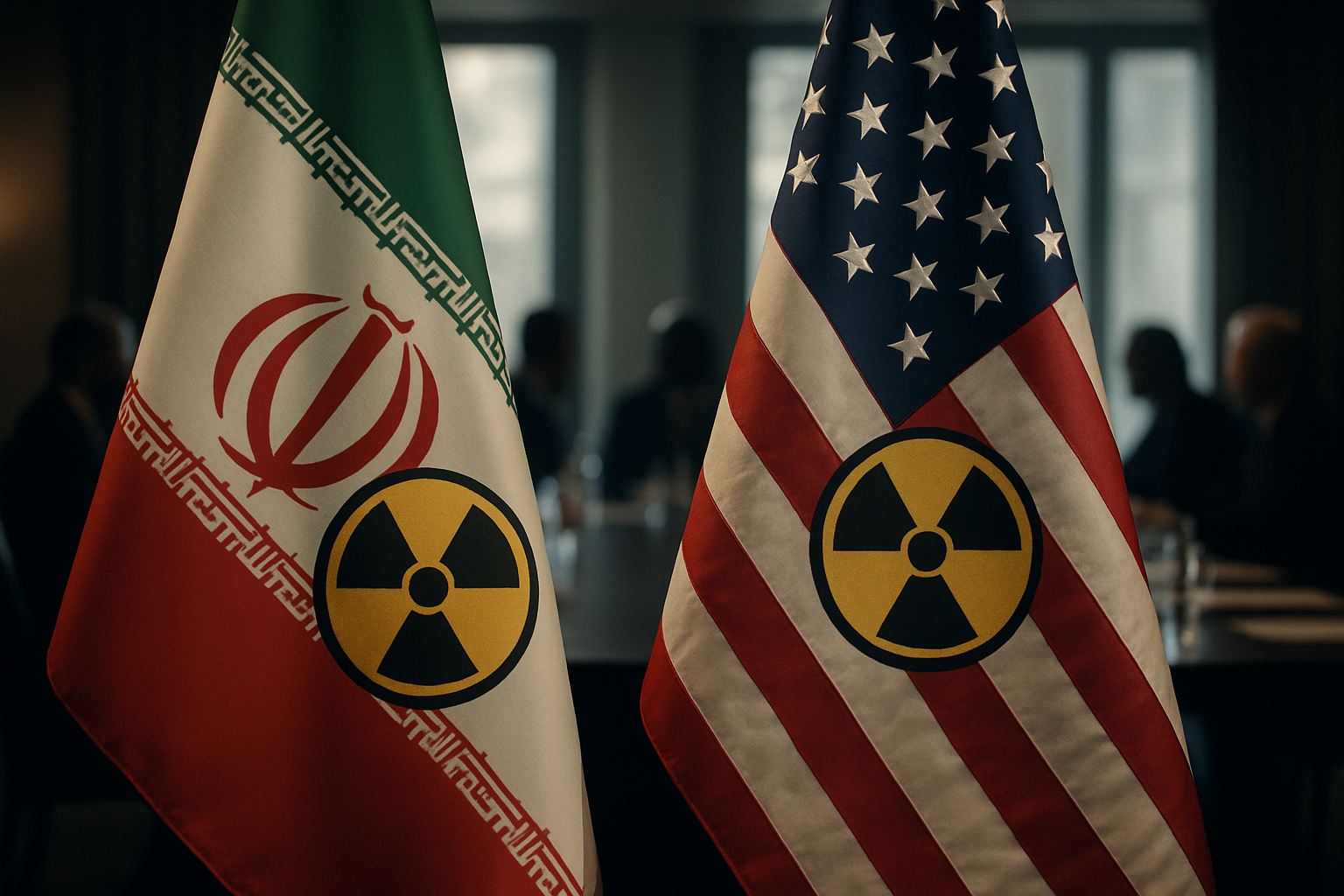
Diplomatic tensions between Iran and the United States over nuclear negotiations have reached a critical juncture in April 2026, with various international mediators attempting to bridge fundamental disagreements while Iran maintains uranium enrichment at 60% purity and excludes ballistic missile programs from any potential agreement.
According to multiple international sources, Iran's Supreme National Security Council announced Saturday it is evaluating "new proposals" from the United States in ongoing diplomatic contacts. However, Iranian Foreign Minister Abbas Araghchi's office indicated no formal date has been set for the next round of negotiations, suggesting continued uncertainty in what has become the most sustained US-Iran diplomatic engagement since the JCPOA collapse in 2018.
Nuclear Program Status Remains Critical
Iran continues enriching uranium at 60% purity versus the 3.67% limit established under the Joint Comprehensive Plan of Action (JCPOA), approaching the 90% threshold necessary for weapons-grade material. Intelligence assessments confirm Iran possesses over 400 kilograms of enriched uranium, sufficient for multiple nuclear weapons if the decision to weaponize is made.
Dr. Yusri Abu Shadi, a former IAEA inspector, has confirmed that Iran's current stockpiles make nuclear weapons "easily achievable" if Tehran chooses to pursue weaponization. This represents a dramatic acceleration from Iran's nuclear capabilities during the original JCPOA negotiations.
"Iran will never abandon uranium enrichment even if war is imposed on us"
— Abbas Araghchi, Iranian Foreign Minister
Despite diplomatic engagement attempts, Iranian officials have consistently maintained their position that uranium enrichment remains an "inalienable right" under international law, with President Masoud Pezeshkian declaring Iran "open to verification" while simultaneously rejecting any complete halt to enrichment activities.
Fundamental Scope Disagreement Persists
The core obstacle preventing breakthrough agreements remains unchanged from decade-old diplomatic challenges: Iran demands nuclear-only compartmentalized talks while excluding ballistic missiles and regional proxy activities as "red lines." Conversely, US Secretary of State Marco Rubio insists any comprehensive agreement must address Iran's missile program, support for armed groups, and human rights record.
Greek diplomatic sources confirm Iran "will not make the slightest concession" on core sovereignty issues, including its ballistic missile program and regional alliance network encompassing Hezbollah, Hamas, and the Houthis. This structural disagreement has prevented successful nuclear negotiations for over eight years since the original JCPOA's collapse.
Military Tensions Continue Despite Diplomatic Engagement
Military incidents have continued throughout the diplomatic process, including F-35C aircraft from the USS Abraham Lincoln shooting down Iranian Shahed-139 drones and IRGC naval units harassing US tankers in the Strait of Hormuz. These incidents affect the strategic waterway through which 40% of global oil transit passes, contributing to oil price volatility.
The Trump administration maintains an unprecedented dual-carrier deployment with the USS Gerald R. Ford and USS Abraham Lincoln representing the largest US naval presence in the Middle East since the 2003 Iraq invasion. Pentagon officials have prepared scenarios ranging from targeted nuclear facility strikes to broader Revolutionary Guard infrastructure campaigns.
Regional Coalition Supports Diplomatic Process
An extraordinary Middle Eastern consensus has emerged supporting continued diplomatic engagement, with Saudi Arabia, UAE, Qatar, and Egypt all backing the negotiation process. This unprecedented regional coalition reflects shared concerns about potential military confrontation destabilizing Persian Gulf energy markets.
Pakistan has emerged as a crucial mediator, with Prime Minister Shehbaz Sharif and Field Marshal Asim Munir developing innovative "message relay systems" that have facilitated communication when direct diplomatic channels became strained. This middle-power diplomacy demonstrates the potential for creative solutions when traditional mechanisms fail.
International Nuclear Governance Crisis Context
The Iran nuclear crisis unfolds against a broader collapse in global nuclear governance frameworks. The New START treaty between the US and Russia expired in February 2026, marking the first time in over 50 years without nuclear constraints between the superpowers. China's rapid nuclear expansion and UN Secretary-General António Guterres' warning that nuclear risks are at their "highest in decades" underscore the template-setting nature of the Iran negotiations.
Success in reaching a comprehensive agreement could provide a diplomatic template for 21st-century nuclear crisis resolution, while failure may accelerate military solutions and encourage nuclear proliferation globally, undermining diplomatic credibility for territorial and security disputes worldwide.
Domestic Pressures Complicate Negotiations
Iran faces severe domestic pressure with over 42,000 arrests since the 2022 protests, while the regime continues prioritizing nuclear capabilities over economic relief despite sanctions pressure. The sentencing of Nobel Peace Prize laureate Narges Mohammadi to additional prison time during the negotiation period demonstrates Iran's domestic control priorities.
Congressional opposition in the United States has reached historic levels, with only 25% public support for potential military action representing "unprecedented unpopularity" according to polling data. The Trump administration must balance Republican hawk pressure against diplomatic achievement needs while maintaining credible military deterrence.
Economic and Energy Security Implications
Previous escalations have reached oil prices of $119.50 per barrel, triggering the largest strategic petroleum reserve release in 50-year history totaling 400 million barrels. Aviation disruption included over 18,000 flight cancellations, with consumer impacts extending from Bangladesh fuel rationing to European energy cost increases.
The Strait of Hormuz vulnerability exposes a critical single-point failure in modern energy architecture, with Iran's Supreme National Security Council announcing maintenance of naval control through deployment of 2,000-6,000 naval mines "until war fully ends." This demonstrates Iran's strategic leverage through energy chokepoint control.
Verification Challenges Unprecedented
Any potential agreement would require monitoring mechanisms far exceeding the original JCPOA's complexity, given Iran's advanced centrifuge technology and sophisticated nuclear infrastructure developed since 2018. IAEA inspections have been suspended since November 2025, complicating verification protocols for future agreements.
Intelligence suggests potential Iranian concessions including a three-year enrichment halt and stockpile transfer to Russia, but hardline official statements cast doubt on Tehran's willingness to accept comprehensive limitations without corresponding US concessions addressing the scope disagreement.
Template-Setting Implications for Global Governance
The Iran-US nuclear crisis represents the most dangerous international confrontation since the Cold War's end, establishing precedents for multilateral cooperation, nuclear proliferation prevention, and diplomatic versus military solutions in the 21st century. Success would strengthen diplomatic credibility and international law enforcement mechanisms, while failure could reshape global governance by encouraging military solutions to territorial and nuclear disputes.
The innovative mediation efforts by Pakistan, Oman, Switzerland, and regional coalition members demonstrate that middle-power diplomacy can provide breakthrough solutions when traditional superpower negotiations reach impasses. This diplomatic evolution may represent a fundamental shift toward more distributed international crisis management in the multipolar era.
Current Assessment and Future Prospects
Iranian evaluation of new US proposals represents a potential diplomatic opening building on previous framework agreements that achieved "broad agreement on guiding principles" - described by Foreign Minister Araghchi as the most significant progress in eight years. However, the fundamental scope disagreement requiring innovative compromise solutions remains unchanged.
Stakes encompass regional war prevention, global energy security, nuclear governance credibility, and 21st-century conflict resolution precedents extending decades beyond current events. The diplomatic window may be narrowing as Iran's nuclear capabilities advance toward weapons-grade levels while military tensions continue escalating through Strait of Hormuz incidents.
Coming diplomatic initiatives will determine whether innovative compromise solutions can bridge decade-old challenges or whether the international community faces an acceleration toward military confrontation with profound implications for global stability, energy security, and nuclear proliferation prevention efforts worldwide.