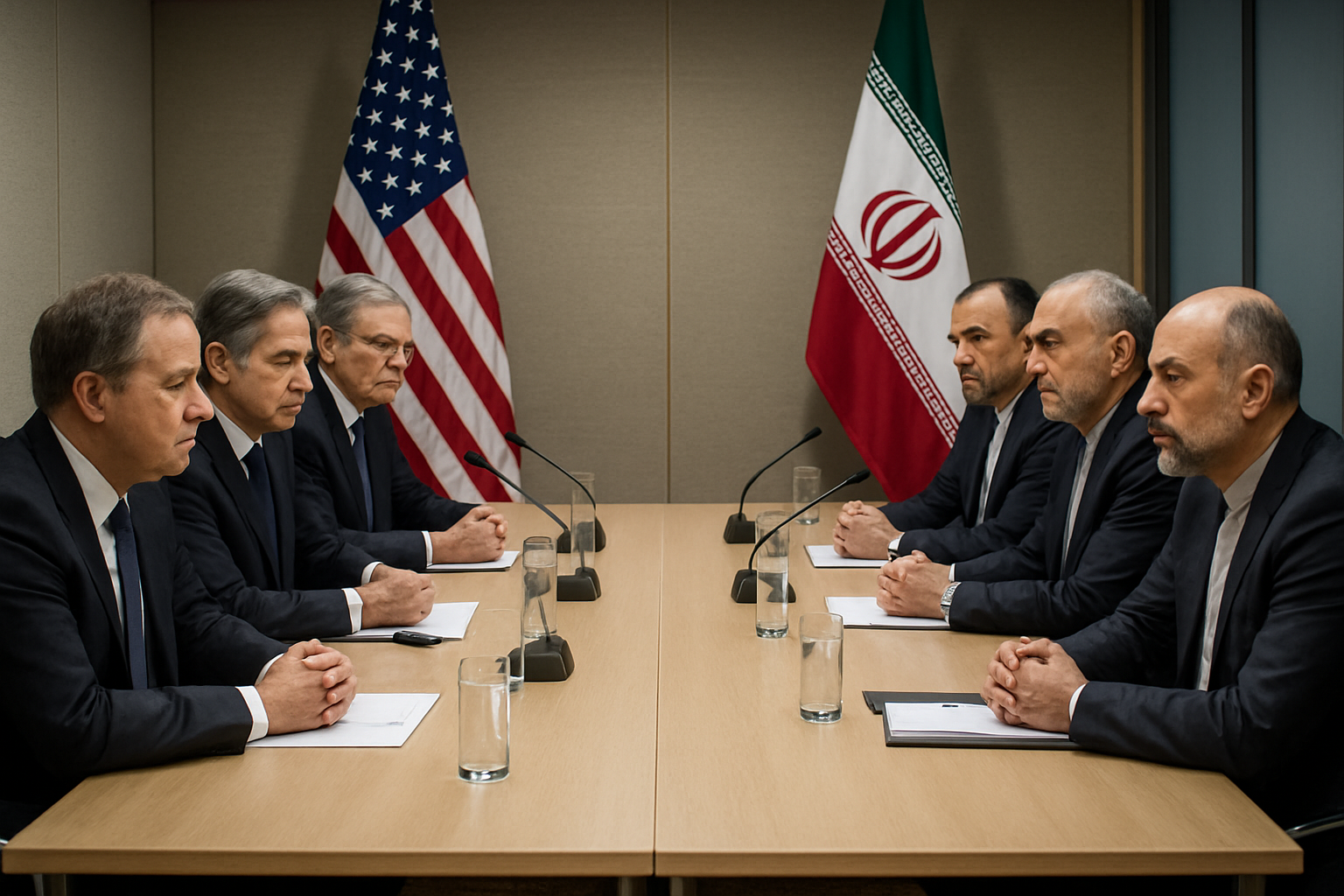
Iran and the United States have agreed to continue nuclear negotiations following talks held in Oman on Friday, with both sides describing the discussions as constructive despite fundamental disagreements over uranium enrichment levels and Iran's ballistic missile program.
Iranian Foreign Minister Abbas Araghchi announced that Tehran and Washington have committed to resuming talks "soon" after six hours of negotiations in Muscat, mediated by Omani officials. President Donald Trump declared the Friday discussions "very good" and expressed optimism that Iran is "very eager to make a deal," though no concrete timeline has been established for the next round.
Iranian Position Maintains Key Red Lines
Speaking to Al Jazeera, Araghchi emphasized that Iran is prepared to reach what he described as a "reassuring agreement" on its nuclear program while maintaining firm positions on several critical issues. Iran currently enriches uranium at 60% purity, significantly above the 3.67% limit established under the original Joint Comprehensive Plan of Action (JCPOA) but below the 90% threshold considered weapons-grade.
"Negotiations are the only way to resolve the Iranian nuclear issue," Araghchi stated, while stressing that halting uranium enrichment entirely remains "not negotiable." He also confirmed that Iran's missile program would be excluded from any nuclear agreement, describing it as a defensive capability outside the scope of discussions.
"Iran's missile program is not, and will not be, part of negotiations. This is a defensive issue outside the scope of nuclear talks."
— Abbas Araghchi, Iranian Foreign Minister
US Seeks Comprehensive Agreement
The Trump administration maintains broader demands that extend beyond nuclear issues. Secretary of State Marco Rubio has insisted that any comprehensive agreement must address Iran's ballistic missile capabilities, support for regional armed groups, and human rights concerns—positions that directly conflict with Iran's compartmentalized approach to the negotiations.
This fundamental disagreement over scope represents the primary obstacle to meaningful progress, echoing challenges that plagued previous diplomatic efforts since the JCPOA's collapse in 2018.
Military Tensions Persist Despite Diplomacy
The diplomatic engagement occurs against a backdrop of heightened military tensions in the Persian Gulf. Recent incidents include a US F-35C fighter jet from the USS Abraham Lincoln shooting down an Iranian Shahed-139 drone that approached the aircraft carrier in the Arabian Sea, approximately 800 kilometers from Iran's coast.
Additionally, Iranian Revolutionary Guard Corps vessels harassed a US-flagged tanker in the Strait of Hormuz during the same period as the negotiations. Oil prices rose over $1 per barrel following news of these military confrontations.
Araghchi warned that Iran would target US military bases in the Middle East if attacked, stating this should not be interpreted as aggression against the host countries but rather as defensive action against American forces that have been deployed to the region.
Omani Mediation Proves Crucial
The venue change from Istanbul to Muscat proved strategically significant, as Iran specifically requested the location to limit discussions exclusively to nuclear issues. Oman's historical role as a neutral mediator, dating back to the 2015 JCPOA negotiations, provided a diplomatic framework that enabled substantive engagement despite underlying tensions.
Sultan Haitham bin Tariq's government facilitated the discussions between US Special Envoy Steve Witkoff and the Iranian delegation, with both sides praising the "positive atmosphere" that emerged from the structured dialogue.
Regional Powers Support Diplomatic Process
In an unprecedented development, major regional powers including Saudi Arabia, the United Arab Emirates, Qatar, and Egypt have all endorsed the diplomatic process. This broad Middle Eastern consensus reflects shared concerns about the potential for military confrontation and its impact on regional stability and global energy markets.
The Persian Gulf handles approximately 40% of global oil transit, making any conflict in the region a matter of international economic concern beyond regional security implications.
Sanctions Pressure Continues
Despite the diplomatic engagement, the Trump administration has maintained economic pressure through what officials describe as a "dual-track approach." Hours after declaring the talks successful, Trump signed an executive order threatening 25% tariffs on countries conducting business with Iran, demonstrating the continued application of maximum pressure tactics alongside diplomatic outreach.
Iran faces severe domestic challenges, including over 42,000 protest-related arrests and economic sanctions that have created significant pressure for sanctions relief. These conditions provide both incentives for negotiation and potential obstacles to compromise.
Nuclear Program Status and Potential Concessions
Iran's current nuclear capabilities have advanced significantly since the JCPOA's collapse. Beyond the 60% uranium enrichment level, intelligence reports suggest Iran may consider major concessions including a three-year enrichment halt and transfer of existing stockpiles to a third country, likely Russia.
However, any agreement would require unprecedented verification mechanisms for Iran's advanced centrifuges and expanded nuclear infrastructure—technical complexities that far exceed those addressed in the original JCPOA framework.
International Context and Stakes
The Iran-US talks coincide with several major international developments, including the recent expiration of the New START nuclear arms control treaty between the United States and Russia, ongoing Ukraine peace negotiations, and broader challenges to global nuclear governance.
The timing creates both opportunities and complications, as success could provide a template for diplomatic solutions to nuclear proliferation challenges, while failure might accelerate military options that could destabilize the broader Middle East.
Israeli officials have emphasized concerns about any incomplete agreement that fails to address Iran's missile capabilities and support for regional proxy forces, viewing these as existential threats that extend beyond nuclear weapons development.
Looking Forward
The agreement to continue negotiations represents the most significant US-Iran diplomatic engagement since the JCPOA's collapse eight years ago. However, fundamental positions remain largely unchanged, with Iran maintaining its "red lines" around missiles and regional activities while the US continues to seek comprehensive solutions.
The coming weeks will prove critical in determining whether innovative diplomatic solutions can bridge decades-old challenges or whether these talks represent another false start in nuclear crisis resolution. Success requires unprecedented compromise from both sides on issues that have defined their adversarial relationship for over four decades.
As both nations maintain military readiness while exploring diplomatic solutions, the international community watches for signs of genuine breakthrough versus continued deadlock in one of the world's most consequential nuclear standoffs.