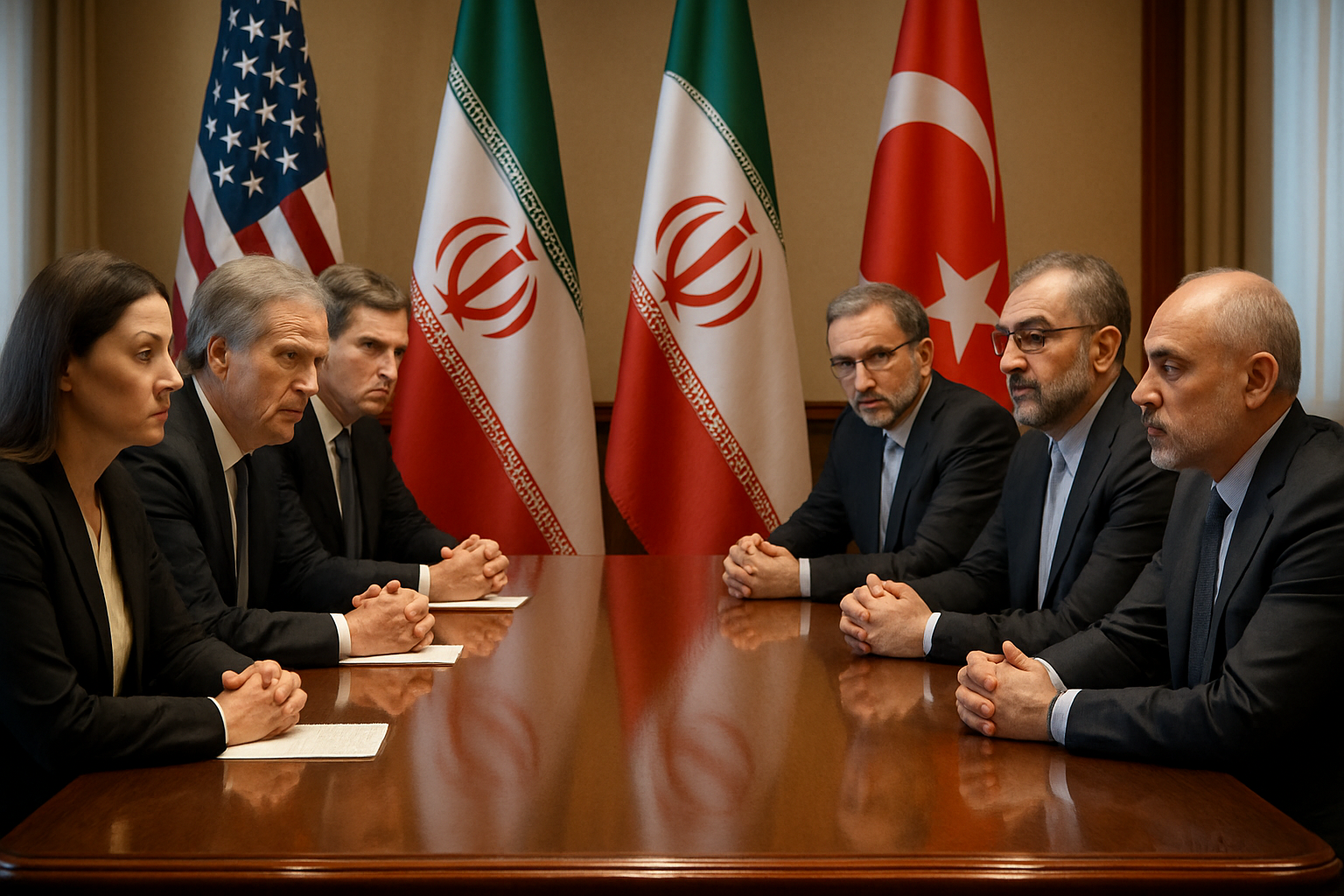
Iran has officially confirmed that nuclear negotiations with the United States will take place this Friday in Turkey, marking the most significant diplomatic engagement between the two nations since the collapse of the Joint Comprehensive Plan of Action (JCPOA) in 2018.
US Special Envoy Steve Witkoff and Iranian Foreign Minister Abbas Araghchi are expected to meet in Turkey to discuss a potential nuclear deal, according to multiple international media reports confirmed Tuesday. The talks represent a critical diplomatic breakthrough amid escalating regional tensions and President Trump's stark warnings of consequences if negotiations fail.
Presidential Confirmation and Diplomatic Framework
Iranian President Masoud Pezeshkian has ordered the start of nuclear talks with the United States, as reported by Iran's Fars news agency. The president confirmed that Iran will begin negotiations with the US, though he set a formal condition that Washington must refrain from threats during the diplomatic process.
According to Bulgarian media reports, Pezeshkian stated that the request for dialogue came from "friendly governments in the region," highlighting the multilateral diplomatic efforts that have facilitated these talks. Turkey is serving as the primary venue for the negotiations, with active diplomatic support from Egypt and Qatar in organizing the crucial meeting.
"Iran confirms it will hold nuclear negotiations with the US this Friday in Turkey. We hope that both sides will work something out, but bad things would happen if no deal is reached."
— Multiple diplomatic sources
Trump's Warning and US Position
President Trump has maintained a dual approach of diplomatic optimism coupled with stern warnings. The US leader expressed hope that the two sides will "work something out," but also issued a clear threat that "bad things would happen" if no deal is reached, according to reports from The Times of Israel and other international sources.
Trump's warnings come against the backdrop of significant US military presence in the region, including the deployment of the USS Abraham Lincoln carrier strike group to the Arabian Sea. The president has previously threatened military action following Iran's crackdown on anti-government protests that peaked in recent months.
The timing of these talks is particularly significant, occurring amid multiple regional crises and just days before separate trilateral peace talks involving Ukraine, Russia, and the US scheduled for February 5-6 in Abu Dhabi.
Historical Context and Previous Failed Diplomacy
These negotiations represent the first major diplomatic breakthrough since the JCPOA collapse in 2018, when the Trump administration withdrew from the nuclear agreement and reimposed sanctions on Iran. The current talks occur against a backdrop of extreme tensions that have brought the two nations to the brink of military confrontation.
Iran's Supreme Leader Ayatollah Ali Khamenei recently warned that any American attack on Iran would trigger a "regional war" in the Middle East. The 86-year-old leader made these remarks during a public address as tensions escalated with increased US military presence in the region.
Recent events have further complicated the diplomatic landscape. Iran conducted naval exercises in the Strait of Hormuz featuring live-fire drills, while Iranian authorities have cracked down on anti-government protests, resulting in over 42,000 arrests and thousands of casualties according to human rights organizations.
Regional Stakeholders and International Support
The talks benefit from significant regional diplomatic support. Turkey, Egypt, and Qatar have all played active roles in facilitating the negotiations, with Turkey serving as the primary venue and the UAE mentioned as an alternative location if needed.
Active diplomatic efforts are underway, mediated by these regional powers, to organize the talks in Ankara this week. The involvement of multiple regional stakeholders suggests a broader Middle Eastern consensus on the importance of preventing military escalation through diplomatic engagement.
Israel is expected to stress to Washington the importance of including curbs on Iran's missile program and support for proxy groups in any potential agreement. Israeli sources report that the Iranian regime fears an American strike may reignite domestic protests and imperil its rule.
Stakes and Potential Outcomes
The Friday meeting in Turkey represents perhaps the most critical diplomatic moment between Iran and the US in decades. The talks occur amid peak military tensions, with both sides maintaining readiness for potential conflict while exploring diplomatic solutions.
Iran has recently designated European Union military forces as "terrorist groups" in retaliation for the EU's designation of Iran's Islamic Revolutionary Guard Corps (IRGC) as a terrorist organization. This escalation affects all 27 EU member states' militaries and demonstrates the broader international implications of Iranian tensions.
The negotiations will need to address multiple complex issues including Iran's nuclear program, sanctions relief, regional proxy activities, and the broader framework for US-Iran relations. Both sides face domestic political pressures that could complicate any potential agreement.
Military Posturing Continues
Despite diplomatic openings, both nations continue military preparations. Iran has conducted extensive naval exercises in the strategically crucial Strait of Hormuz, while the US maintains significant naval assets in the region including the Abraham Lincoln carrier strike group.
The IRGC spokesperson Ali Mohammad Naeeni has accused the US of psychological warfare and claimed Iran has "action plans for any hostile scenario." This military posturing occurs simultaneously with diplomatic outreach, reflecting the delicate balance both sides must maintain.
The talks also occur against the backdrop of ongoing regional conflicts, including the Ukraine war where Iran has been accused of providing drone technology to Russia, further complicating the broader geopolitical landscape.
Path Forward
Friday's meeting in Turkey will likely focus on establishing a framework for broader negotiations rather than resolving all outstanding issues immediately. The presence of US Special Envoy Steve Witkoff, who is also participating in Ukraine peace talks, demonstrates the interconnected nature of current global diplomatic efforts.
Success in these talks could potentially prevent military confrontation and open pathways for broader regional stability. However, the significant challenges include addressing Iran's nuclear program, sanctions relief mechanisms, and regional security concerns that have defined US-Iran relations for decades.
As both sides prepare for this crucial diplomatic encounter, the international community watches with cautious optimism, hoping that diplomacy can prevail over the military options that both leaders have threatened to employ if negotiations fail.