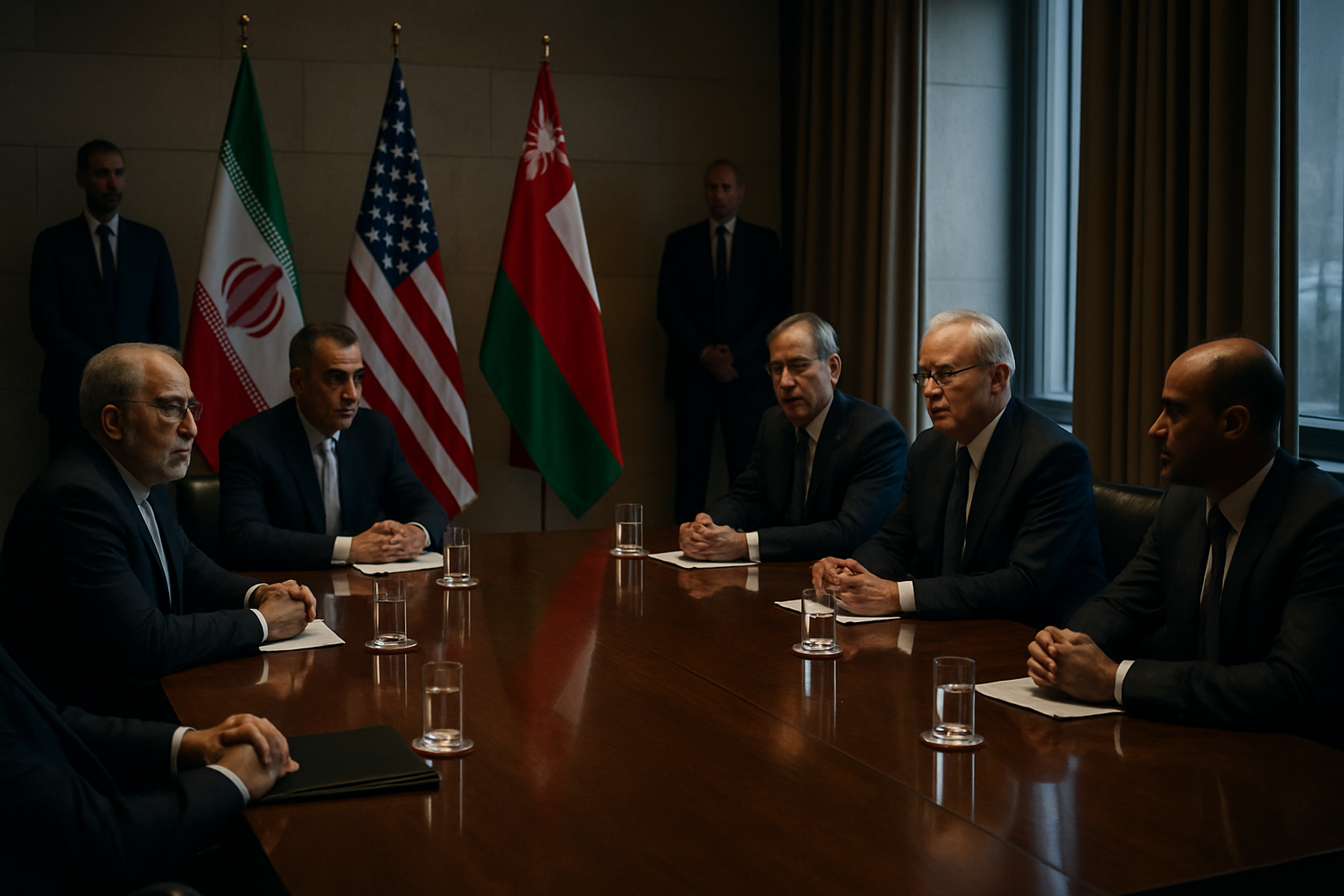
Iran and the United States reported significant progress in their second round of nuclear negotiations in Geneva on Tuesday, with Iranian Foreign Minister Abbas Araghchi announcing "broad agreement on a set of guiding principles" while expressing Tehran's openness to international inspections and potential uranium transfers to Russia.
The talks, held at the Swiss capital with Oman serving as mediator, represent the most substantial diplomatic breakthrough in Iran-US nuclear relations since the collapse of the Joint Comprehensive Plan of Action (JCPOA) in 2018. Both delegations characterized the discussions as "constructive" and committed to continue working toward "the text of a potential agreement."
Geneva Framework Establishes Foundation
Speaking to reporters following the three-hour negotiations, Araghchi described the atmosphere as positive and said the two parties had reached agreement on fundamental principles that would guide future discussions. "We came to some agreements and some main principles. And based on those principles, we will eventually draft a document," the Iranian foreign minister stated.
The venue evolution from Muscat to Geneva signals growing international momentum behind diplomatic resolution, with Switzerland officially supporting the talks while Oman continues its crucial mediation role established during the original JCPOA negotiations in 2015.
US Vice President JD Vance acknowledged the talks went well "in some ways" but noted that Iran was not yet willing to recognize some of Washington's red lines. American officials told Axios they expected to return with concrete proposals within two weeks, suggesting sustained engagement despite remaining disagreements.
Nuclear Status and Potential Concessions
Iran currently enriches uranium to 60% purity, significantly above the 3.67% limit established under the JCPOA and approaching the 90% threshold needed for weapons-grade material. Intelligence assessments suggest Iran possesses sufficient enriched uranium for multiple nuclear weapons if weaponized, creating urgency for diplomatic resolution.
However, Iranian President Masoud Pezeshkian declared his country is "open to verification" to prove it is not seeking nuclear weapons, marking a significant shift in Tehran's negotiating position. Reports indicate Iran is considering a three-year uranium enrichment halt and potential transfer of existing stockpiles to Russia as confidence-building measures.
"We don't seek atomic weapons, we are open to verification"
— Masoud Pezeshkian, Iranian President
Despite this openness, fundamental disagreements persist over the scope of any agreement. Iran maintains that ballistic missiles and regional proxy activities remain "red lines" that cannot be included in nuclear-focused discussions, while US Secretary of State Marco Rubio insists any comprehensive deal must address missiles, armed groups, and human rights issues.
Military Tensions Amid Diplomatic Progress
The Geneva talks occurred against a backdrop of unprecedented military escalation, with the United States deploying two aircraft carriers—USS Gerald R. Ford and USS Abraham Lincoln—creating the largest American naval presence in the Middle East in years, positioned approximately 800 kilometers from Iran's coast.
Recent military incidents have heightened tensions, including a US F-35C fighter jet shooting down an Iranian Shahed-139 drone near the Abraham Lincoln, and Iranian Revolutionary Guard vessels harassing American tankers in the Strait of Hormuz, which handles 40% of global oil transit. Oil prices have risen by more than $1 per barrel amid these tensions.
President Trump issued his starkest warning yet aboard Air Force One, declaring "I don't think they want the consequences of not making a deal" while confirming his indirect involvement in the negotiations. The deployment of the second carrier was justified as preparation "in case we don't make a deal."
Regional Coalition Supports Diplomatic Path
The negotiations have received unprecedented support from regional powers, with Saudi Arabia, the UAE, Qatar, and Egypt all backing the diplomatic process—a remarkable consensus among Middle Eastern nations typically divided on Iran policy. This regional coalition reflects shared concerns about the economic and security implications of military conflict in the Persian Gulf.
Oman's historical role as neutral mediator has proven essential, leveraging its successful facilitation of the 2015 JCPOA negotiations. The sultanate's diplomatic infrastructure and relationships with both Washington and Tehran provide crucial continuity for sustained dialogue.
UN Secretary-General António Guterres welcomed the continuation of talks and urged both parties to maintain momentum in discussions aimed at achieving "concrete and constructive results."
Domestic Pressures Shape Negotiations
Both governments face significant domestic pressures that complicate the negotiating process. Iran has arrested more than 42,000 protesters since the 2022 uprising, with continued crackdowns including the sentencing of Nobel Peace Prize laureate Narges Mohammadi to an additional 7.5 years in prison during the current talks.
The Iranian regime appears to prioritize maintaining its nuclear capabilities over economic relief, despite severe sanctions that have created a survival crisis. However, the willingness to engage in substantive negotiations suggests recognition that diplomatic resolution may be necessary to avoid military confrontation.
The Trump administration faces pressure from Republican hawks who view engagement with Iran as appeasement, while simultaneously seeking foreign policy achievements. Israeli Prime Minister Benjamin Netanyahu has coordinated extensively with Trump, emphasizing that any agreement must include comprehensive security arrangements beyond nuclear issues.
International Nuclear Governance Context
The Iran negotiations occur amid a broader crisis in international nuclear governance, with the New START treaty between the US and Russia having expired on February 5—the first time in over 50 years that the superpowers lack nuclear arms constraints. China's nuclear expansion and multilateral arms control breakdown add urgency to preventing Iranian weapons development.
Success in Geneva could provide a template for 21st-century nuclear crisis resolution, while failure might accelerate military solutions and encourage proliferation elsewhere, undermining diplomatic credibility for territorial and security disputes worldwide.
Verification Challenges and Technical Complexities
Any eventual agreement would require unprecedented verification mechanisms to address Iran's advanced centrifuge technology, expanded nuclear infrastructure, and sophisticated enrichment capabilities developed since 2018. The technical complexity far exceeds the original JCPOA framework, requiring innovative monitoring solutions.
Iran's nuclear program has grown significantly more advanced during the sanctions period, with dispersed facilities and enhanced defensive preparations making comprehensive oversight substantially more challenging than previous international agreements.
Stakes for Regional and Global Stability
The outcome of these negotiations carries implications far beyond bilateral relations, affecting global energy markets, regional security architecture, and international law enforcement mechanisms. Success could prevent a regional war that would destabilize energy markets and encourage diplomatic solutions to other conflicts.
Failure, however, might accelerate military confrontation that could reshape Middle Eastern geopolitics for decades, disrupt global supply chains, and undermine confidence in diplomatic alternatives to force in resolving international disputes.
As both sides prepare to continue negotiations based on the Geneva framework, the coming weeks will test whether innovative compromise solutions can bridge longstanding disagreements or whether fundamental positions remain irreconcilable. The unprecedented regional support and international attention suggest this may represent the most promising opportunity for nuclear crisis resolution since the JCPOA's collapse.