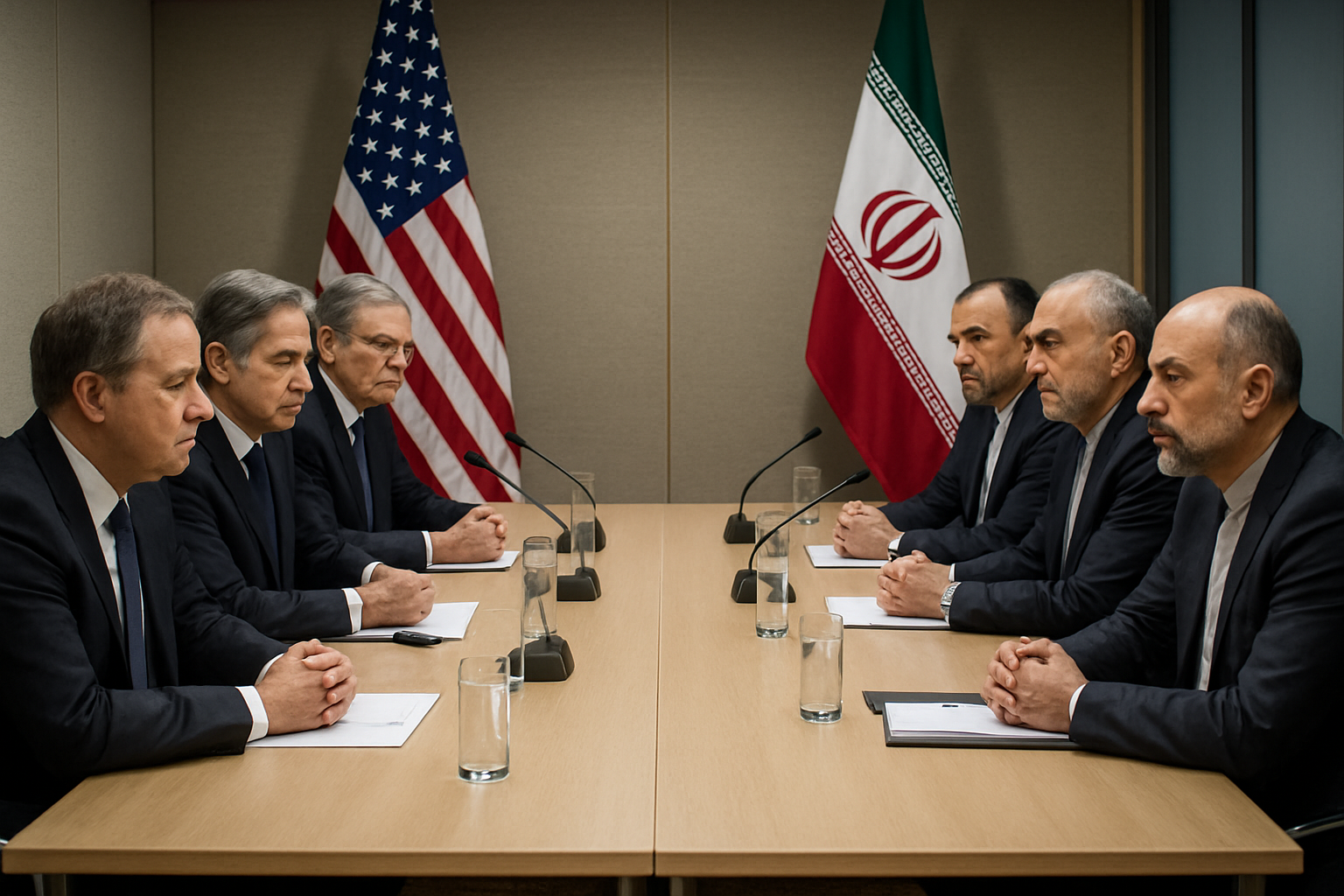
Iran and the United States are preparing for high-level nuclear negotiations in Oman this Friday, marking the latest diplomatic attempt to de-escalate mounting tensions between the two nations amid a backdrop of military confrontations and regional instability.
According to Iranian media reports and regional diplomatic sources, Iranian Foreign Minister Abbas Araghchi will lead the Iranian delegation in talks with US representatives, including Special Envoy Steve Witkoff. The venue change from Turkey to Oman reflects Iran's strategic preference to limit discussions strictly to nuclear issues, avoiding broader topics such as its ballistic missile program and regional proxy activities.
Venue Change Signals Iranian Strategy
The relocation of talks from Turkey to Oman was specifically requested by Iran, according to multiple diplomatic sources. A regional official speaking to AFP explained that "the Iranians requested a meeting in Oman and the Americans accepted that location but the parameters of the conversations are still being worked out."
Iran's choice of Oman is particularly significant given the Gulf nation's history as a neutral mediator in previous nuclear negotiations. The sultanate hosted crucial backdoor talks that led to the 2015 Joint Comprehensive Plan of Action (JCPOA), making it a familiar and trusted venue for sensitive diplomatic exchanges.
Tehran's insistence on Oman as the venue appears designed to maintain strict control over the negotiation agenda. Iranian officials have made clear they will only discuss the nuclear program, declaring their missile arsenal "off the table" as a red line in any negotiations.
Contrasting US and Iranian Positions
The divergent expectations for the talks highlight the complex challenges ahead. US Secretary of State Marco Rubio has insisted that meaningful negotiations must encompass more than just nuclear issues, stating that talks would need to include "the range of Iran's ballistic missiles, its support for groups around the Middle East and its treatment of its own people."
"If the Iranians want to meet, we're ready," Rubio said. "But talks would have to include the range of Iran's ballistic missiles, its support for groups around the Middle East and its treatment of its own people, besides the nuclear dispute."
— Marco Rubio, US Secretary of State
In stark contrast, a senior Iranian official has emphasized that discussions will focus exclusively on the nuclear program, with the missile program remaining "off the table." This fundamental disagreement over scope threatens to complicate any meaningful progress in the negotiations.
The Iranian delegation will include senior diplomats Majid Takht-Ravanchi and Kazem Gharibabadi alongside Foreign Minister Araghchi, according to Iran's ISNA news agency. This high-level composition signals Tehran's serious approach to the talks despite the limited scope they envision.
Military Tensions Complicate Diplomacy
The diplomatic initiative comes against a backdrop of escalating military confrontations between US and Iranian forces. Just days before the scheduled talks, a US F-35C fighter jet from the USS Abraham Lincoln shot down an Iranian Shahed-139 drone that aggressively approached the aircraft carrier in the Arabian Sea, approximately 800 kilometers from Iran's coast.
The incident, confirmed by Navy Captain Tim Hawkins of CENTCOM, resulted in no US casualties or damage but highlighted the dangerous proximity of military forces as diplomacy unfolds. The same day witnessed Iranian Revolutionary Guard Corps vessels harassing a US-flagged tanker in the Strait of Hormuz, according to maritime security firm Vanguard Tech.
These confrontations have contributed to oil price volatility, with crude prices rising more than $1 per barrel following news of the military incidents. The energy markets remain sensitive to any signs of escalation in the strategically vital Persian Gulf region.
Proposed Framework for Nuclear Agreement
International mediators have reportedly proposed a comprehensive framework for the crucial talks. According to sources familiar with the discussions, the proposals include requiring Iran to halt uranium enrichment for three years and transfer its existing enriched uranium stockpile to a third country.
This framework would represent a significant departure from Iran's current nuclear activities, which have expanded considerably since the US withdrawal from the JCPOA in 2018. Iran has been enriching uranium at levels approaching weapons-grade purity, raising international concerns about potential nuclear weapons development.
The proposed three-year moratorium would provide a substantial confidence-building period while allowing both sides to negotiate a longer-term comprehensive agreement. The transfer of existing enriched uranium stocks to a third country would immediately reduce proliferation risks while talks proceed.
Historical Context of Oman's Mediation Role
Oman's selection as the venue underscores the sultanate's unique position in Middle Eastern diplomacy. Sultan Haitham bin Tariq has maintained Oman's traditional policy of neutrality, enabling Muscat to serve as a bridge between conflicting regional powers.
The country's diplomatic credentials in Iran-US relations date back to the secret negotiations that preceded the 2015 nuclear deal. Omani officials facilitated multiple rounds of backdoor talks between American and Iranian representatives, helping to establish the foundation for broader multilateral negotiations.
This historical precedent provides both optimism and caution for the current diplomatic effort. While Oman's mediation previously succeeded in creating space for dialogue, the current regional environment presents significantly more complex challenges than those faced in 2013-2015.
Regional Stakes and International Implications
The talks carry implications far beyond bilateral US-Iran relations. Regional allies are closely monitoring the negotiations, with varying perspectives on their potential outcomes. Israel has consistently emphasized the importance of curbing Iran's missile program and proxy support networks, issues that remain outside Iran's preferred negotiating parameters.
Gulf Arab states, while generally supportive of diplomatic solutions, harbor concerns about Iran's regional activities and the potential for any agreement to legitimize Iranian influence. The European Union, having designated Iran's Revolutionary Guard Corps as a terrorist organization, faces its own complex calculations regarding sanctions relief and diplomatic engagement.
The timing of the talks also coincides with other major diplomatic initiatives in the region, including ongoing Ukraine-Russia-US trilateral peace negotiations in Abu Dhabi. This convergence of diplomatic activities reflects the interconnected nature of current international crises and the potential for progress in one arena to influence others.
Economic Pressures Drive Iranian Interest
Iran's willingness to engage in talks comes amid severe economic pressure from sustained US sanctions and domestic unrest. The country has faced significant challenges including a major protest crackdown that resulted in over 42,000 arrests according to human rights organizations.
The economic incentive for diplomatic progress is substantial. Iran's oil exports remain severely constrained by sanctions, limiting government revenues and contributing to domestic economic hardship. Any nuclear agreement that provides sanctions relief would offer significant economic benefits to the Iranian leadership.
However, Iran's insistence on limiting talks to nuclear issues suggests that economic pressure alone may not be sufficient to secure broader concessions on missile programs or regional activities that concern the United States and its allies.
Challenges and Opportunities Ahead
The Friday talks in Oman represent both an opportunity for diplomatic breakthrough and a test of whether the fundamental differences between US and Iranian positions can be bridged. The venue selection and agenda limitations already signal the constraints within which negotiators must operate.
Success in the nuclear talks could provide momentum for addressing other regional challenges, while failure might lead to further military tensions and reduced prospects for diplomatic solutions. The international community will be closely monitoring not just the immediate outcomes but also whether the talks establish a framework for sustained diplomatic engagement.
As both sides prepare for Friday's negotiations, the stakes could not be higher. With military forces in close proximity and regional tensions at dangerous levels, the talks in Oman may represent one of the last opportunities for diplomacy to prevent a broader confrontation in the Middle East.
The success or failure of these negotiations will likely determine not only the trajectory of US-Iran relations but also the broader security architecture of the Middle East in the years ahead.