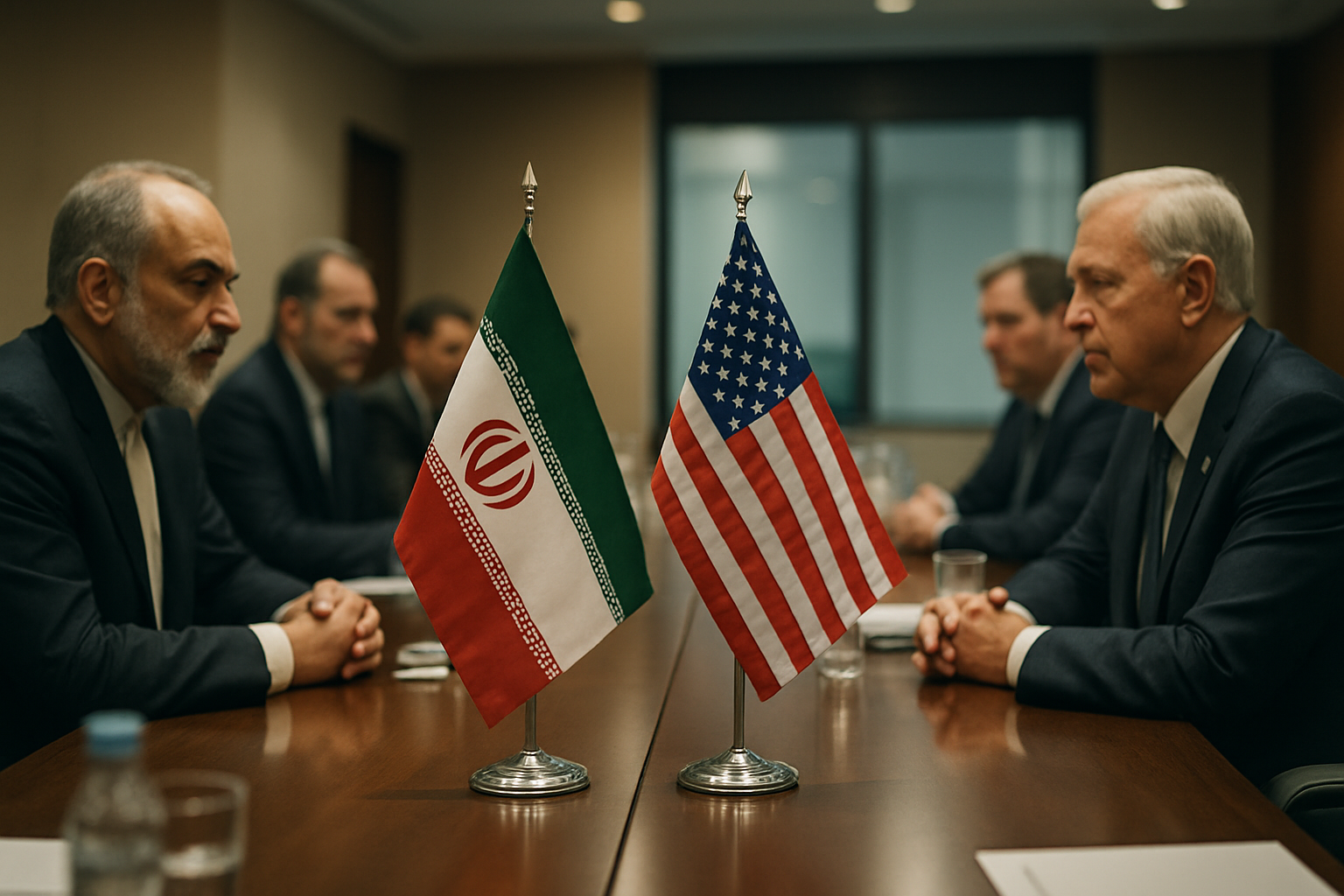
Iran and the United States have confirmed they will proceed with nuclear negotiations in Oman on Friday morning, marking the most significant diplomatic engagement between the two nations since the collapse of the Joint Comprehensive Plan of Action (JCPOA) in 2018, despite escalating military tensions in the Arabian Sea and continued threats from the Trump administration.
The talks, scheduled to begin at 10:00 AM local time (06:00 GMT) in Muscat, will bring together Iranian Foreign Minister Abbas Araghchi and US Special Envoy Steve Witkoff in what represents a critical test of diplomatic resolution over Iran's nuclear program. The venue selection of Oman reflects the sultanate's historic role as a neutral mediator, having previously facilitated the original JCPOA negotiations in 2015.
Last-Minute Venue Changes Reflect Deep Disagreements
The path to Friday's negotiations has been marked by significant diplomatic turbulence. Originally scheduled for Istanbul, the talks nearly collapsed Wednesday evening when Iran demanded both a venue change to Oman and a dramatic narrowing of the agenda scope. Tehran insisted discussions be limited exclusively to nuclear issues, explicitly excluding its ballistic missile program and regional proxy activities from consideration.
The Trump administration initially resisted these conditions, with Secretary of State Marco Rubio maintaining that any comprehensive agreement must address Iran's missile capabilities and support for regional militant groups. However, after consultation with Arab mediators from Qatar, Turkey, and Egypt, Washington ultimately accepted Iran's framework to prevent the diplomatic process from derailing entirely.
According to sources familiar with the negotiations, multiple regional powers including Saudi Arabia, the UAE, Qatar, and Egypt have presented both sides with a framework of key principles to guide the discussions, demonstrating unprecedented regional investment in preventing military confrontation.
Military Confrontations Shadow Diplomatic Process
The nuclear talks proceed against a backdrop of dangerous military escalation that has brought both nations closer to direct conflict than at any point since the current crisis began. Just days before the scheduled negotiations, a US F-35C fighter jet from the USS Abraham Lincoln aircraft carrier shot down an Iranian Shahed-139 drone that aggressively approached the carrier in the Arabian Sea, approximately 800 kilometers from Iran's coast.
Navy Captain Tim Hawkins, speaking for US Central Command, confirmed the incident represented a defensive action after the Iranian drone continued its approach despite de-escalatory measures. The same day, vessels from Iran's Islamic Revolutionary Guard Corps (IRGC) harassed the US-flagged tanker Stena Imperative in the Strait of Hormuz, according to maritime security firm Vanguard Tech.
"The Iranian drone exhibited unclear intent and continued approaching despite multiple warnings and de-escalatory signals from our carrier group."
— Navy Captain Tim Hawkins, US Central Command
These military confrontations have had immediate economic consequences, with oil prices rising more than $1 per barrel following news of the incidents. The timing of these events, occurring just 72 hours before the nuclear talks, has raised questions about whether hardliners in both countries are attempting to sabotage diplomatic progress.
Historical Context and Stakes
The upcoming negotiations represent the culmination of a diplomatic breakthrough that began in early February when Iranian President Masoud Pezeshkian officially ordered preparations for "fair and equitable" nuclear negotiations with the United States. This marked a significant shift from Iran's previous position, coming in response to what Pezeshkian described as requests from "friendly regional countries" and amid severe domestic pressure from ongoing protests and economic sanctions.
The current crisis stems from the Trump administration's 2018 withdrawal from the JCPOA, which had successfully limited Iran's nuclear activities in exchange for sanctions relief. Since then, Iran has steadily expanded its uranium enrichment program, currently producing uranium at 60% purity – significantly higher than the 3.67% limit established under the original agreement and approaching the 90% threshold needed for weapons-grade material.
Iran's nuclear advancement has accelerated dramatically since the JCPOA's collapse. Intelligence assessments suggest the country now possesses enough enriched uranium for multiple nuclear weapons if it chooses to weaponize its program, though Tehran continues to maintain that its nuclear activities are for peaceful purposes only.
Potential Iranian Concessions Under Consideration
Despite the public rhetoric, diplomatic sources indicate that Iran may be prepared to make significant concessions to achieve sanctions relief and prevent military confrontation. Reports suggest that Tehran is considering a three-year halt to uranium enrichment activities and the transfer of its existing stockpile of highly enriched uranium to a third country, most likely Russia.
Such concessions would represent a dramatic reversal of Iran's nuclear expansion since 2018, potentially rolling back years of technological advancement. However, Iran continues to face severe domestic pressures that make diplomatic resolution increasingly attractive. The country has experienced widespread protests resulting in over 42,000 arrests, while international sanctions have created significant economic hardship for ordinary Iranians.
For the United States, the talks offer an opportunity to address nuclear proliferation concerns through diplomatic means rather than military action, which President Trump has repeatedly threatened. Trump warned Iran's Supreme Leader Ayatollah Ali Khamenei that he should be "very worried" while simultaneously confirming that "we are negotiating."
Regional Powers Rally Behind Diplomatic Solution
The unprecedented level of regional support for the diplomatic process reflects growing concern that military confrontation could spiral into a broader regional conflict with global implications. Saudi Arabia, the UAE, Qatar, and Egypt have all endorsed the negotiation framework, representing a remarkable consensus among Middle Eastern powers that typically find themselves on opposing sides of regional disputes.
Oman's selection as the venue reflects not only its historical neutrality but also its unique diplomatic relationships with both Washington and Tehran. The sultanate played a crucial behind-the-scenes role in facilitating the original JCPOA negotiations and maintaining diplomatic channels even during periods of maximum tension.
The regional powers' involvement extends beyond mere endorsement. Qatar, Turkey, and Egypt have actively mediated between the two sides to prevent the talks from collapsing, while Saudi Arabia and the UAE have provided crucial diplomatic cover for Iran's engagement with the United States.
Fundamental Disagreements Remain
Despite the agreement to proceed with talks, fundamental disagreements persist over both the scope of discussions and the timeline for any potential agreement. Iran has established what it calls "red lines" around its ballistic missile program and regional activities, insisting that nuclear negotiations must be compartmentalized from broader security concerns.
The United States, however, maintains that Iran's missile capabilities and support for regional proxy groups are inseparable from nuclear security concerns. Secretary of State Rubio has argued that any lasting agreement must address what Washington sees as interconnected threats to regional stability.
"Iran's nuclear program, ballistic missiles, and regional proxy activities form an integrated threat matrix that cannot be addressed piecemeal. Any comprehensive solution must account for all dimensions of Iranian destabilizing behavior."
— Marco Rubio, US Secretary of State
This fundamental disagreement over scope could prove to be an insurmountable obstacle, even if both sides demonstrate flexibility on technical nuclear issues. Iran's insistence on limiting discussions to nuclear matters reflects not only strategic calculations but also domestic political constraints that make broader concessions extremely difficult for Tehran.
Economic Pressures and Domestic Calculations
Both sides face significant domestic pressures that could either facilitate or complicate diplomatic progress. For Iran, the combination of international sanctions, domestic unrest, and economic isolation has created powerful incentives for diplomatic engagement. The country's economy has contracted significantly under the weight of US sanctions, while ongoing protests have demonstrated the regime's vulnerability to popular discontent.
Iranian leaders recognize that only comprehensive sanctions relief can address the country's economic crisis, making nuclear negotiations essential for regime survival. However, the same domestic pressures that motivate engagement also constrain Iran's negotiating flexibility, as any agreement perceived as capitulation could trigger renewed protests.
For the Trump administration, the talks offer an opportunity to achieve a significant foreign policy victory while avoiding the risks and costs of military confrontation. However, Trump also faces pressure from Republican hawks who view any engagement with Iran as appeasement and prefer continued maximum pressure combined with the threat of military action.
Global Implications and Timeline
The outcome of Friday's negotiations will have implications far beyond the bilateral US-Iran relationship. Success could establish a framework for addressing nuclear proliferation challenges elsewhere, while failure could accelerate trends toward military solutions and further undermine the global non-proliferation regime.
The talks also occur within a broader context of global tensions, including the ongoing conflict in Ukraine, rising US-China competition, and the recent expiration of the New START nuclear arms control treaty between the United States and Russia. Success in the Iran nuclear negotiations could provide a rare example of diplomatic progress amid deteriorating international relations.
Regional allies are closely monitoring the proceedings for implications for their own security arrangements. Israel, in particular, has expressed concerns about any agreement that fails to address Iran's missile capabilities and regional activities, potentially complicating US diplomatic efforts even if nuclear issues are resolved.
The Path Forward
As negotiators prepare to meet in Muscat, both sides face the challenge of managing domestic expectations while maintaining sufficient flexibility to achieve diplomatic breakthrough. The success of Friday's talks will likely depend on whether both sides can compartmentalize their disagreements sufficiently to make progress on core nuclear issues while leaving broader security concerns for future negotiations.
The international community, particularly regional powers, will play a crucial role in maintaining diplomatic momentum even if initial talks produce only modest progress. The framework established by Qatar, Turkey, and Egypt provides a foundation for continued engagement even if Friday's session falls short of comprehensive agreement.
Ultimately, the stakes could not be higher. Success could open the door to renewed diplomacy and potentially prevent a military confrontation that could destabilize the entire Middle East region. Failure, however, could accelerate both sides toward military options with unpredictable and potentially catastrophic consequences for regional and global security.
As the world watches, Friday's negotiations in Muscat represent not just a test of US-Iran diplomacy, but a broader examination of whether diplomatic solutions remain viable in an increasingly polarized and militarized international system. The outcome will reverberate far beyond the negotiating room, potentially shaping the trajectory of Middle Eastern security and global nuclear governance for years to come.