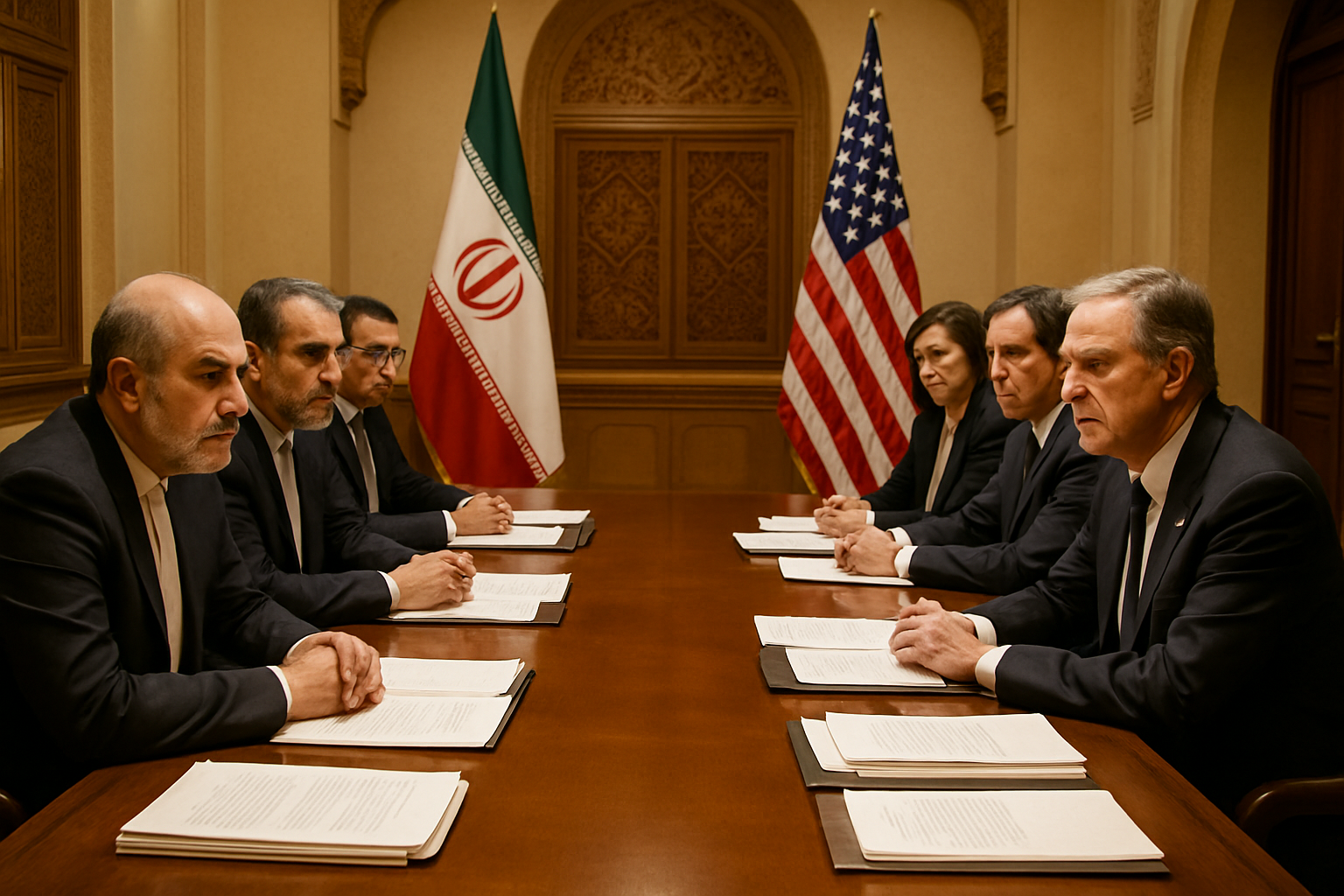
Iran has expressed openness to reaching a "reassuring deal" with the United States regarding its nuclear program, with Foreign Minister Abbas Araghchi confirming that a new round of negotiations has been agreed upon following Friday's talks in Muscat, Oman.
Speaking to Al Jazeera on Saturday, Araghchi described the negotiations as having achieved "a positive atmosphere" and confirmed that both sides had agreed to continue discussions "soon," marking the most significant diplomatic engagement between the two nations since the collapse of the Joint Comprehensive Plan of Action (JCPOA) in 2018.
Diplomatic Breakthrough in Oman
The February 7 talks in Muscat represented a historic moment in US-Iran relations, with President Donald Trump declaring the discussions "very good" while acknowledging that Iran appeared "very eager to make a deal." The six-hour negotiations, mediated by Omani officials, brought together Iranian Foreign Minister Abbas Araghchi and US Special Envoy Steve Witkoff in the most substantive diplomatic engagement between the two countries in nearly eight years.
The venue change from Istanbul to Muscat at Iran's specific request proved crucial for enabling productive dialogue. Sultan Haitham bin Tariq's neutral facilitation drew upon Oman's successful role in the 2015 JCPOA negotiations, providing a diplomatic precedent for complex multilateral discussions.
"We had very good discussions with Iran. Iran is very eager to make a deal."
— President Donald Trump
Iran's Nuclear Stance and Red Lines
Despite expressing willingness to engage, Iran has maintained firm positions on several key issues. Araghchi emphasized that uranium enrichment remains an "inalienable right" for Tehran and insisted that negotiations must focus exclusively on nuclear matters, excluding ballistic missiles and regional proxy activities.
Iran currently enriches uranium at 60% purity, significantly above the 3.67% limit established under the original JCPOA and approaching the 90% threshold required for weapons-grade material. Intelligence sources suggest Iran may consider a three-year enrichment halt and transferring existing stockpiles to a third country, likely Russia, as potential concessions.
However, Araghchi made clear that Iran's missile program was "never negotiable" and warned that Tehran would target US bases in the region if America launched military strikes against Iranian territory. This represents a continuation of Iran's longstanding position that its defensive capabilities remain non-negotiable in any nuclear framework.
US Position and Broader Demands
The United States, led by Secretary of State Marco Rubio, has insisted that any comprehensive agreement must address Iran's ballistic missile capabilities and support for regional proxy groups, creating a fundamental scope disagreement with Iranian negotiators. This broader approach reflects the Trump administration's view that nuclear issues cannot be divorced from Iran's wider regional activities.
Despite the diplomatic engagement, the Trump administration continued its "maximum pressure" approach by imposing new tariffs on countries trading with Iran immediately after the talks concluded. This dual-track strategy of engagement backed by economic coercion demonstrates the administration's attempt to maintain leverage while pursuing diplomatic solutions.
Regional Support and Military Tensions
The negotiations have received unprecedented backing from regional powers, with Saudi Arabia, the United Arab Emirates, Qatar, and Egypt all supporting the diplomatic process. This remarkable Middle Eastern consensus reflects widespread concern about the consequences of military confrontation in a region that handles 40% of global oil transit through the Strait of Hormuz.
Despite the diplomatic progress, military tensions persist. Recent incidents include a US F-35C fighter jet shooting down an Iranian Shahed-139 drone that approached the USS Abraham Lincoln in the Arabian Sea, and Iranian Revolutionary Guard vessels harassing a US-flagged tanker in the Strait of Hormuz. These confrontations highlight the delicate balance between maintaining military deterrence and enabling diplomatic progress.
International Context and Nuclear Framework
The Iran-US talks are occurring against a complex international backdrop. The New START nuclear treaty between the US and Russia expired on February 5, 2026, eliminating the last bilateral nuclear arms control agreement between the world's largest nuclear powers. This development has created additional urgency around nuclear governance and non-proliferation efforts globally.
The negotiations also coincide with ongoing Ukraine-Russia-US peace talks in Abu Dhabi, which have achieved concrete results including prisoner exchanges and the restoration of US-Russia military communications after a four-year suspension. These parallel diplomatic efforts reflect a broader moment of potential breakthrough in several frozen international conflicts.
Domestic Pressures and Implementation Challenges
Both governments face significant domestic pressures that complicate negotiations. Iran is dealing with over 42,000 protest arrests and severe economic sanctions that have created regime survival pressure for sanctions relief. The Islamic Republic's leadership must balance the need for economic relief with maintaining legitimacy among hardline constituencies who view negotiations with skepticism.
For the Trump administration, the challenge lies in balancing engagement with Iran against Republican hawks who view any dialogue as appeasement. The administration must also coordinate with Israeli concerns about incomplete agreements that fail to address what Israel sees as existential threats from Iran's missile program and regional proxy network.
Verification and Technical Complexities
Any future nuclear agreement would require unprecedented verification mechanisms to address Iran's advanced nuclear infrastructure developed since the JCPOA collapse. Iran now possesses sophisticated centrifuges, expanded regional presence, and enhanced technical capabilities that did not exist during the original 2015 agreement.
The technical and political obstacles are substantial even if fundamental scope disagreements can be resolved. Creating effective monitoring systems for Iran's current nuclear program would require innovative solutions that go far beyond the original JCPOA framework.
Economic Implications and Sanctions Relief
Central to any agreement will be the timeline and scope of sanctions relief. Iran faces severe economic pressure from comprehensive US sanctions targeting its oil exports, financial sector, and international trade relationships. The recent executive order threatening tariffs on countries trading with Iran demonstrates the administration's willingness to extend economic pressure beyond traditional sanctions.
Oil markets have already reacted to the diplomatic developments and ongoing tensions, with prices rising over $1 per barrel following recent military incidents. Energy analysts warn that potential supply chain disruptions and continued uncertainty could create broader market volatility.
Looking Ahead: Challenges and Opportunities
The agreement to continue talks represents the most significant diplomatic opening between the US and Iran since the JCPOA collapse, but fundamental challenges remain. The scope disagreement over whether to include missiles and regional activities could prove insurmountable, even with Iran's apparent flexibility on nuclear-specific issues.
Success would require innovative compromise solutions that bridge decade-old challenges while addressing the security concerns of all parties. The framework established in Oman provides a tested methodology for continued dialogue, but translating this into substantive agreements on nuclear limitations, sanctions relief, and regional security will require unprecedented diplomatic innovation.
The coming weeks will be critical in determining whether the Omani breakthrough represents a genuine path toward nuclear diplomacy or another false start in the long-running crisis. With both sides maintaining military readiness while exploring diplomatic solutions, the next round of talks will test whether sustained engagement can overcome the fundamental disagreements that have prevented progress for nearly eight years.
The stakes extend far beyond bilateral US-Iran relations, encompassing regional stability, global nuclear governance, and the broader question of whether diplomacy can prevent military confrontation in one of the world's most strategically important regions. As the international community watches closely, the success or failure of these negotiations may define Middle Eastern security architecture for years to come.