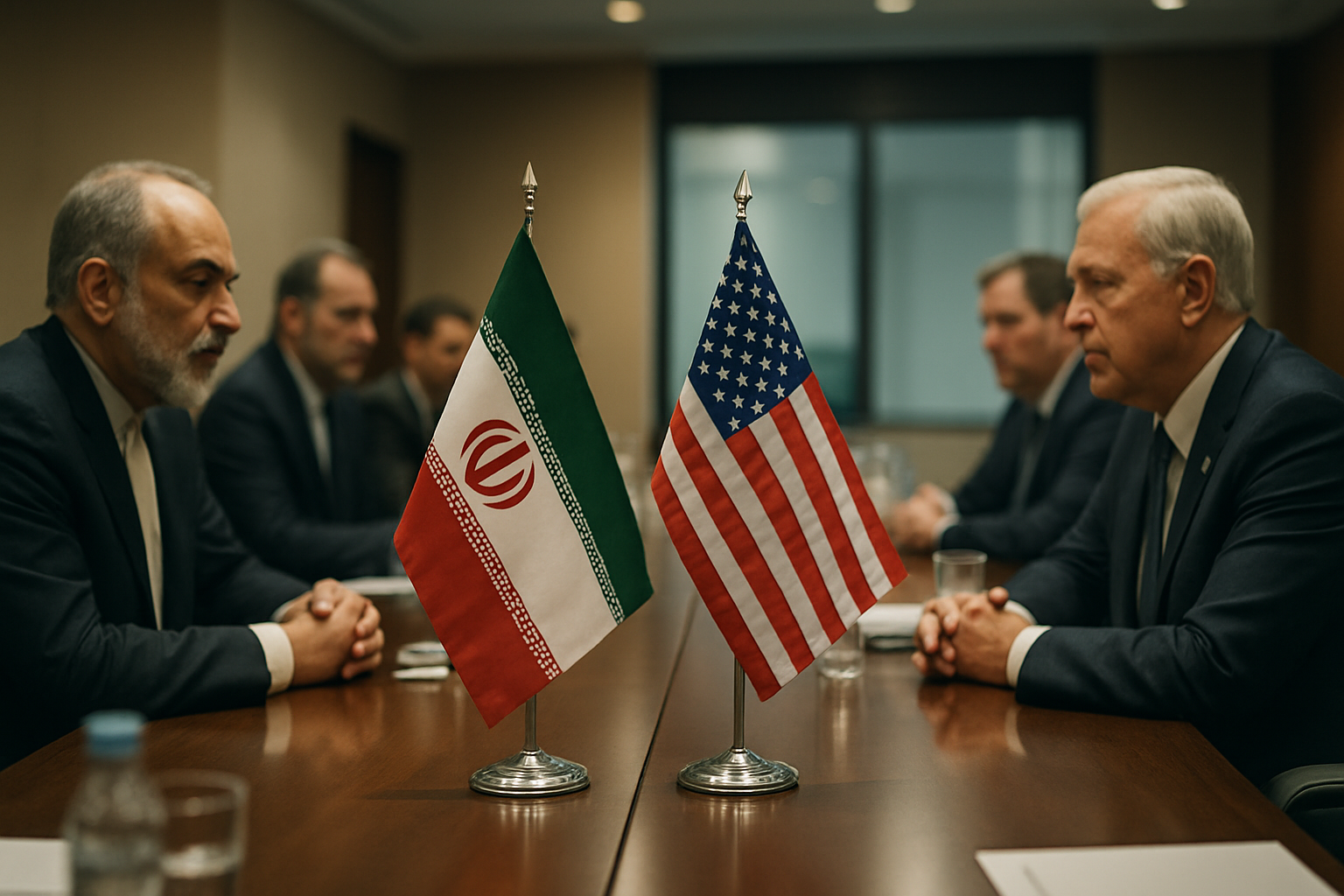
Nuclear negotiations between Iran and the United States will resume Friday morning in Muscat, Oman, marking a crucial diplomatic moment amid escalating regional tensions and recent military incidents between the two nations.
Iranian Foreign Minister Abbas Araghchi announced Wednesday evening that the nuclear talks with the United States are scheduled to begin around 10:00 AM Friday in the Omani capital. The confirmation came from the Iranian Foreign Ministry and was subsequently verified by US officials, representing the most significant diplomatic engagement between the historic rivals since the collapse of the Joint Comprehensive Plan of Action (JCPOA) in 2018.
Venue Change Reflects Iranian Priorities
The decision to hold talks in Oman represents a strategic shift from the originally proposed venue in Istanbul, Turkey. According to diplomatic sources, Iran specifically requested the change to ensure discussions remain focused exclusively on nuclear issues, excluding ballistic missile programs and regional proxy activities from the agenda.
Oman's selection as host nation carries significant diplomatic weight, given the sultanate's successful mediation role in the original 2015 nuclear agreement negotiations. The neutral Gulf state has maintained diplomatic relations with both Washington and Tehran throughout decades of US-Iran tensions, making it an ideal venue for sensitive negotiations.
Military Confrontations Shadow Diplomacy
The announced talks come against a backdrop of serious military incidents that have tested both sides' commitment to diplomatic engagement. Most significantly, a US F-35C fighter jet from the USS Abraham Lincoln aircraft carrier shot down an Iranian Shahed-139 drone that aggressively approached the vessel in the Arabian Sea on Tuesday.
"The drone continued its approach despite de-escalatory measures, prompting defensive action to protect our personnel and equipment,"
— Navy Captain Tim Hawkins, CENTCOM Spokesperson
The incident occurred approximately 800 kilometers from Iran's coast, with US officials confirming no American casualties or equipment damage. On the same day, Iranian Revolutionary Guard Corps (IRGC) vessels reportedly harassed the US-flagged tanker Stena Imperative in the Strait of Hormuz, according to maritime security firm Vanguard Tech.
These confrontations led to a $1+ per barrel increase in global oil prices and raised questions about whether diplomatic progress remained possible despite military tensions. However, both governments confirmed that Friday's talks would proceed as scheduled.
Trump Administration's Diplomatic Approach
President Donald Trump has maintained a dual approach of military pressure combined with diplomatic openness. Speaking to reporters, Trump confirmed "we are negotiating" while simultaneously warning Iran's Supreme Leader Ayatollah Ali Khamenei that he "should be very worried" about potential consequences if talks fail.
The US delegation will be led by Special Envoy Steve Witkoff, who has been conducting preliminary discussions with various regional stakeholders. Secretary of State Marco Rubio has emphasized that any comprehensive agreement must address Iran's ballistic missile program and support for regional proxies, though Iran has declared these topics "red lines" that cannot be part of nuclear-focused negotiations.
Iranian Position and Domestic Pressures
Iran's agreement to participate in talks comes amid significant domestic pressures. The Islamic Republic faces severe economic sanctions that have crippled its economy, with over 42,000 people arrested during recent protest movements according to human rights organizations. President Masoud Pezeshkian has set conditions that negotiations must be conducted in an atmosphere "free of threats and unreasonable expectations."
Iranian officials have indicated potential willingness to make significant concessions, including a possible three-year halt to uranium enrichment activities and transferring existing nuclear stockpiles to a third country, likely Russia. However, Iran maintains that its ballistic missile program and regional activities remain non-negotiable sovereign rights.
Regional Powers Support Diplomatic Process
Multiple Middle Eastern governments have expressed support for the diplomatic initiative. Saudi Arabia, the United Arab Emirates, Qatar, and Egypt have all indicated backing for negotiations aimed at preventing military escalation. This regional consensus represents a significant shift from previous decades when many Arab states viewed any US-Iran dialogue with suspicion.
The broader regional context includes ongoing conflicts in Gaza, Syria, and Iraq, where Iranian-backed forces and US interests frequently clash. A successful nuclear agreement could potentially create space for addressing these secondary conflicts through diplomatic rather than military means.
Technical Challenges and Verification Issues
Even if Friday's talks produce positive momentum, substantial technical challenges remain. Iran's nuclear program has advanced significantly since 2018, with uranium enrichment levels reaching 60% purity - well beyond the 3.67% limit established in the original JCPOA but still short of the 90% needed for weapons-grade material.
Any new agreement would require comprehensive verification mechanisms, potentially including expanded International Atomic Energy Agency (IAEA) inspections and real-time monitoring systems. Iran has previously objected to intrusive verification protocols as violations of national sovereignty, while the US insists on robust oversight to prevent clandestine weapons development.
Economic Stakes and Sanctions Relief
Iran's economy has contracted significantly under current sanctions, with oil exports falling from over 2 million barrels per day before 2018 to current levels of approximately 1.5 million barrels daily. The potential for sanctions relief represents a major incentive for Iranian negotiators, though the US is likely to maintain some restrictions regardless of nuclear compliance.
Energy markets are closely monitoring the talks, as Iran possesses the world's fourth-largest proven oil reserves and second-largest natural gas reserves. A comprehensive agreement could potentially add significant crude oil supply to global markets, affecting prices worldwide.
Historical Precedent and Current Obstacles
The 2015 JCPOA took nearly two years of intensive negotiations involving Iran, the United States, United Kingdom, France, Germany, Russia, and China. That agreement successfully limited Iran's nuclear program in exchange for sanctions relief before Trump's withdrawal in 2018 and subsequent "maximum pressure" campaign.
Current negotiations face additional complexities not present in 2015, including Iran's expanded regional influence, increased uranium enrichment capabilities, and different geopolitical dynamics following Russia's invasion of Ukraine and China's growing Middle Eastern presence.
International Implications
Success or failure in Oman could have far-reaching consequences beyond US-Iran relations. European allies, particularly France, Germany, and the UK, have repeatedly urged diplomatic solutions while maintaining sanctions pressure. Russia and China, both having expanded ties with Iran since 2018, could play crucial roles in any verification or implementation mechanisms.
Israel, which has conducted military strikes against Iranian nuclear facilities and consistently opposes any agreement that leaves Iran's nuclear infrastructure intact, will be closely monitoring developments. Israeli officials have indicated they reserve the right to act unilaterally if they believe diplomatic solutions are insufficient.
Path Forward
Friday's talks represent a critical juncture in decades of US-Iran tensions. While both sides have expressed cautious optimism, fundamental disagreements over the scope of negotiations, verification requirements, and sanctions relief timelines remain unresolved.
Success would require unprecedented compromise from both governments - Iran accepting intrusive verification in exchange for meaningful sanctions relief, and the United States providing economic benefits while maintaining regional security guarantees for allied nations.
The international community will be watching closely as negotiators attempt to balance nuclear non-proliferation objectives with regional security concerns and domestic political pressures in both Washington and Tehran. The outcome in Oman could determine whether diplomacy or military confrontation shapes the future of US-Iran relations and broader Middle Eastern stability.