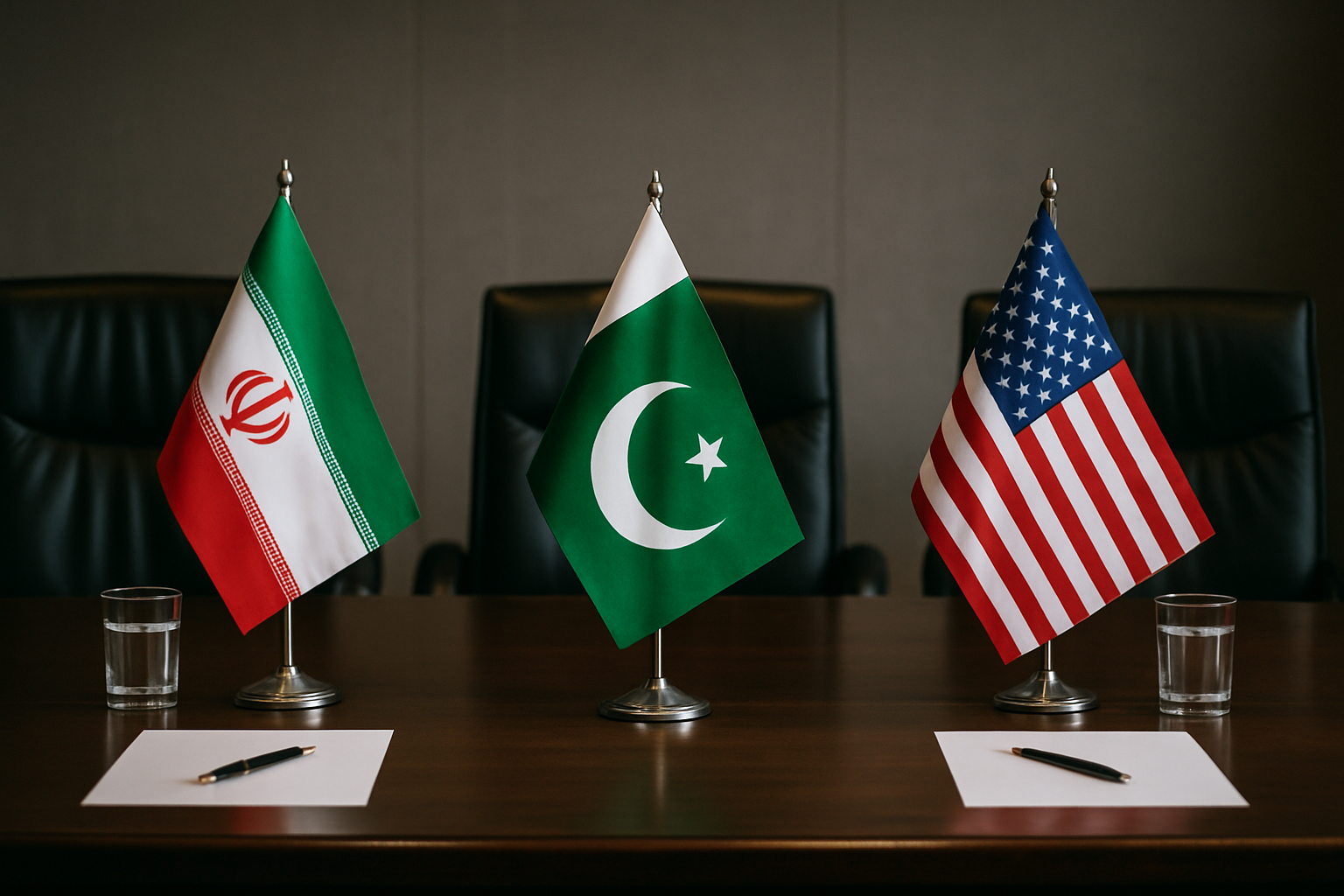
Iranian Foreign Minister Abbas Araghchi arrived in St. Petersburg Monday for high-stakes diplomatic meetings with Russian President Vladimir Putin, as efforts to revive US-Iran nuclear negotiations remain suspended following the dramatic collapse of Pakistan-mediated peace talks.
Araghchi's visit to Russia comes as part of a broader diplomatic offensive that has taken him from Oman to Pakistan in recent days, seeking international support while nuclear negotiations with the United States remain at an impasse. The Iranian foreign minister's tour reflects Tehran's strategy of leveraging regional partnerships as direct talks with Washington have stalled over fundamental disagreements on Iran's nuclear program and regional activities.
Pakistan's Failed Mediation Effort
The current diplomatic crisis stems from the collapse of historic talks in Islamabad, where Pakistan had achieved a remarkable breakthrough in April. Prime Minister Shehbaz Sharif and Field Marshal Asim Munir successfully mediated a ceasefire between the US and Iran just 88 minutes before President Trump's "whole civilization will die" deadline on April 8, causing oil prices to crash 20% from $119.50 to below $100 per barrel.
However, marathon negotiations led by Vice President JD Vance subsequently failed after 21 hours of intensive discussions when Iran refused to abandon its uranium enrichment program. The talks broke down over Iran's continued enrichment of uranium at 60% purity—approaching the 90% threshold needed for weapons-grade material—and the US demand for Tehran to suspend its nuclear activities.
"Iran will never abandon enrichment even if war is imposed on us,"
— Abbas Araghchi, Iranian Foreign Minister
Nuclear Program at Critical Juncture
Intelligence assessments indicate Iran now possesses over 400 kilograms of weapons-grade uranium material—sufficient for multiple nuclear weapons if weaponized. This represents a significant advancement since the collapse of the Joint Comprehensive Plan of Action (JCPOA) in 2018, when Iran's nuclear program was more limited in scope and capability.
The International Atomic Energy Agency suspended its monitoring activities in November 2025, leaving the international community with reduced oversight of Iran's nuclear activities. This monitoring gap has heightened concerns about Iran's nuclear trajectory and complicated verification challenges for any future agreement.
Regional Diplomatic Landscape
Araghchi's diplomatic tour has taken him through multiple regional capitals, including consultations with officials in Oman—a traditional mediator in US-Iran negotiations—before arriving in Russia. Turkey's Foreign Minister Hakan Fidan has also engaged in separate discussions with both Iranian and Pakistani counterparts regarding the stalled negotiation process.
Despite the setbacks, regional coalition support for diplomatic solutions remains intact. Saudi Arabia, the UAE, Qatar, and Egypt have maintained an unprecedented consensus supporting negotiated resolution to the nuclear crisis, recognizing the energy security implications of prolonged conflict in the Persian Gulf.
Scope of Disagreement
The fundamental obstacle preventing breakthrough remains unchanged from previous diplomatic efforts spanning over a decade. Iran insists on nuclear-only discussions while excluding its ballistic missile program and regional proxy activities as "red lines." The United States, by contrast, demands a comprehensive agreement addressing Iran's missile capabilities, support for regional armed groups, and human rights violations.
This scope disagreement proved decisive in the Lebanon crisis during the Islamabad talks. Israeli Prime Minister Netanyahu's explicit exclusion of Lebanon operations from the ceasefire framework created what Vice President Vance later acknowledged as a "legitimate misunderstanding" from Iran's perspective, leading to the talks' ultimate collapse.
Russian Factor in Nuclear Diplomacy
Araghchi's meetings in St. Petersburg occur against the backdrop of the New START treaty's expiration in February 2026—the first time in over 50 years that the US and Russia operate without nuclear arms control constraints. This broader nuclear governance crisis adds urgency to resolving the Iranian nuclear issue and provides context for Moscow's potential role in any future diplomatic framework.
Previous negotiations had explored potential Iranian concessions including a three-year uranium enrichment halt and transferring existing stockpiles to Russia for safekeeping. However, Iran's hardline positions expressed since the Islamabad talks' collapse suggest such compromises may no longer be viable without corresponding US concessions on sanctions and scope limitations.
Economic and Energy Implications
The failure to achieve a lasting diplomatic resolution continues to impact global energy markets. The Strait of Hormuz—through which 40% of global oil transit passes—remains subject to Iranian Revolutionary Guard control and periodic disruptions. Iran has implemented a cryptocurrency payment system requiring oil tankers to pay $1 per barrel for passage, complicating normal commercial operations.
Major shipping companies including Maersk and MSC have suspended Persian Gulf operations indefinitely, with over 150 tankers stranded carrying billions of dollars in cargo. The International Energy Agency maintains its largest strategic petroleum reserve release in 50-year history to stabilize global energy supplies.
Congressional and International Opposition
Domestic pressure in the United States has reached unprecedented levels, with only 25% of Americans supporting military operations against Iran—the lowest approval rating for any Middle East intervention in modern history. Congressional opposition has grown increasingly vocal, with Senator Richard Blumenthal expressing concern about potential ground troop deployments.
European allies have largely rejected military escalation, with UK Prime Minister Keir Starmer declaring Britain "will not be dragged into an Iran war" and France and Germany emphasizing diplomatic approaches. This alliance fracture represents the most significant rejection of American military leadership since the 2003 Iraq War.
Humanitarian Consequences
The Iran Red Crescent reports over 787 civilian casualties from recent hostilities, including a Pentagon-acknowledged elementary school strike that killed 165-185 students due to what officials termed "outdated targeting data." War crimes investigations have been initiated, adding legal complexity to the crisis.
International evacuations have reached Arab Spring-scale proportions, with Australia extracting 115,000 citizens and Germany evacuating 30,000. The European Union activated its ESTIA crisis mechanism for the first time in bloc history following Iranian drone attacks on RAF Akrotiri in Cyprus—marking the first attack on European territory since World War II.
Future Diplomatic Prospects
While back-channel communications continue through Pakistani, Qatari, and Gulf intermediaries, formal negotiations remain suspended. Iran has categorically rejected further direct talks under current conditions, citing ongoing US naval blockade of Iranian ports and excessive American demands.
UN Secretary-General António Guterres has characterized the situation as "the greatest test of multilateral cooperation in the modern era," emphasizing the template-setting significance for 21st-century conflict resolution. The crisis will determine whether diplomatic innovation can prevent military confrontation or if the international community defaults to military solutions for nuclear proliferation challenges.
Strategic Stakes
The stakes extend far beyond bilateral US-Iran relations, affecting global nuclear governance credibility, international law enforcement mechanisms, and the architecture of Middle Eastern stability. Success in achieving diplomatic resolution would strengthen non-proliferation norms globally and provide a framework for future nuclear crisis management.
Conversely, failure to bridge the fundamental disagreements through innovative diplomatic compromise could accelerate military solutions, reshape Middle Eastern geopolitics for decades, encourage nuclear proliferation elsewhere, and undermine diplomatic credibility for territorial and security disputes worldwide.
As Araghchi conducts his diplomatic offensive in Moscow, the international community watches closely to determine whether renewed engagement through alternative channels can revive the stalled peace process or if the world's most dangerous crisis since the Cold War's end will return to military escalation with global implications extending far beyond current events.