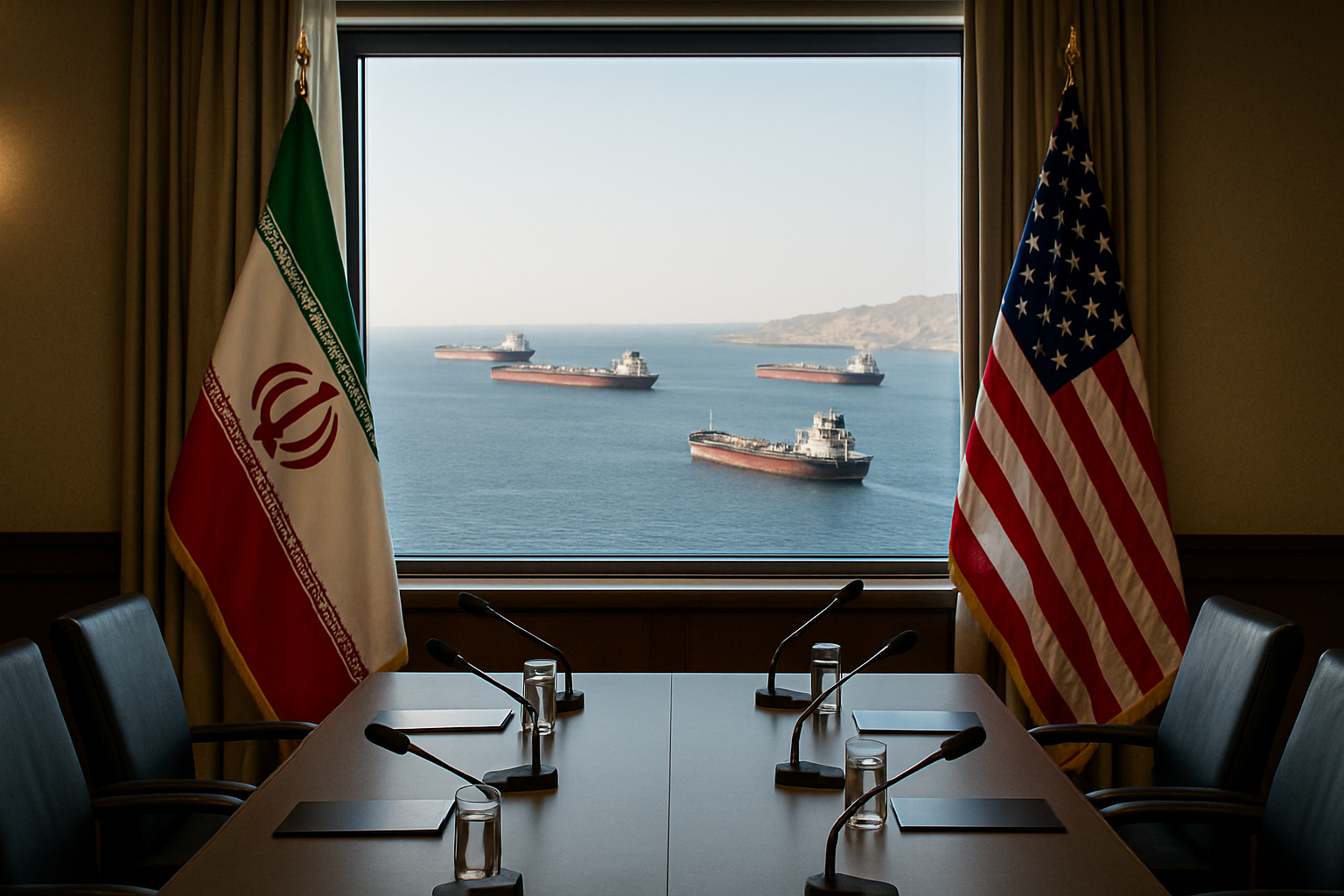
Iran has offered to reopen the strategically vital Strait of Hormuz without requiring progress on nuclear negotiations, according to multiple diplomatic sources, as tensions mount over stalled US-Iran talks that have failed to produce a breakthrough despite months of diplomatic efforts.
The proposal, transmitted through intermediaries including Pakistan and Oman, represents a significant shift in Iran's negotiating strategy as it seeks to decouple control of the world's most important oil chokepoint from broader nuclear discussions that have reached an impasse.
Trump Administration Expresses Frustration
President Donald Trump declared he is "not happy" with Iran's negotiating stance despite Omani mediators reporting "significant progress" in recent diplomatic exchanges. The president's dissatisfaction marks a dramatic shift from earlier optimism when he called the talks "very good" and described Iran as "very eager to make a deal."
Iranian Foreign Minister Abbas Araghchi, conducting a regional diplomatic tour that has taken him from Pakistan to Russia, maintains that a nuclear agreement remains "within reach" - a stark contrast to Washington's increasingly pessimistic assessment.
The diplomatic disconnect has emerged despite the unprecedented Pakistan-mediated "Islamabad Accord" that successfully prevented a major escalation in April, when a ceasefire was achieved just 88 minutes before Trump's stated deadline for military action.
The Strait of Hormuz Gambit
Iran's proposal to separate Strait of Hormuz operations from nuclear negotiations could provide immediate relief to global energy markets. The narrow 21-mile waterway handles approximately 40% of the world's oil transit, making its closure a weapon of enormous economic impact.
According to sources familiar with the Iranian position, Tehran is willing to guarantee commercial shipping passage through the strait in exchange for an end to the US naval blockade of Iranian ports - operations that Iran characterizes as acts of war under international law.
"The Iranian parliament will consider legislation establishing Tehran's control over the Strait of Hormuz," Iranian Legislature's national security commission head Ebrahim Azizi said Monday.
— Ebrahim Azizi, Iranian Parliament
However, the International Maritime Organization (IMO) rejected Iran's legal claims, with its chief stating there is "no legal basis" for imposing tolls on vessels transiting the international waterway.
Nuclear Talks Reach Critical Impasse
The current diplomatic crisis stems from fundamental disagreements that have persisted throughout multiple rounds of negotiations. Iran maintains its uranium enrichment at 60% purity - significantly above the 3.67% limit established in the 2015 Joint Comprehensive Plan of Action (JCPOA) and approaching the 90% threshold needed for weapons-grade material.
Intelligence assessments confirm Iran possesses over 400 kilograms of enriched uranium, sufficient for multiple nuclear weapons if weaponized. Former IAEA inspector Dr. Yusri Abu Shadi has stated that weapons development is now "easily achievable" given Iran's current stockpile.
The scope disagreement that has defined these negotiations remains unchanged: Iran demands nuclear-only talks while excluding ballistic missiles and regional proxy activities as "red lines," while the US insists on a comprehensive agreement addressing Iran's missile program, support for armed groups, and human rights violations.
European Criticism Mounts
The diplomatic stalemate has drawn sharp criticism from European allies. German Chancellor Friedrich Merz delivered an unusually direct rebuke, stating that Iran's leadership was "humiliating" the United States by getting US officials to "travel to Pakistan and then leave without results."
"The Iranians are obviously very skilled at negotiating, or rather, very skilful at not negotiating," Merz said during a public appearance, highlighting growing transatlantic frustration with the process.
Military Tensions Persist
Despite diplomatic efforts, military incidents continue to underscore the volatility of the situation. US forces maintain an unprecedented dual-carrier presence in the region with the USS Gerald R. Ford and USS Abraham Lincoln, representing the largest American naval deployment in the Middle East since the 2003 Iraq invasion.
Recent confrontations include F-35C fighter jets shooting down Iranian Shahed-139 drones that approached US vessels, and Iranian Revolutionary Guard Corps harassment of commercial tankers in the Strait of Hormuz. Oil prices have risen more than $1 per barrel on these incidents alone.
US Secretary of State Marco Rubio assessed that Iran appears "serious" about reaching an agreement but emphasized that any deal must include limits on Iran's ballistic missile program and support for regional proxies - positions that remain anathema to Iranian negotiators.
Regional Coalition Under Strain
An unprecedented coalition of Middle Eastern powers - including Saudi Arabia, the UAE, Qatar, and Egypt - continues to support diplomatic solutions despite the current impasse. This remarkable regional consensus reflects shared concerns about the economic and security implications of prolonged conflict.
However, the coalition faces increasing strain from Iran's recent military actions, including attacks that killed civilians in UAE territory and injured dozens at Kuwaiti airports during the April crisis.
Egypt's President Abdel Fattah el-Sisi has warned against "comprehensive chaos" affecting regional stability, while continuing to advocate for diplomatic solutions over military confrontation.
The Pakistani Mediation Model
Pakistan's role as mediator has emerged as a template for middle-power diplomacy in an era of great power competition. Prime Minister Shehbaz Sharif and Field Marshal Asim Munir developed an innovative "message relay system" that successfully facilitated communication when direct US-Iran contact proved impossible.
The Pakistani framework achievement in April - preventing what UN Secretary-General António Guterres called the "most dangerous crisis since the Cold War" - demonstrated that creative diplomatic solutions remain possible even in the most volatile circumstances.
"Trump has cancelled his envoys' trip to Islamabad. Iran's chief negotiator has walked out. Pakistan is still calling this 'fragile but alive,'" according to diplomatic sources.
— Regional diplomatic sources
Nuclear Governance Crisis Context
The Iran nuclear crisis unfolds against a broader breakdown in global nuclear governance. The New START treaty between the US and Russia expired in February 2026, marking the first time in over 50 years that the world's two largest nuclear powers operate without arms control constraints.
China's rapid nuclear expansion and Iran's advancing enrichment program represent multiple simultaneous challenges to the international non-proliferation regime. Success in resolving the Iranian crisis could provide a template for 21st-century nuclear diplomacy, while failure might accelerate military solutions and encourage proliferation elsewhere.
Economic Implications and Energy Security
The economic stakes extend far beyond the immediate region. Iran's control of the Strait of Hormuz represents a critical vulnerability in global supply chains, with major shipping companies like Maersk and MSC having suspended operations during previous escalations.
The International Energy Agency has maintained its largest strategic reserve release in 50-year history - 400 million barrels - to cushion markets against supply disruptions. Consumer impacts have been felt globally, from fuel rationing affecting 170 million people in Bangladesh to emergency heating subsidies across Europe.
Looking Ahead: Diplomatic Innovation or Military Confrontation
As diplomatic efforts face renewed challenges, the international community watches for signs of whether innovative solutions can bridge decades-old disagreements or whether the trajectory leads inevitably toward military confrontation.
Iran's offer to separate Hormuz operations from nuclear talks represents one potential pathway, though it requires Washington to accept a more compartmentalized approach than its comprehensive strategy demands.
The stakes remain maximum: success could prevent regional war and provide a diplomatic template for future crises, while failure might reshape Middle Eastern geopolitics for decades while undermining confidence in multilateral crisis management.
With congressional support for military action at historically low levels and European allies advocating diplomatic solutions, pressure mounts on both sides to find creative compromises that address core security concerns while avoiding the catastrophic consequences of military escalation.
The coming weeks will determine whether the innovative Pakistani mediation framework can convert temporary achievements into lasting stability, or whether the world returns to what experts describe as the most dangerous international crisis since the Cold War's end.