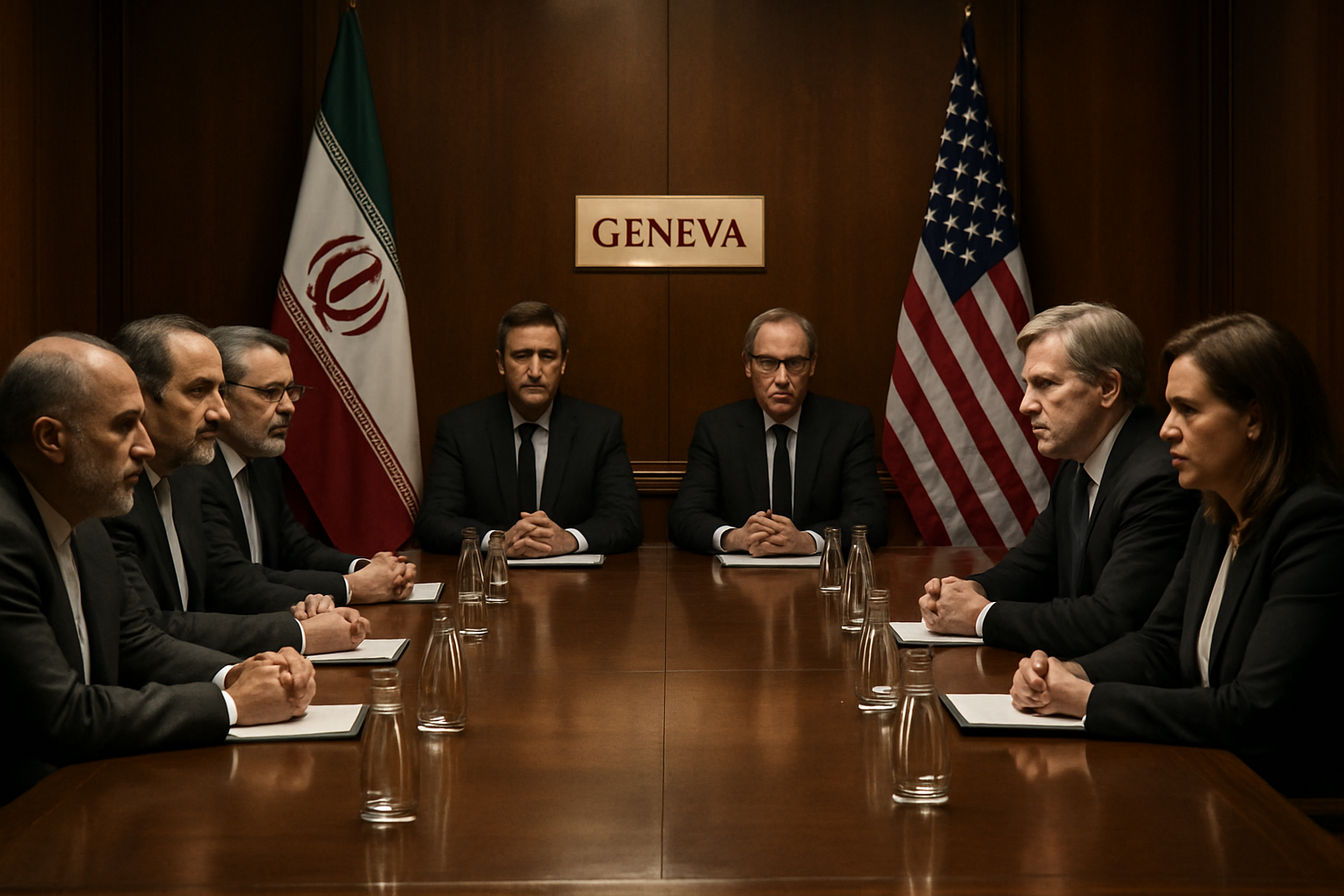
Iran has signaled a willingness to make nuclear concessions while simultaneously warning that any US attack, including limited strikes, would be considered an "act of aggression" as negotiations enter a critical phase in Geneva amid escalating military tensions in the Middle East.
The diplomatic developments come as Iranian Foreign Minister Abbas Araghchi announced Iran is prepared to dilute and partially deplete its highly enriched uranium stockpile in exchange for sanctions relief and US recognition of its right to "peaceful nuclear enrichment." The offer represents Tehran's most significant nuclear concession proposal in years as both sides work toward finalizing an agreement framework.
Iran's Nuclear Compromise Position
According to multiple diplomatic sources, Iran has indicated readiness to make substantial concessions on its nuclear program, including a potential three-year halt to uranium enrichment and transferring existing stockpiles to Russia for dilution. The Islamic Republic currently enriches uranium at 60% purity, significantly above the 3.67% limit specified in the 2015 Joint Comprehensive Plan of Action (JCPOA) and approaching the 90% weapons-grade threshold.
Iranian officials emphasized, however, that any agreement must recognize Tehran's "inalienable right" to nuclear technology. Foreign Ministry spokesman Esmaeil Baqaei declared that Iran would never accept "zero enrichment" and maintained that uranium enrichment remains a sovereign right regardless of international pressure.
"Iran is prepared to make new concessions regarding its nuclear program if the United States lifts sanctions and recognizes Tehran's right to enrich uranium."
— Senior Iranian Official, Reuters
Defiant Response to Military Threats
Despite expressing willingness for nuclear compromises, Iranian officials have adopted an increasingly defiant stance toward US military threats. Following President Trump's consideration of a limited strike on Iran, Iranian Foreign Ministry spokesman Esmaeil Baqaei delivered an uncompromising response during a Tehran briefing.
"With respect to your first question concerning the limited strike, I think there is no limited strike," Baqaei stated. "An act of aggression would be regarded as an act of aggression. Period. And any state would react to an act of aggression as part of its inherent right of self-defence ferociously so that's what we would do."
The warning comes after Trump acknowledged he was considering military action if nuclear negotiations fail to produce results. Iranian officials have made clear that any military strike would trigger retaliation, potentially escalating tensions across the region.
Geneva Talks Show Promise
The third round of nuclear negotiations between Iran and the United States is scheduled to continue Thursday in Geneva, with Oman serving as mediator and Switzerland providing official support. Previous rounds in February achieved what Araghchi described as "broad agreement on guiding principles" - the most significant diplomatic progress since the JCPOA collapse in 2018.
The venue evolution from Muscat to Geneva signals growing international investment in a diplomatic solution. Switzerland's neutral mediation traditions, combined with Oman's historical role in facilitating the original 2015 nuclear agreement, have created a framework for sustained dialogue despite fundamental disagreements.
Fundamental Scope Disagreements Persist
Despite progress on nuclear issues, Iran and the United States remain deadlocked over the scope of any comprehensive agreement. Iran has established "red lines" excluding its ballistic missile program and regional proxy activities from nuclear-only talks, insisting on compartmentalized negotiations focused solely on nuclear technology.
US Secretary of State Marco Rubio, however, demands a comprehensive agreement addressing Iran's missile capabilities, support for armed groups including Hezbollah and Hamas, and human rights violations. This structural disagreement has prevented breakthrough agreements for over a decade since the original JCPOA's collapse.
Unprecedented Military Buildup
Military tensions have reached critical levels as the United States deployed a dual-carrier strike force to the Middle East, with the USS Gerald R. Ford joining the USS Abraham Lincoln approximately 800 kilometers from Iran's coast. The deployment represents the largest US naval presence in the region in years and provides multiple strike capabilities should diplomatic efforts fail.
Recent military incidents have heightened concerns about potential escalation. An F-35C fighter jet from the USS Abraham Lincoln shot down an Iranian Shahed-139 drone that aggressively approached the carrier, while Iranian Revolutionary Guard Corps vessels have harassed US tankers in the Strait of Hormuz, through which 40% of global oil transit passes.
Oil prices have risen more than $1 per barrel on tensions, reflecting market concerns about potential supply disruptions should the crisis escalate to military confrontation.
Regional Coalition Backs Diplomacy
An unprecedented coalition of Middle Eastern powers - including Saudi Arabia, the UAE, Qatar, and Egypt - has thrown its support behind the diplomatic process, creating extraordinary regional consensus for preventing military confrontation. The backing reflects shared concerns about energy security and maritime stability in the Persian Gulf.
This regional unity represents a remarkable shift in Middle Eastern politics, with traditional rivals aligning to prevent a conflict that could destabilize global energy markets and trigger broader regional war.
Domestic Pressures Shape Negotiations
Both Iran and the United States face significant domestic pressures affecting their negotiating positions. Iran has conducted mass arrests of protesters since 2022, with over 42,000 people detained during civil unrest, while Nobel Peace Prize laureate Narges Mohammadi was sentenced to an additional 7.5 years in prison during the current talks.
Despite severe economic sanctions creating regime survival pressure, Iranian leadership appears to prioritize nuclear capabilities over sanctions relief, calculating that nuclear leverage provides greater long-term security than economic accommodation.
The Trump administration faces pressure from Republican hawks who view engagement as appeasement, while simultaneously seeking a foreign policy victory that could define the president's second-term legacy.
International Stakes at Historic High
The Iran nuclear crisis unfolds against a backdrop of broader nuclear governance challenges. The New START treaty between the United States and Russia expired February 5, 2026, marking the first time in over 50 years without US-Russia nuclear constraints. China's nuclear expansion and UN Secretary-General António Guterres' warning that nuclear risks are "higher than in decades" underscore global implications.
Success in the Iran negotiations could provide a template for 21st-century nuclear crisis resolution, while failure may accelerate military solutions that could reshape Middle Eastern geopolitics for decades and encourage nuclear proliferation elsewhere.
Technical and Political Challenges
Even if political breakthrough occurs, unprecedented verification challenges await. Iran's advanced centrifuge technology, sophisticated infrastructure, and current 60% enrichment capability require monitoring mechanisms exceeding the original JCPOA's complexity. Intelligence assessments confirm Iran possesses sufficient enriched uranium for multiple weapons if weaponized, creating urgency for diplomatic resolution.
Any agreement would need years of implementation to rebuild trust between historically antagonistic parties while addressing technical obstacles that have grown substantially since the original nuclear deal's collapse.
Critical Decision Point Approaching
The coming days represent a decisive moment for diplomacy versus military confrontation in one of the world's most volatile regions. With framework progress achieved but fundamental positions unchanged on decades-old challenges, the window for diplomatic resolution may be narrowing as explicit warnings intensify and Iran's nuclear capabilities advance toward weapons-grade levels.
The outcome will influence not only regional stability and global energy security but also establish precedents for international law enforcement, territorial sovereignty, and nuclear governance in an increasingly multipolar world order. Success could prevent regional war while strengthening non-proliferation norms globally; failure may accelerate military solutions with consequences extending far beyond the immediate region.