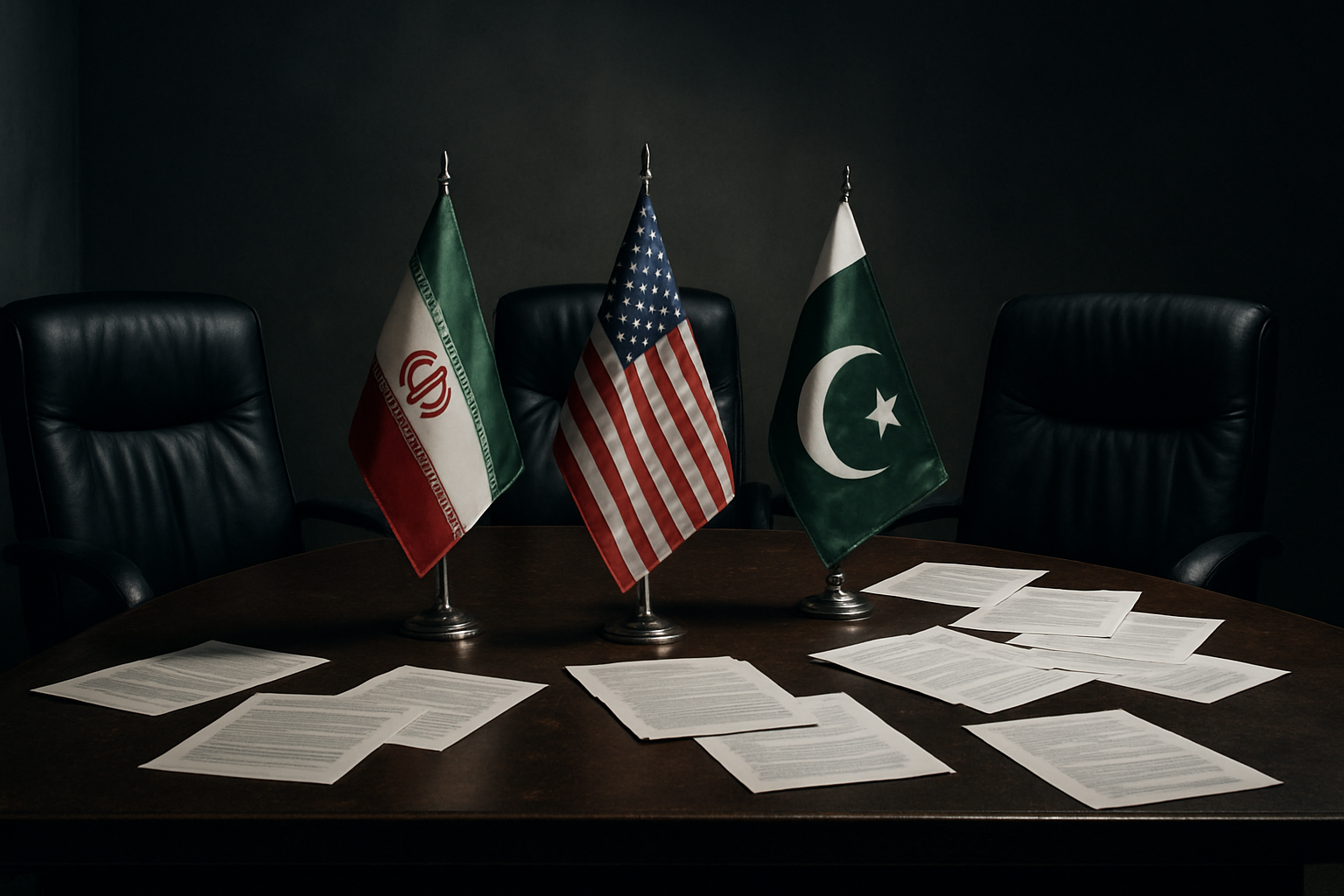
Diplomatic talks between Iran and the United States have reached a critical impasse, with President Donald Trump canceling planned negotiations in Pakistan after dismissing Iran's proposals as insufficient, marking the latest setback in efforts to end one of the most dangerous international crises since the Cold War.
The breakdown comes just two weeks after Pakistan's historic mediation success brought the world back from the brink of catastrophe, when Prime Minister Shehbaz Sharif and Field Marshal Asim Munir achieved a breakthrough ceasefire just 88 minutes before Trump's apocalyptic deadline on April 8, 2026.
Trump's Diplomatic Reversal
According to multiple international sources, Trump made the decision to cancel the planned diplomatic mission to Pakistan after Iranian Foreign Minister Abbas Araghchi departed Islamabad without agreeing to direct negotiations with US envoys. White House officials confirmed that Steve Witkoff and Jared Kushner, who were expected to lead the American delegation, will not travel to Pakistan as previously scheduled.
The cancellation represents a dramatic shift from the optimism that followed Pakistan's unprecedented mediation success, which had crashed oil prices by 20% from $119.50 to below $100 per barrel and ended a global aviation crisis affecting over 18,000 flights.
"This is more than a momentary setback. It reveals a deeper truth about US-Iran diplomacy: pressure can create openings, but it rarely creates trust."
— Analysis from Azerbaijan diplomatic sources
The Nuclear Stalemate
At the heart of the diplomatic breakdown lies Iran's nuclear program, which continues to pose the greatest obstacle to any sustainable agreement. Iran maintains uranium enrichment at 60% purity—approaching the 90% weapons-grade threshold—with over 400 kilograms of enriched material sufficient for multiple nuclear weapons if weaponized.
Iranian officials have consistently maintained that ballistic missiles and regional proxy activities remain "red lines" excluded from nuclear-only discussions, while the United States demands a comprehensive agreement addressing missiles, armed groups, and human rights concerns. This fundamental scope disagreement has prevented breakthrough attempts for over a decade, dating back to the collapse of the JCPOA in 2018.
Pakistan's Mediation Under Strain
The current crisis threatens to undermine Pakistan's remarkable emergence as a crucial mediator in the conflict. The "Islamabad Accord" framework, achieved through an innovative "message relay system" when direct US-Iran communication was impossible, had been hailed as template-setting middle power diplomacy.
Pakistani officials, including Interior Minister Mohsin Naqvi, met with US Ambassador Natalie Baker to discuss security arrangements despite the Iranian withdrawal, demonstrating Islamabad's continued commitment to facilitating dialogue between the adversaries.
The breakdown is particularly significant given the extraordinary regional coalition that had backed the diplomatic process—Saudi Arabia, UAE, Qatar, and Egypt maintained unprecedented consensus supporting peaceful resolution despite Iranian attacks on their territories during the crisis.
Economic and Energy Implications
The collapse of talks has immediately impacted global energy markets, with oil prices surging above $106 for Brent crude and $104.29 for WTI—the second time in 2026 that prices have breached the $100 threshold. Iran's Revolutionary Guard maintains "complete control" over the Strait of Hormuz, affecting 40% of global oil transit through the strategic waterway.
Major shipping companies including Maersk and MSC have suspended operations indefinitely, leaving over 150 tankers stranded with billions of dollars in cargo. The situation threatens to reverse the economic relief that had begun following the April ceasefire, including potential fuel rationing in Bangladesh affecting 170 million people and the reversal of wartime austerity measures in Pakistan.
Naval Confrontation Escalates
Adding to diplomatic tensions, US forces seized the Iranian cargo vessel M/V Touska in the Gulf of Oman after a six-hour standoff, with the USS Spruance firing on the engine room before Marines conducted a helicopter assault to board the ship. Iran has condemned the action as "armed piracy" and threatened swift retaliation.
The naval incident has further complicated efforts to resume negotiations, with Iranian officials citing the ongoing US naval blockade of Iranian ports as a major obstacle to renewed talks.
International Isolation of US Position
The diplomatic crisis has highlighted growing international reluctance to support US military action against Iran. NATO allies have largely rejected escalation, with UK Prime Minister Starmer declaring Britain "will not be dragged into Iran war," while France and Germany continue to emphasize diplomatic approaches.
The rejection represents the most significant rebuke of American military leadership since the 2003 Iraq War, with only Israel's Netanyahu offering full support for US actions. Congressional opposition at home has reached unprecedented levels, with only 25% of Americans supporting Operation Epic Fury according to recent polling.
The Lebanon Loophole
A critical factor in the diplomatic breakdown remains Israeli Prime Minister Netanyahu's explicit exclusion of Lebanon from the Pakistan-mediated ceasefire. Israeli strikes have killed over 254 people in a single day—the deadliest bombardment since March—while 1.2 million Lebanese have been displaced, representing 25% of the population.
Iran has consistently threatened withdrawal from negotiations unless there is comprehensive enforcement across all fronts, viewing the Lebanon exclusion as evidence of US unwillingness to constrain Israeli actions.
Nuclear Governance Crisis
The current impasse occurs within a broader nuclear governance crisis, as the New START treaty between the US and Russia expired in February 2026—the first time in over 50 years that the world's two largest nuclear powers operate without arms control constraints. UN Secretary-General António Guterres has warned that nuclear risks are at their "highest in decades."
Iran's continued uranium enrichment, combined with China's nuclear expansion and the breakdown of multilateral arms control mechanisms, creates an urgent need for diplomatic innovation in nuclear crisis resolution.
A Dangerous Precedent
The failure of the Pakistan-mediated talks represents more than a bilateral setback—it threatens to establish a precedent that diplomatic innovation cannot bridge fundamental disagreements between major powers. The success of Pakistan's mediation had been viewed as a template for 21st-century crisis resolution, demonstrating that middle powers could bridge adversaries when traditional mechanisms fail.
As diplomatic sources noted, the current crisis represents "the greatest test of multilateral cooperation in the modern era," with implications extending far beyond the immediate US-Iran conflict to affect global approaches to territorial sovereignty, energy security, and international law enforcement.
Looking Ahead
Despite the current impasse, back-channel communications continue through Pakistani, Qatari, and Gulf intermediaries. Iran's comprehensive 10-point proposal, addressing Strait of Hormuz protocols, sanctions relief, regional conflicts, and security guarantees, remains the most detailed US-Iran framework since the 2015 nuclear deal.
The coming days will determine whether Pakistan's innovative mediation framework can restore negotiations or whether the world faces a return to the most dangerous international crisis since the end of the Cold War. The stakes extend far beyond bilateral relations, affecting global energy architecture, nuclear proliferation mechanisms, and international stability for decades to come.
As the world watches this critical juncture unfold, the success or failure of diplomatic innovation versus military confrontation will establish precedents for international relations in the 21st century, testing whether multilateral cooperation can prevail in an increasingly volatile and interconnected world.