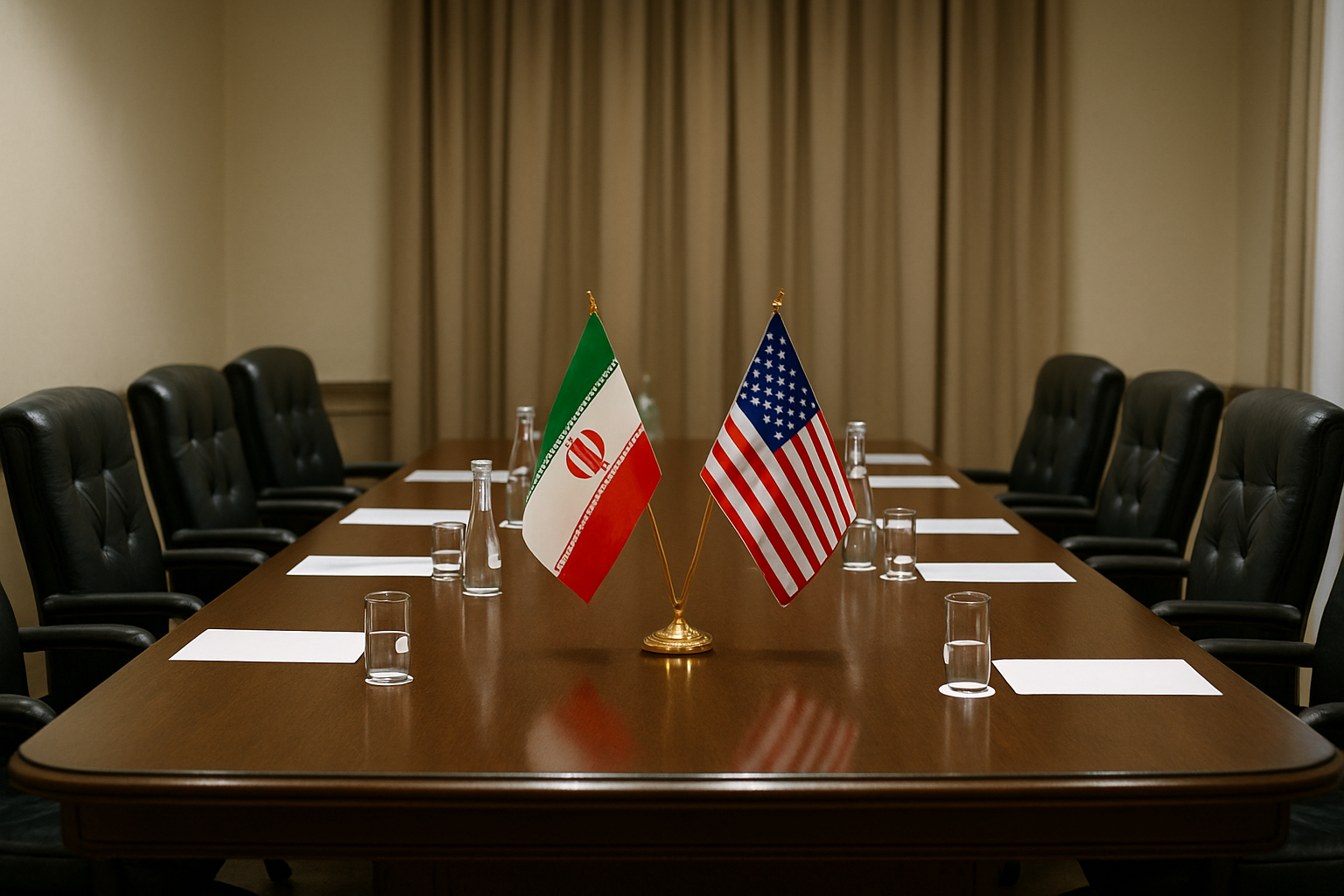
Pakistan has positioned itself as a potential mediator in escalating Iran-US tensions, with Prime Minister Shehbaz Sharif offering to host peace talks between the two adversaries amid conflicting accounts about ongoing diplomatic contacts and a complex regional crisis that has brought the world closer to a major Middle East conflict.
The mediation offer comes as President Donald Trump announced a five-day postponement of threatened strikes against Iranian power plants, citing "very good and productive conversations" with Iran regarding a "complete and total resolution of hostilities in the Middle East." However, Iranian officials have categorically denied that any direct negotiations have taken place, calling Trump's claims "fake news" and psychological warfare.
Pakistan's Diplomatic Initiative
Prime Minister Shehbaz Sharif made the mediation offer through a post on social media platform X, stating that Pakistan "stands ready and honoured to be the host to facilitate meaningful and conclusive talks for a comprehensive settlement of the ongoing conflict," subject to concurrence by both the United States and Iran.
The Pakistani initiative represents part of a broader regional effort to prevent military escalation, with Pakistan joining Turkey and Egypt as countries actively relaying messages between the adversaries. According to European diplomatic sources, while no direct talks are occurring, these regional powers are serving as crucial communication channels during the crisis.
"Pakistan welcomes and fully supports ongoing efforts to pursue dialogue to end the war in the Middle East, in the interest of peace and stability in the region and beyond."
— Shehbaz Sharif, Prime Minister of Pakistan
Pakistan's Foreign Ministry has reiterated the country's commitment to resolving the conflict through diplomacy, emphasizing the need for caution against speculation and highlighting Pakistan's historical role in regional mediation efforts.
Contradictory Claims About Negotiations
The most striking aspect of current diplomatic developments is the fundamental disagreement between American and Iranian accounts of what, if any, conversations are taking place. Trump's announcement of "productive conversations" stands in stark contrast to Iranian denials, creating uncertainty about the actual state of diplomatic engagement.
Iranian Fars news agency swiftly contradicted Trump's claims, stating there have been "no direct or indirect communications with the US." Iranian sources suggested that Trump may have backed down from his threats after receiving Iran's warnings about potential regional retaliation targeting energy facilities across the Middle East.
Chinese analysts have expressed skepticism about the likelihood of any breakthrough, noting that core conditions for a ceasefire remain unmet. According to South China Morning Post analysis, the fundamental disagreements between the parties make substantive progress unlikely despite the apparent diplomatic activity.
Historical Context of Diplomatic Failures
Current mediation efforts occur against the backdrop of repeated diplomatic failures spanning several years. Most recently, intensive Geneva talks achieved what Iranian Foreign Minister Abbas Araghchi called "broad agreement on guiding principles" – the most significant progress since the 2018 collapse of the Joint Comprehensive Plan of Action (JCPOA).
However, these breakthrough negotiations ultimately collapsed over fundamental scope disagreements. Iran maintained that ballistic missiles and regional proxy activities were "red lines" excluded from nuclear-only discussions, while the US insisted on comprehensive agreements addressing missiles, armed groups, and human rights.
The failure of these talks, despite unprecedented regional support from Saudi Arabia, UAE, Qatar, and Egypt, led to the current military crisis that has seen major escalation including the death of Iran's Supreme Leader Ali Khamenei and ongoing military operations.
Regional Stakes and Energy Security
The conflict has already demonstrated its global implications through significant disruption to energy markets and international trade. Iran's threats to close the Strait of Hormuz – through which 40% of global seaborne oil transits – have contributed to oil price volatility and concerns about worldwide supply chain disruptions.
The crisis has triggered the largest coordinated evacuation efforts since the Arab Spring, with over 18,000 flights cancelled worldwide due to airspace closures across multiple Middle Eastern countries. Dubai International Airport, the world's busiest, remains shut down due to missile damage, while major airlines have suspended operations affecting hundreds of thousands of passengers globally.
Energy security concerns extend beyond oil to natural gas supplies, with Qatar's LNG production affected by the conflict. This has particular implications for European energy security, with natural gas prices showing significant increases as the crisis has unfolded.
Nuclear Dimensions and Weapons Concerns
Central to the crisis is Iran's nuclear program, which has advanced significantly since the collapse of previous diplomatic frameworks. Iran currently enriches uranium at 60% purity, approaching the 90% threshold required for weapons-grade material, and intelligence estimates suggest sufficient stockpiles for multiple weapons if weaponized.
The nuclear aspects of the crisis occur within a broader context of global nuclear governance breakdown. The New START treaty between the US and Russia expired in February 2026 – marking the first time in over 50 years without nuclear constraints between the two powers – while China continues its nuclear expansion program.
Former IAEA inspector Dr. Yusri Abu Shadi has confirmed that Iran's current uranium stockpiles make weapons development "easily achievable," adding urgency to diplomatic efforts while creating pressure for military solutions if negotiations fail.
Military Escalation and Regional Impact
The current crisis represents the most dangerous international situation since the Cold War's end, with unprecedented military buildups and regional consequences. The US has deployed dual aircraft carriers representing approximately one-third of its active Navy fleet, while regional allies have faced direct attacks from Iranian forces.
Recent military operations have resulted in civilian casualties across multiple countries, including the UAE, Kuwait, Qatar, and Cyprus – the latter marking the first attack on European territory since World War II. These escalations have strained the unprecedented regional coalition that had supported diplomatic solutions.
Revolutionary Guard forces have declared a policy of "no red lines remain," systematically targeting US and Israeli assets across the region, while continuing to threaten critical energy infrastructure that could affect global markets.
International Responses and Mediation Efforts
Beyond Pakistan's mediation offer, several international actors are attempting to prevent further escalation. The White House has described the situation as "fluid," with spokeswoman Karoline Leavitt noting the evolving nature of potential negotiations.
European allies have maintained calls for de-escalation while issuing travel warnings and evacuation orders for their citizens in the region. Multiple countries have ordered immediate evacuations from Iran, citing "extremely uncertain" security conditions.
The United Nations Security Council has convened emergency sessions, with Secretary-General António Guterres describing the situation as presenting "serious threats to international peace and security." However, permanent member divisions have limited the UN's ability to provide unified responses to the crisis.
Economic and Humanitarian Consequences
The conflict's economic impact extends far beyond energy markets, affecting global financial systems and supply chains. Stock markets have experienced significant volatility, with some regional exchanges recording their largest single-day declines in history.
Humanitarian organizations have documented hundreds of civilian casualties, including controversial strikes on educational facilities that have drawn international condemnation for potential violations of the Geneva Conventions. The targeting of schools and civilian infrastructure has become a particular point of international concern.
Supply chain vulnerabilities have been exposed, particularly affecting manufacturing sectors dependent on Middle Eastern trade routes and logistics networks. The disruption demonstrates the global economy's sensitivity to geopolitical shocks in strategic regions.
Prospects for Resolution
Despite the complexity of current circumstances, diplomatic observers note several factors that could support peaceful resolution. Regional powers' continued investment in mediation efforts, despite military escalation, suggests sustained commitment to diplomatic solutions among key stakeholders.
Pakistan's historical ties to both sides, combined with its nuclear program experience, potentially positions it as an effective mediator. The country has maintained relationships with both Iranian and American officials while avoiding taking sides in regional conflicts.
However, fundamental disagreements remain unchanged from previous diplomatic efforts. The scope of any potential agreement – whether focused solely on nuclear issues or expanded to include missiles and regional proxy activities – continues to present the primary obstacle to breakthrough negotiations.
Strategic Implications for Global Order
The Iran-US crisis represents a template-setting moment for 21st-century international relations, testing whether diplomatic solutions can address complex nuclear and regional security challenges in an increasingly multipolar world.
Success in achieving negotiated resolution could provide frameworks for addressing similar crises globally, while failure might encourage military approaches to international disputes, potentially undermining diplomatic credibility for decades.
The crisis occurs amid broader questions about international law enforcement, territorial sovereignty principles, and nuclear governance mechanisms, with outcomes likely to influence approaches to conflict resolution extending far beyond the current Middle Eastern context.
As Pakistan and other regional mediators continue their diplomatic efforts, the international community faces critical decisions about supporting negotiated solutions versus accepting military confrontation as the primary means of resolving complex international disputes in the modern era.