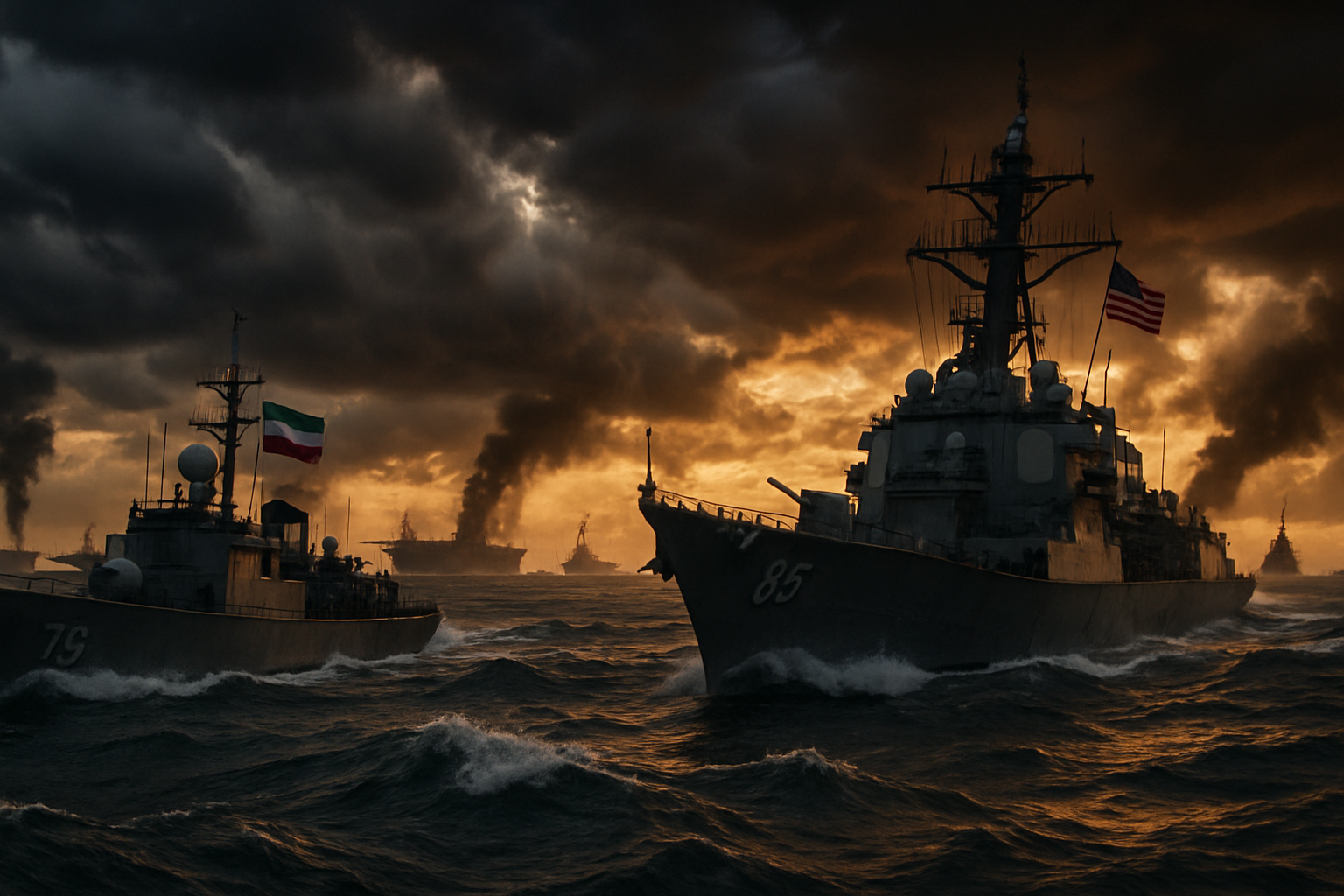
The escalating conflict between Iran and the United States has reached a critical juncture as Iran claims to have downed a US fighter jet while simultaneously rejecting a 48-hour ceasefire proposal, marking the most dangerous phase of tensions since the crisis began in February 2026.
According to multiple international sources, Iran reported successfully shooting down an American F-15 fighter aircraft over Iranian territory on Friday, with Iranian officials conducting search operations for the pilot. The incident represents a significant escalation in the ongoing military confrontation that has disrupted global energy markets and shipping routes.
Concurrent reporting from Greece indicates that Iranian forces also downed an A-10 Warthog aircraft in the Persian Gulf, further complicating the narrative of American military dominance that President Trump has sought to maintain throughout the conflict.
Ceasefire Efforts Collapse Amid Diplomatic Deadlock
The downing of the US aircraft comes as diplomatic efforts to resolve the crisis have reached an impasse. According to Iranian semi-official Fars news agency, Tehran has rejected a US proposal for a 48-hour ceasefire that was reportedly transmitted through an unnamed third country on Wednesday.
Pakistani officials have confirmed their role in facilitating indirect negotiations between the US and Iran, with Pakistan announcing that talks aimed at securing an armistice have reached "a complete deadlock." Qatar has refused to take over the mediation role, further limiting diplomatic options for resolution.
The White House has confirmed that President Trump has been briefed on the downing of the US fighter jet, though there has been no immediate official response from Washington regarding either the aircraft incident or the ceasefire rejection.
Strait of Hormuz Crisis Continues
Despite the military escalation, some maritime activity has resumed in the critical Strait of Hormuz, which handles approximately 40% of global oil and LNG flows. Shipping data shows that vessels from countries Iran considers "friendly" have been permitted passage, including three Omani-operated tankers, a French-owned container ship, and a Japanese-owned gas carrier that successfully transited the waterway since Thursday.
The selective reopening reflects Iran's strategic policy of allowing passage for ships with no US or Israeli connections, while maintaining pressure on American and allied interests. This approach has created uncertainty in global energy markets, with oil and commodity traders closely monitoring each transit for signs of broader reopening or further restrictions.
A French-owned CMA CGM container ship became the first French-flagged vessel to successfully navigate the strait since the conflict began, suggesting that Iran may not consider France a hostile nation despite its NATO membership.
Regional Coalition Under Strain
The escalating conflict has severely tested the unprecedented regional coalition that emerged earlier this year. Saudi Arabia, the UAE, Qatar, and Egypt had formed an extraordinary Middle Eastern consensus supporting diplomatic resolution, but this unity faces increasing strain as the conflict intensifies.
Iran's systematic targeting of Gulf state infrastructure through "Operation True Promise 4" has created direct threats to coalition members. The Revolutionary Guards have declared that "no red lines remain," abandoning previous restraints on civilian infrastructure attacks.
Qatar's Ras Laffan Industrial City, which handles approximately 20% of global LNG exports, has suffered "extensive damage" from Iranian missile strikes. This attack prompted Qatar to expel Iran's military and security attachés, marking a significant diplomatic rupture between the two nations that share the world's largest natural gas field.
Global Economic Impact Intensifies
The conflict has triggered the most severe global energy crisis since the 1970s oil shocks. Oil prices have surged past $100 per barrel for the first time since 2014, with Brent crude reaching $119.50 and WTI hitting record increases of 18.98% in single-day trading.
The International Energy Agency has authorized the largest strategic petroleum reserve release in its 50-year history, with 32 countries contributing 400 million barrels to global markets. Japan is releasing 80 million barrels in its first such action since the 2011 Fukushima disaster, reflecting the severity of the supply disruption.
Aviation has been particularly affected, with over 18,000 flights cancelled worldwide—the most extensive disruption since COVID-19. Eight Middle Eastern countries have simultaneously closed their airspace, severing crucial Asia-Europe flight corridors and leaving Dubai International Airport, the world's busiest, completely shuttered due to missile damage.
Nuclear Diplomacy Breakdown
The current military escalation represents the complete collapse of nuclear negotiations that had shown unprecedented promise. Geneva talks in February achieved a "broad agreement on guiding principles"—the most significant diplomatic progress since the 2018 JCPOA collapse.
However, fundamental disagreements over scope proved insurmountable. Iran maintained that ballistic missiles and regional proxy activities were "red lines" that should be excluded from nuclear-only talks, while the US insisted on comprehensive agreements addressing missiles, armed groups, and human rights issues.
Iran continues uranium enrichment at 60% purity, approaching the 90% threshold needed for weapons-grade material. Intelligence assessments suggest Iran now possesses sufficient enriched uranium for multiple weapons if weaponized, creating urgent proliferation concerns amid the military confrontation.
Congressional and International Response
The downing of American aircraft and collapse of ceasefire talks has intensified Congressional scrutiny of the Trump administration's Iran strategy. Bipartisan lawmakers are demanding comprehensive briefings on long-term strategy, cost projections, and the risk of expanded military commitment.
Senator Richard Blumenthal expressed being "more concerned than ever" about the potential for ground troop deployment, noting the conflict's "almost unprecedented" unpopularity among the American public, with support levels at just 25%.
Internationally, the crisis has prompted emergency UN Security Council sessions, with Secretary-General António Guterres describing it as the "greatest test of multilateral cooperation in the modern era." The situation has exposed the fragility of crisis management mechanisms in the multipolar world order.
Historical Context and Strategic Implications
The current escalation builds on months of deteriorating relations that began with intensive nuclear negotiations in February 2026. The deployment of dual-carrier strike forces and the largest US military buildup in the region since 2003 created a backdrop of unprecedented military pressure that ultimately contributed to diplomatic failure.
The conflict has now expanded beyond bilateral US-Iran tensions to affect global energy security, nuclear governance credibility, and international law enforcement. The targeting of nuclear infrastructure, attacks on European territory (Cyprus), and the involvement of proxy groups have created template-setting precedents for 21st-century conflict resolution.
Iran's installation of Mojtaba Khamenei as the first hereditary Supreme Leader in the Islamic Republic's 47-year history, following his father's death in March, has consolidated Revolutionary Guard control over Iranian governance during active warfare.
Looking Forward
As the conflict enters what appears to be its most dangerous phase, the downing of US aircraft and rejection of ceasefire proposals signal a potential shift toward prolonged military confrontation. The Pentagon has prepared operations extending through September, far beyond initial 4-6 week timelines, while Iran shows no signs of backing down from its systematic campaign against US and allied interests.
The failure of diplomatic initiatives and the escalating military action create risks that extend far beyond the Middle East. Success in containing the crisis could provide frameworks for future nuclear crisis resolution, while failure may encourage military solutions over diplomatic approaches for decades to come, fundamentally reshaping international conflict resolution mechanisms.
With global energy markets in turmoil, shipping routes disrupted, and nuclear governance credibility at stake, the April 2026 developments mark a potential watershed moment in post-Cold War international relations, with implications that will resonate for decades regardless of how the immediate crisis resolves.