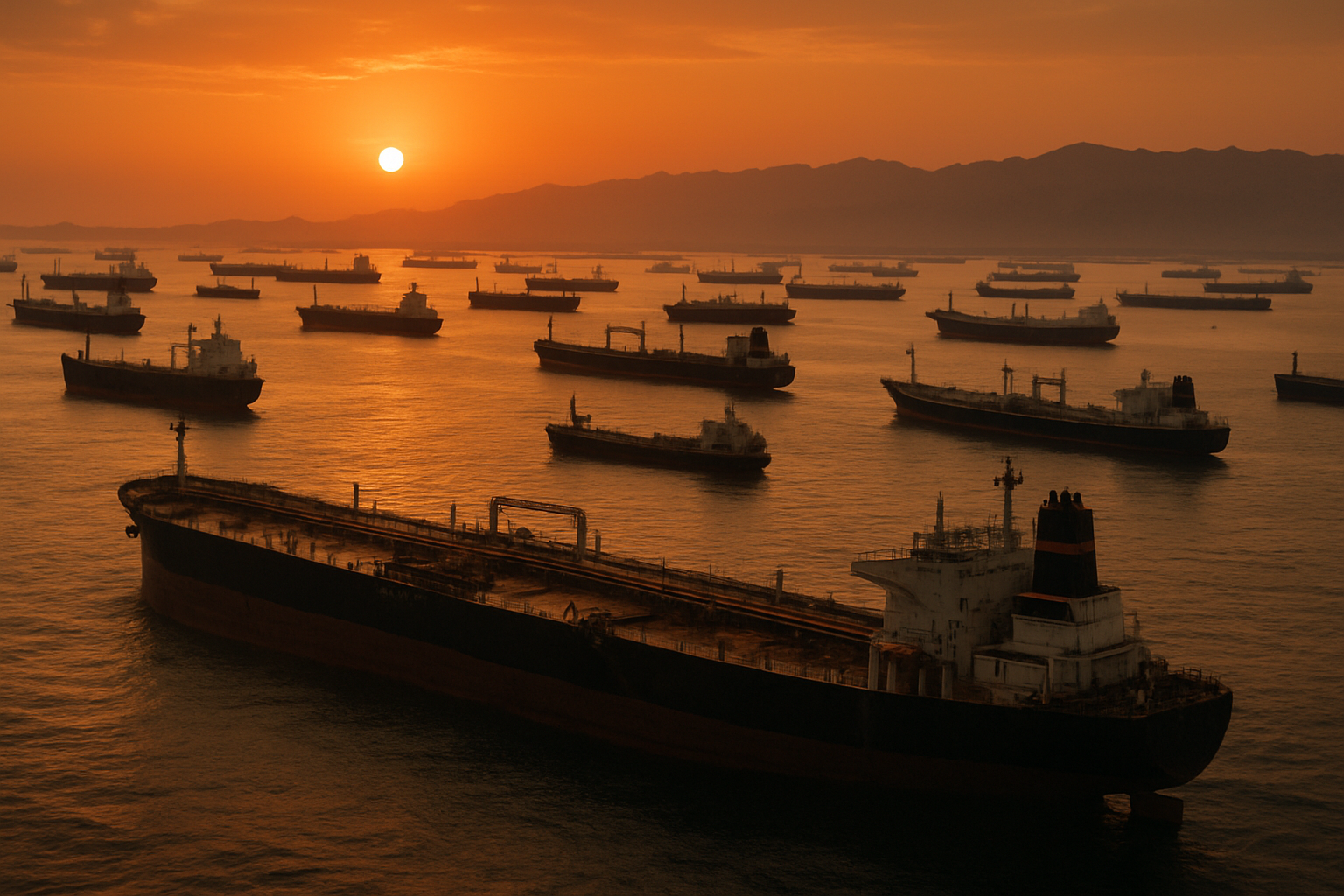
Oil prices have surged to unprecedented levels above $122 per barrel as Iran's ongoing war with the United States and Israel escalates into the most severe global energy crisis in decades, with the Revolutionary Guard's closure of the Strait of Hormuz disrupting 40% of the world's seaborne oil transit and triggering widespread fuel shortages across multiple continents.
The crisis deepened dramatically on Tuesday as Kuwaiti crude jumped $24.46 to reach $122.94 per barrel, while Brent crude hit $98.96 and West Texas Intermediate futures climbed to $94.77, marking the highest oil prices since the early days of the Russia-Ukraine conflict in 2022. The surge reflects the catastrophic impact of Iran's decision to declare the strategic 21-mile Strait of Hormuz "unsafe for shipping," effectively blocking one-fifth of global oil supplies.
Strait of Hormuz Closure Creates Global Supply Crisis
Iran's Revolutionary Guard has maintained control over the vital waterway for over a week, stranding more than 150 oil and LNG tankers worth billions in cargo value. Major shipping companies including Maersk and MSC have suspended all operations in the Persian Gulf, while alternative routes through the Arabian Peninsula lack adequate capacity and add significant time and cost penalties to global energy supplies.
"We could still be suffering the ripple effect of this for weeks, if not months," warned energy analysts, as Qatar Energy Minister Saad Al Kaabi cautioned that Gulf states may be forced to declare force majeure "within weeks" if the conflict continues, potentially driving oil prices toward $150 per barrel.
Widespread Consumer Impact Across Continents
The energy crisis has triggered immediate price increases worldwide, with Spain reporting diesel prices climbing more than 20% since the conflict began. European natural gas prices have exploded by 24%, while U.S. markets have seen 78% increases as Qatar—responsible for approximately 20% of global LNG exports—halted production at its Ras Laffan and Mesaid facilities following Iranian attacks.
Airlines are implementing significant fare increases to offset soaring fuel costs, with over 18,000 flights cancelled globally as eight Middle Eastern countries maintain simultaneous airspace closures. Ireland faces what officials call "brazen rip-off" fuel price increases, while Austria reports 20% jumps in fuel costs amid growing trade union criticism.
"Oil and gas are not just fuel, they are raw materials for thousands of products, including fertilisers used in farming."
— Energy Market Analyst
Government Emergency Responses Escalate
European governments are implementing emergency measures to prevent price manipulation, with France announcing 500 fuel station inspections and Romania developing five scenarios to prevent diesel from exceeding critical price thresholds. The European Union is rapidly developing state aid packages for energy-intensive industries facing unprecedented cost pressures.
Japan is considering deploying its strategic petroleum reserves for the first time since the 2011 Fukushima disaster, given its 95% dependence on Middle Eastern oil supplies, with 70% typically transiting through the now-closed Strait of Hormuz. The G7 finance ministers are coordinating potential strategic oil reserve releases through the International Energy Agency.
Industrial Supply Chains Face Severe Disruption
The crisis extends far beyond energy markets, affecting global supply chains dependent on Persian Gulf trade routes. Spanish industrial companies are receiving letters from gas suppliers invoking legal clauses to break existing price contracts, while manufacturing sectors including automotive, electronics, and textiles face severe disruptions from Gulf-dependent logistics networks.
China has suspended refined fuel export contracts, cancelling committed shipments and further tightening global supply. Singapore retailers warn of 30% increases in logistics costs, demonstrating how the 21-mile Strait of Hormuz has become a critical single-point failure in modern global logistics.
Financial Markets in Turmoil
Global financial markets have crashed in response to the energy crisis, with Pakistan's KSE-100 recording its largest single-day decline in history, falling 8.97%. South Korea's KOSPI dropped 12% with circuit breakers activated as the Korean won hit a 17-year low. Central banks including the European Central Bank and Bank of Japan are coordinating emergency liquidity provisions to prevent broader financial contagion.
The aviation industry faces parallel disruption with Dubai International Airport—the world's busiest with 86 million passengers annually—remaining shut down due to missile damage. Emirates, Air France-KLM, and other major carriers have suspended operations indefinitely, affecting hundreds of thousands of passengers in the most comprehensive aviation disruption since COVID-19.
Long-term Energy Security Implications
Energy experts warn that the current crisis exposes dangerous over-dependence on strategic chokepoints and volatile geopolitical regions. Unlike weather-related disruptions with predictable timelines, recovery depends entirely on military operations resolution and diplomatic normalization between the warring parties.
OPEC's emergency production increase of 206,000 barrels per day proves insufficient to offset the shipping disruption, as increased production becomes meaningless when tankers cannot transit safely through critical waterways. Strategic petroleum reserves provide only temporary buffer for sustained disruptions of this magnitude.
"Iran's Revolutionary Guards said on Tuesday they would not allow 'one litre of oil' to be shipped from the Middle East if US and Israeli attacks continue."
— Iranian Revolutionary Guard Statement
International Crisis Management Under Pressure
The crisis represents the most dangerous international situation since the Cold War's end, occurring amid the February 5 expiration of the New START treaty—marking the first time in over 50 years without US-Russia nuclear constraints. UN Secretary-General António Guterres has declared nuclear risks at their "highest in decades," while the template-setting nature of this crisis affects future approaches to territorial disputes and conflict resolution worldwide.
Saudi Arabia's state-owned oil giant Aramco has warned of "catastrophic consequences" for global oil markets if the Strait of Hormuz remains blocked, as the waterway serves not only energy transit but critical trade routes connecting Asia-Europe commerce. The regional coalition of Saudi Arabia, UAE, Qatar, and Egypt that previously supported diplomatic solutions now faces severe strain as Iranian retaliation has directly targeted member territories.
Recovery Timeline Remains Uncertain
Traditional monetary policy tools show limited effectiveness against structural geopolitical disruptions of this magnitude. Energy markets remain volatile with critical transit routes blocked, while aviation industries cannot implement long-term scheduling with multiple airspaces closed indefinitely.
The crisis highlights fundamental vulnerabilities in modern energy architecture that require years or decades to address through supply diversification and renewable transitions. However, the immediate urgency has accelerated discussions about reducing dependence on volatile geopolitical regions and single-chokepoint dependencies.
As oil prices continue climbing toward potentially historic levels, the international community faces its greatest test of multilateral cooperation in crisis management since the modern era began. The decisions made in coming days will reverberate through international relations for decades, affecting approaches to conflict resolution, energy security architecture, and the sustainability of the post-World War II international order.