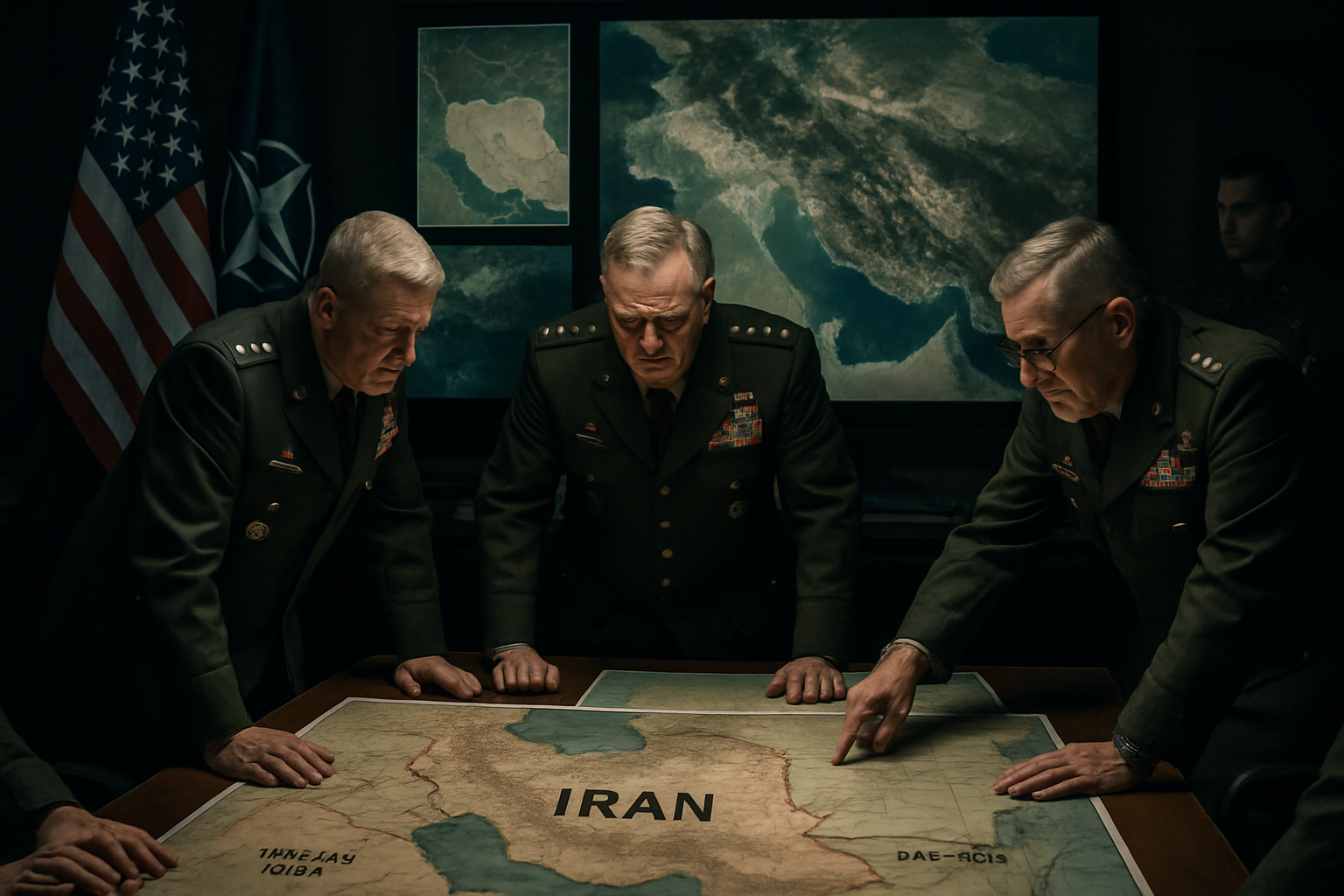
Iran's parliament speaker has issued a stern warning that the country is prepared for any U.S. ground troop deployment, as reports from multiple international sources suggest the Pentagon is preparing for extended ground operations in Iran amid the escalating month-long conflict.
Mohammad Bagher Ghalibaf, Iran's parliament speaker, declared that Iranian armed forces are "prepared and waiting for any possible U.S. ground troop entry into Iranian territory," according to state media reports. The stark warning comes as European media sources confirm Pentagon preparations for "weeks of ground operations" involving special forces and conventional troops.
Pentagon Preparing Extended Campaign
According to a Washington Post report citing U.S. officials, Pentagon plans could involve raids by Special Operations forces and conventional infantry troops. The operations, potentially lasting several weeks to two months, would mark a dramatic escalation from the current Operation Epic Fury air campaign that began February 28.
The Trump administration has already deployed significant military assets to the Middle East, including a dual-carrier strike group featuring the USS Gerald Ford and USS Abraham Lincoln, representing approximately one-third of the active U.S. Navy fleet. An additional 5,000 Marines aboard the USS Tripoli arrived in the region Friday, raising speculation about potential ground operations.
"As long as the Americans seek Iran's surrender, our response is that we will never accept humiliation."
— Mohammad Bagher Ghalibaf, Iran Parliament Speaker
Global Crisis Reaches Critical Phase
The potential for ground operations emerges as the conflict has created unprecedented global disruption. Over 18,000 flights have been cancelled worldwide—the most extensive aviation crisis since COVID-19—while oil prices have surged past $100 per barrel as Iran has effectively closed the Strait of Hormuz with naval mines, affecting 40% of global oil transit.
The International Energy Agency has released a record 400 million barrels from strategic reserves in the largest intervention in the agency's 50-year history, while natural gas prices have increased 24% in Europe and 78% in the United States.
Regional Powers Seek Diplomatic Solution
Despite the military escalation, regional powers are attempting to mediate the crisis. The foreign ministers of Pakistan, Saudi Arabia, Turkey, and Egypt are meeting in Islamabad to discuss ways to halt the month-long conflict, which has killed thousands and caused massive disruption to global energy supplies.
Iranian officials have accused the United States of publicly discussing negotiations while secretly planning military operations. "The enemy sends public messages of negotiation and dialogue, while secretly planning a ground offensive," Ghalibaf stated in a message to the nation.
Unprecedented Military Buildup
Current U.S. deployments in the region could reach 17,000 troops if additional forces are deployed, including potential elements from the 82nd Airborne Division. This would represent the largest American military presence in the Middle East since the 2003 Iraq invasion, though still below the 150,000 troops deployed during that campaign.
The conflict has already resulted in the first U.S. casualties of Operation Epic Fury, with three service members confirmed killed and over 150 wounded. The USS Charlotte submarine made history by sinking the Iranian frigate IRIS Dena—the first enemy vessel sunk by a U.S. submarine since World War II.
Iranian Succession Crisis
The military tensions occur amid a constitutional crisis in Iran following the confirmed death of Supreme Leader Ali Khamenei on March 1. His son, Mojtaba Khamenei, has emerged as the favored successor in what would be the first hereditary succession in the Islamic Republic's 47-year history.
CIA assessments suggest the Revolutionary Guards have unprecedented control over the selection process, indicating a shift from clerical to military governance during the active warfare conditions.
Nuclear Diplomacy Collapsed
The current military crisis emerged from the complete breakdown of nuclear negotiations, despite what had been described as "broad agreement on guiding principles" in Geneva talks—the most progress since the 2018 JCPOA collapse.
The fundamental disagreement persists: Iran maintains ballistic missiles and regional proxies as "red lines" excluded from any nuclear-only agreement, while the U.S. demands a comprehensive deal addressing missiles, armed groups, and human rights issues.
Iran continues uranium enrichment at 60% purity with over 400kg of material—sufficient for multiple weapons if weaponized—while maintaining it will "never abandon enrichment even if war is imposed."
Congressional Scrutiny Intensifies
On Capitol Hill, bipartisan lawmakers are demanding answers about strategy, costs, and the potential deployment of ground troops. Senator Richard Blumenthal has expressed being "more concerned than ever" about boots on the ground, while the conflict faces historically low public support at just 25%.
Pentagon officials are reportedly preparing operations through September 2026, far beyond the initial 4-6 week timeline suggested by the White House. Operation Epic Fury has already cost $11.3 billion in its first week alone.
Global Implications
UN Secretary-General António Guterres has called the crisis "the greatest test of multilateral cooperation and crisis management in the modern era." The rapid transition from diplomacy to military confrontation demonstrates the fragility of crisis management in the multipolar era.
The conflict has prompted the first attack on European territory since World War II, with Iranian drones striking RAF Akrotiri in Cyprus, leading to an unprecedented naval coalition including British, Spanish, Italian, French, Dutch, and Greek vessels.
As international evacuations reach Arab Spring levels—with Australia reporting 115,000 nationals trapped and Germany 30,000 stranded—the crisis represents a template-setting moment for 21st-century conflict resolution that will influence international relations for decades to come.
The stakes extend far beyond the Middle East, encompassing regional war prevention, global energy security, nuclear governance credibility, and the enforcement of international law in an increasingly multipolar world. Whether the crisis can be contained or will escalate into broader regional conflict remains the most critical question facing international leaders today.