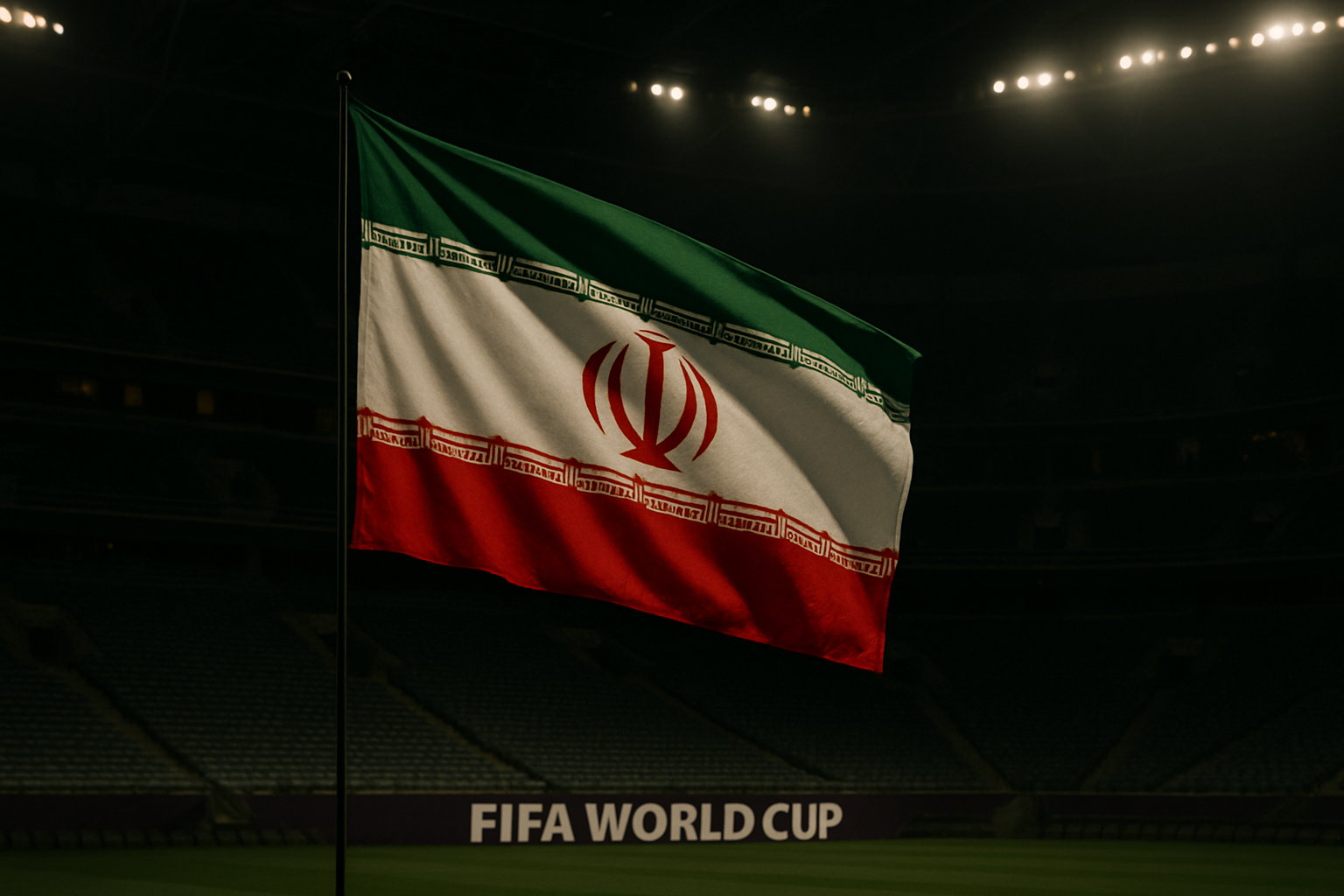
Iran's national football team has officially withdrawn from the 2026 FIFA World Cup, making history as the first qualified nation to exit the tournament due to military conflict, Sports Minister Ahmad Donyamali announced on Wednesday, March 11, 2026.
The decision comes following deadly US-Israeli military operations that claimed the life of Supreme Leader Ayatollah Ali Khamenei on March 1, 2026, during what was designated "Operation Epic Fury." Iran's withdrawal represents an unprecedented crisis in World Cup history, as no qualified nation has ever previously abandoned the tournament for geopolitical reasons.
"Considering that this corrupt regime has assassinated our leader, under no circumstances can we participate in the FIFA World Cup," Donyamali stated during a televised interview, referring to the United States as co-host of the tournament. "After they killed our leader, there are no conditions that allow us to participate in the World Cup."
Historic World Cup Withdrawal
The Iranian announcement marks the culmination of months of uncertainty surrounding the nation's participation in the expanded 48-team tournament, scheduled to begin June 11, 2026, across the United States, Canada, and Mexico. Iran had been drawn in Group G alongside Belgium, New Zealand, and Egypt, with matches scheduled in Inglewood, California, and Seattle, Washington.
FIFA now faces an unprecedented situation with potential financial penalties of $10.5 million, though such sanctions have never been applied for conflict-related withdrawals. The organization must decide whether to advance Iraq as the next-ranked Asian team or restructure Group G entirely.
The withdrawal creates significant commercial and broadcasting challenges, particularly affecting Middle Eastern markets where Iran has substantial viewership. The decision also impacts the 200,000-strong Iranian-American community in Los Angeles, known as "Tehrangeles," who had anticipated supporting their national team in their adopted homeland.
Escalating Military Conflict
Iran's decision follows the most dangerous international crisis since the Cold War, with US-Israeli operations targeting Iranian leadership and infrastructure. The conflict has resulted in over 1,500 casualties according to the Hengaw Organization, with 1,300 military personnel and 200 civilians killed across 150 cities in 22 Iranian provinces.
The crisis has created global disruptions, with over 18,000 flights cancelled worldwide and oil prices surging past $80 per barrel following Iran's closure of the Strait of Hormuz, which handles 40% of global oil transit. Dubai International Airport has been completely shut down, while major shipping companies have suspended Persian Gulf operations.
"Considering the malicious actions carried out against Iran, they have imposed two wars on us in eight or nine months, and thousands of our citizens have died. Therefore, we definitely have no possibility of such participation."
— Ahmad Donyamali, Iranian Sports Minister
FIFA's Unprecedented Challenge
Hours before Iran's official withdrawal, US President Donald Trump had assured FIFA President Gianni Infantino that Iran's team would be "welcome, without doubt" to compete in the tournament. The assurance came during a meeting at the White House where Trump emphasized the separation of sporting events from political disputes.
FIFA has maintained political neutrality throughout its history, but the Iranian withdrawal presents an unprecedented test of this principle. The organization requested detailed security reports from all three host nations earlier this year amid growing concerns about Iran's participation status.
The withdrawal undermines FIFA's vision of the 2026 World Cup as the most inclusive in history, featuring an expanded format designed to provide more nations with opportunities to participate on football's biggest stage.
Tournament Implications and Logistics
The 2026 World Cup was already facing significant logistical challenges as the first tri-national hosting arrangement in tournament history. Iran's withdrawal adds another layer of complexity to what FIFA officials have described as the most ambitious World Cup ever organized.
The tournament faces additional challenges including ongoing security concerns in Mexico following recent cartel violence in Guadalajara, visa complications affecting fans from multiple nations, and coordination difficulties across three countries with different currencies, legal systems, and security protocols.
Iran's scheduled matches were to take place at SoFi Stadium in Inglewood, California (against New Zealand on June 15 and Belgium on June 21) and at Lumen Field in Seattle (against Egypt on June 26). These venues will now require alternative programming or match restructuring.
Broader Impact on International Football
The Iranian crisis extends beyond the men's national team. Seven members of Iran's women's national football team have sought asylum in Australia after being labeled "wartime traitors" by Iranian state television for remaining silent during the national anthem at the AFC Women's Asian Cup. The players were granted humanitarian visas following intervention by US President Trump, who warned Australia it would be making a "terrible humanitarian mistake" if forced to return the players to Iran.
This represents the largest single-team refugee crisis in international sports history, highlighting the impossible position faced by Iranian athletes who must choose between representing their country and personal safety.
Historical Context and Precedent
Iran's withdrawal sets a troubling precedent for international football at a time of increasing global tensions. The decision comes during what experts describe as the most challenging World Cup preparation period in the tournament's 96-year history, with just 100 days remaining before the June kickoff.
The situation demonstrates the vulnerability of international sporting events to geopolitical conflicts and raises questions about FIFA's ability to maintain the World Cup's traditional role as a unifying global celebration transcending political boundaries.
Previous World Cup editions have proceeded despite regional conflicts and political tensions, but Iran's withdrawal marks the first time a qualified nation has completely abandoned participation due to military conflict with a host nation.
Economic and Diplomatic Ramifications
The withdrawal carries significant economic implications beyond the immediate tournament impact. Iran's absence reduces potential television viewership and sponsorship value, particularly in Middle Eastern markets where football enjoys massive popularity.
The crisis also affects broader diplomatic efforts to maintain sports as neutral ground for international engagement. The World Cup has historically served as a platform for diplomatic outreach, with previous tournaments providing opportunities for dialogue between adversarial nations.
Iran's decision reflects the broader challenges facing international sports organizations in an increasingly polarized world, where political conflicts increasingly spill over into sporting arenas.
Looking Ahead
With the 2026 World Cup just months away, FIFA faces critical decisions about how to proceed with Group G and broader tournament organization. The Iranian withdrawal may prompt other nations to reconsider their participation if regional conflicts continue to escalate.
The situation represents a watershed moment for international football governance, testing whether the "beautiful game" can maintain its traditional role as a unifying force in an increasingly divided world. The resolution will establish precedents for how major sporting events navigate geopolitical tensions in the 21st century.
As the most-watched sporting event globally, the World Cup carries unique symbolic weight for international cooperation and unity. Iran's withdrawal challenges the fundamental premise that football can transcend political boundaries, potentially reshaping how future tournaments approach qualification, hosting, and participation in an era of heightened global tensions.