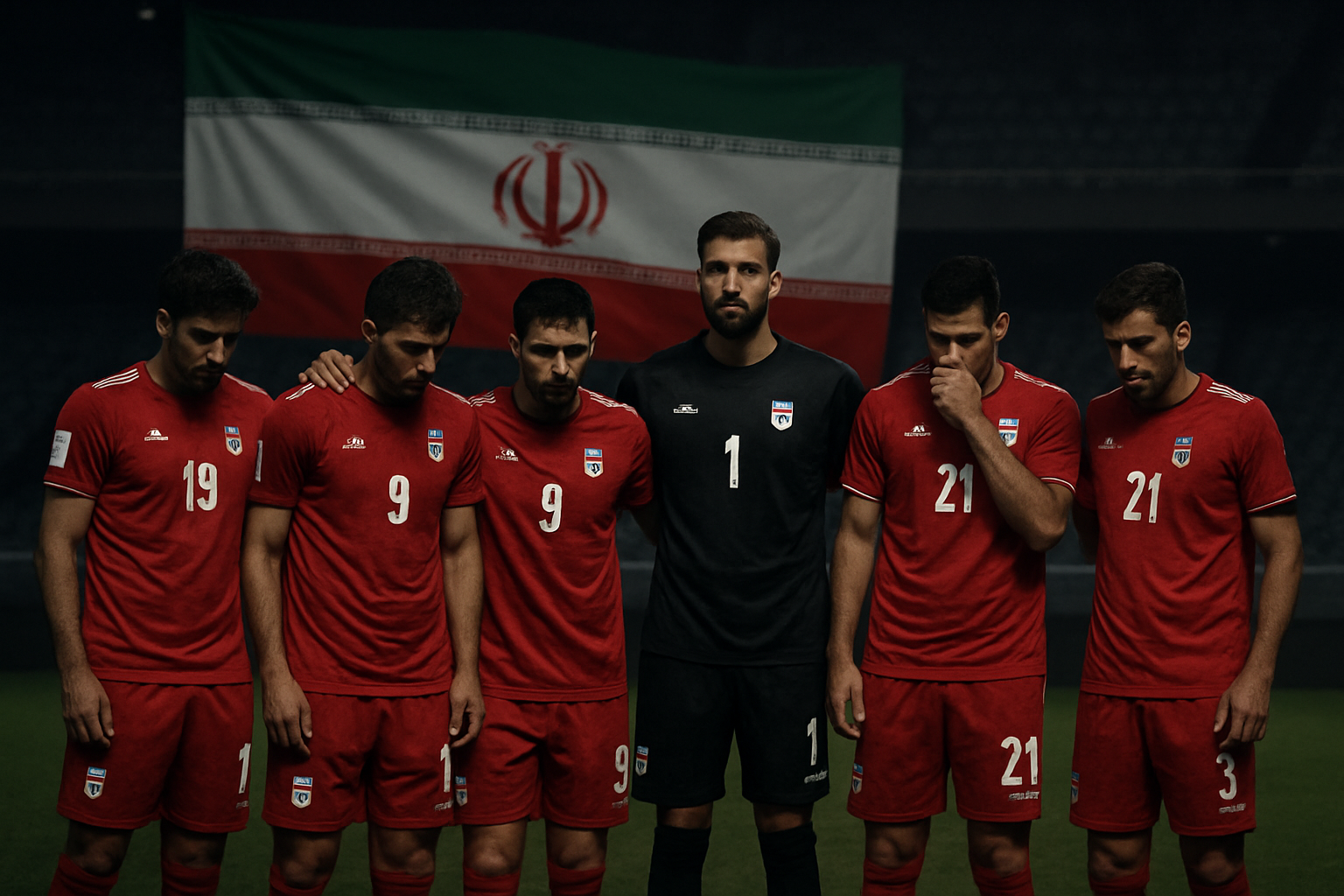
Iran's Sports Minister Ahmad Donyamali confirmed on Wednesday that the Iranian national football team will not participate in the 2026 FIFA World Cup, marking the first time in World Cup history that a qualified nation has withdrawn due to ongoing military conflict.
Speaking to international media, Donyamali cited the escalating military confrontation with the United States and Israel, along with the recent death of Supreme Leader Ali Khamenei, as making it impossible for Iran to field a team in the tournament scheduled to begin in June across the United States, Canada, and Mexico.
"After the government killed our leader, there are no conditions that allow us to participate in the World Cup," Donyamali stated, referencing the March 1 death of Khamenei during Operation Epic Fury, the largest coordinated U.S.-Israeli military operation since the 2003 Iraq invasion.
Historic World Cup Withdrawal
Iran's withdrawal represents an unprecedented situation in FIFA World Cup history. Never before has a qualified nation pulled out of the tournament due to active military conflict, creating a complex logistical challenge for FIFA just three months before the competition begins.
The Iranian team was drawn into Group G alongside Belgium, Egypt, and New Zealand, with matches scheduled at SoFi Stadium in Inglewood, California (versus New Zealand on June 15 and Belgium on June 21) and at Lumen Field in Seattle (versus Egypt on June 26).
FIFA's regulations stipulate potential fines of up to $10.5 million for teams that withdraw after qualification, though these penalties have never been applied to a nation withdrawing due to military conflict. The organization now faces the unprecedented decision of whether to advance the next-ranked team from Asia or restructure Group G entirely.
Deteriorating Security Situation
Iran's withdrawal comes amid the most dangerous international crisis since the Cold War's end. The ongoing conflict, which began with Iran's uranium enrichment program reaching 60% purity, escalated dramatically when diplomatic negotiations collapsed in Geneva despite achieving what Abbas Araghchi called "broad agreement on guiding principles."
The situation reached a critical point when President Trump issued a historic 10-day ultimatum in February, warning that "bad things will happen" if no nuclear agreement was reached. When talks failed over Iran's exclusion of ballistic missiles and regional proxies as "red lines," military action commenced.
The March 1 Operation Epic Fury resulted in the confirmed death of Supreme Leader Khamenei, ending his 37-year rule and triggering a constitutional succession crisis. A three-member transitional council now governs Iran while the Assembly of Experts selects a permanent successor under wartime conditions.
"The global aviation crisis alone makes it impossible for our team to travel safely. Over 18,000 flights have been cancelled worldwide, and eight countries have closed their airspace simultaneously."
— FIFA Source, speaking anonymously
Global Tournament Impact
Iran's withdrawal compounds the mounting challenges facing the 2026 World Cup, already dealing with unprecedented logistical complexities as the first tournament hosted across three nations. The expanded 48-team format was designed to be more inclusive, making Iran's absence particularly significant.
The ongoing Middle East conflict has created the most extensive aviation disruption since COVID-19, with Iran, Iraq, Israel, UAE, Qatar, Syria, Kuwait, and Bahrain simultaneously closing their airspace. Dubai International Airport, the world's busiest, remains shut down due to missile damage from Iran's "Operation True Promise 4" retaliation campaign.
Oil prices have surged 10% past $80 per barrel as Iran declared the Strait of Hormuz "unsafe," affecting 40% of global oil transit. This economic disruption threatens the tournament's commercial viability, with major sponsors already expressing concerns about the geopolitical instability.
Precedent and Diplomatic Implications
The withdrawal sets a troubling precedent for international sporting events amid rising global tensions. FIFA President Gianni Infantino, who previously expressed "complete confidence" in all host nations' capabilities, now faces questions about the organization's ability to maintain political neutrality while ensuring tournament integrity.
Iran's decision has drawn mixed international responses. President Trump reportedly told FIFA President Infantino that Iran is "welcome" to participate despite the ongoing conflict, though this contradicts his administration's "unconditional surrender" demands. The disconnect highlights the complexity of separating sports from geopolitics in an interconnected world.
The Iranian-American community in Los Angeles, often called "Tehrangeles" with over 200,000 residents, remains divided on the issue. Many Iranian-Americans had looked forward to supporting their homeland's team while living in the host country, but the withdrawal eliminates this rare opportunity for cultural bridge-building.
FIFA's Response and Next Steps
FIFA finds itself in uncharted territory, with no established protocol for handling withdrawals due to military conflict. The organization's statutes emphasize political neutrality, but critics argue that allowing Iran's withdrawal due to its own military actions could set a dangerous precedent for future tournaments.
Under FIFA regulations, Iraq would be the next-ranked Asian team to potentially replace Iran, though this creates its own complications given Iraq's proximity to the conflict zone. Alternative options include restructuring Group G as a three-team group or advancing a team from the intercontinental playoffs.
The decision impacts not only sporting logistics but also substantial financial considerations. Iran's qualification secured significant broadcasting revenue from Middle Eastern markets, and their matches against traditional powerhouse Belgium were expected to draw massive global audiences.
Broader Context of Sports and Conflict
Iran's withdrawal occurs against a backdrop of increasing intersection between sports and geopolitics. The country's women's football team recently sought asylum in Australia after being labeled "wartime traitors" by Iranian state television for remaining silent during the national anthem at the AFC Women's Asian Cup.
The situation reflects broader challenges facing international sports organizations as they navigate an increasingly polarized world. From Russian participation debates to human rights concerns in host nations, sporting bodies find themselves making decisions with far-reaching diplomatic consequences.
Regional allies who had supported diplomatic solutions to the Iran crisis now face difficult choices. Saudi Arabia, UAE, Qatar, and Egypt, which formed an unprecedented consensus backing negotiations, must reconsider their positions as the conflict expands beyond bilateral U.S.-Iran tensions.
Looking Ahead to 2026
With exactly 100 days remaining until the tournament begins, Iran's withdrawal creates urgency for FIFA's decision-making process. The organization must balance sporting integrity, commercial interests, and political neutrality while managing the most complex World Cup in history.
The expanded format across three nations was designed to showcase football's global reach and inclusivity. Iran's absence due to military conflict undermines this vision, serving as a stark reminder of how geopolitical tensions can override sporting ideals.
For Iranian football fans, the withdrawal represents not just a missed World Cup, but the broader cost of international isolation during a critical period in their nation's history. The decision will likely reverberate through Iranian sports for years to come, affecting everything from youth development programs to international friendlies.
As the world prepares for what was meant to be a celebration of global unity through football, Iran's withdrawal serves as a sobering reminder of how quickly sporting dreams can become casualties of geopolitical conflict. The 2026 World Cup, already facing unprecedented challenges, must now proceed without one of Asia's most consistent qualifiers, marking a historic first in the tournament's 96-year history.