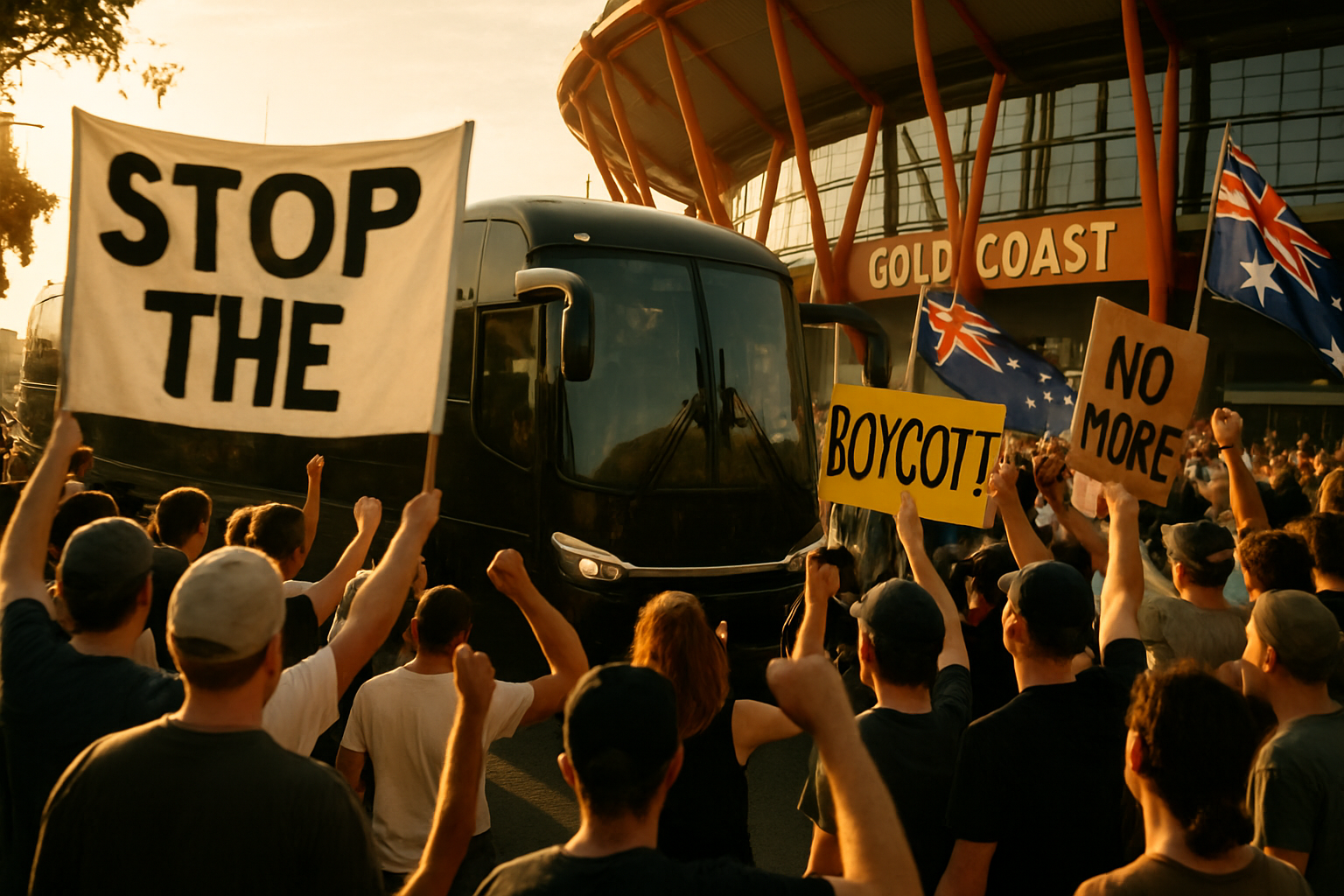
Dramatic scenes unfolded on Australia's Gold Coast as hundreds of protesters surrounded the bus carrying the Iranian women's national soccer team following their final match in the AFC Women's Asian Cup, with disturbing footage appearing to show players making international distress signals from inside the vehicle.
The incident occurred after Iran's elimination from the tournament, marking the latest chapter in an ongoing saga that has seen the team become unwitting symbols of Iran's domestic political crisis and women's rights struggles. Video footage captured at least one woman on the bus appearing to make what observers identified as the international help sign—a gesture that has become synonymous with calls for assistance during situations of distress.
Escalating Tensions Surrounding Team
The Iranian women's football team has faced intense scrutiny throughout the tournament, particularly following their controversial opening match against Australia where they remained silent during the national anthem. Iranian state television had previously condemned the team as "wartime traitors" for their symbolic protest, with commentators warning that the players' lives were in "imminent danger."
This latest incident represents a dangerous escalation in what has become a complex intersection of sports, politics, and human rights. The team, described by observers as "intimidated and surveilled" during their stay on the Gold Coast, now finds themselves at the center of protests that reflect Iran's broader political upheaval.
"Let them go" could be heard among the crowd, suggesting concerns about the team's wellbeing rather than hostility toward the players themselves.
— ABC Grandstand Sport
Context of Iran's Political Crisis
The protests surrounding the team must be understood within the broader context of Iran's ongoing domestic crisis. Since 2022, the country has witnessed unprecedented civil unrest, with over 42,000 arrests documented during widespread protests against government policies, particularly regarding women's rights.
The Iranian women's soccer team's situation has become emblematic of the impossible choices facing Iranian athletes who must navigate between representing their country and expressing personal conscience. Previous incidents involving Iranian athletes using international sporting platforms for peaceful dissent have resulted in bans, harassment, and persecution upon their return home.
International Concerns for Player Safety
Human rights observers and security experts have expressed serious concerns about the team's wellbeing, both during the tournament and especially regarding their eventual return to Iran. The use of the international help sign—if confirmed—would represent a deeply troubling development that underscores the players' vulnerable position.
The AFC Women's Asian Cup, intended as a celebration of women's football in the region, has become overshadowed by geopolitical tensions and concerns for athlete safety. Tournament organizers are reportedly aware of the situation and working to ensure player security, though the extent of their ability to protect the team remains unclear.
Broader Implications for Sports and Politics
This incident highlights how international sporting events have increasingly become flashpoints for broader social and political tensions. The Iranian women's team finds themselves in an unenviable position where their participation in the tournament itself has become a form of political expression, regardless of their personal intentions.
The situation also raises critical questions about the protection of athletes' rights to peaceful expression and the international community's response when athletes face persecution for symbolic protests. Sports governing bodies and human rights organizations are closely monitoring developments, with some calling for enhanced protections for athletes facing political pressure.
A Pattern of Athletic Protest
The Iranian team's actions are part of a broader pattern of Iranian athletes using international sporting platforms to express dissent against regime policies. These peaceful protests have consistently focused on women's rights issues and have drawn harsh responses from Iranian authorities.
The escalation from silent anthem protests to apparent distress signals represents a concerning development that suggests the players may feel their situation has deteriorated significantly. The international community now faces questions about how to respond when athletes appear to be in genuine distress while representing their country.
International Response and Next Steps
As footage of the bus incident circulates globally, pressure is mounting for international protection of the Iranian players' right to peaceful expression. The situation has become a test case for how the international community responds when athletes face potential persecution for symbolic protests.
Growing calls for athlete protection come as Iran continues its broader crackdown on dissent, with Nobel laureate Narges Mohammadi recently sentenced to additional prison time, demonstrating the regime's zero-tolerance approach to any form of opposition expression.
The Iranian women's soccer team's ordeal on the Gold Coast serves as a stark reminder of how sports and politics intersect in ways that can put individual athletes at risk. As the international community watches and debates appropriate responses, the players themselves remain caught between competing pressures that threaten to overshadow their athletic achievements and personal safety.
The resolution of this crisis may well determine how future situations involving athletes facing political pressure are handled, making it a defining moment for sports governance and human rights protection in the modern era.