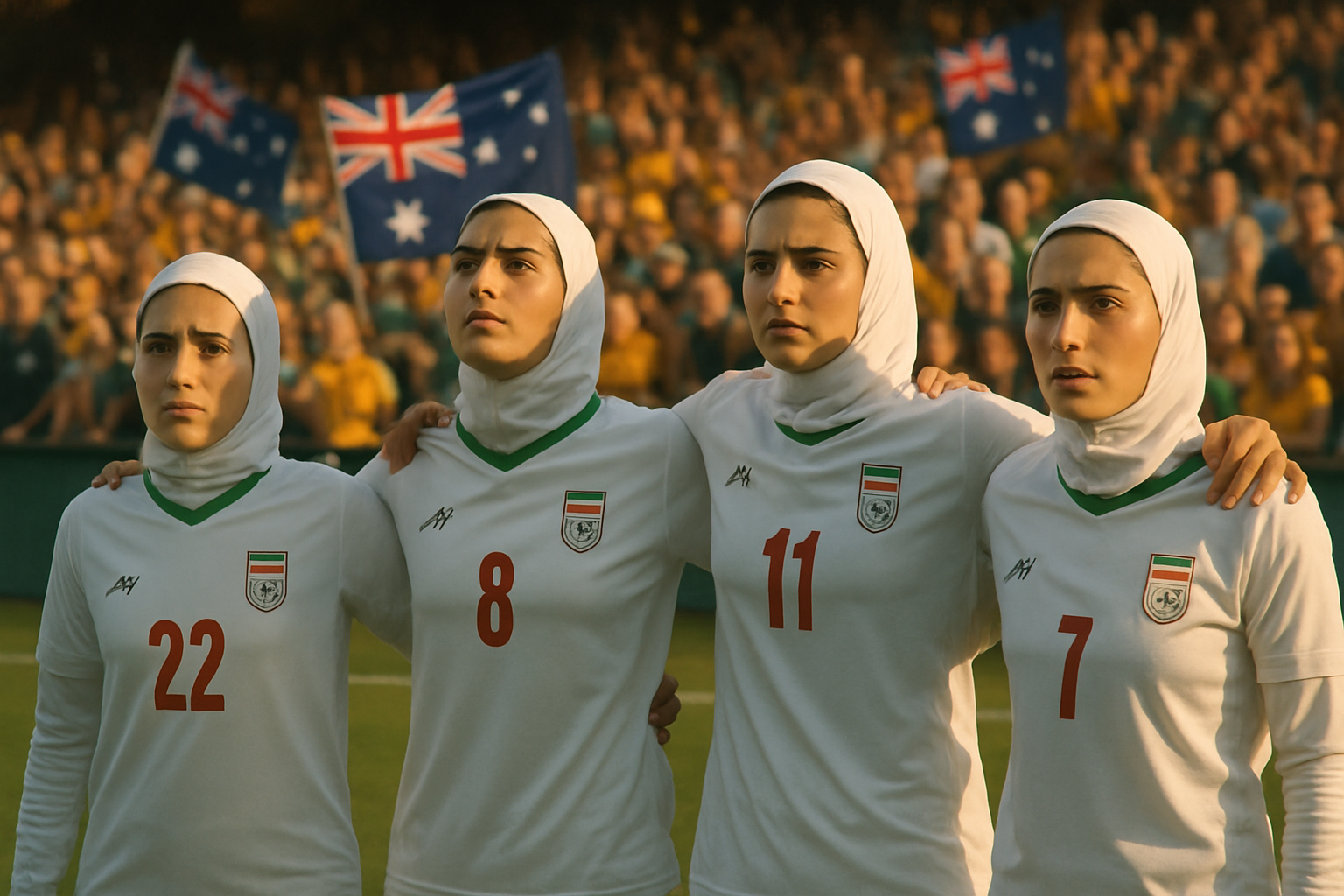
Australia has granted asylum to five members of the Iranian women's soccer team who fled their handlers during the AFC Women's Asian Cup, marking a significant humanitarian decision amid mounting international pressure and direct intervention from US President Donald Trump.
Home Affairs Minister Tony Burke confirmed the decision Monday night, stating he met with the women and told them they were "welcome to stay in Australia." The asylum grants come after the players escaped from their handlers at a Gold Coast hotel following their team's elimination from the tournament, with Iranian state television branding them "wartime traitors" for their symbolic protest.
The Catalyst: Silent Protest Sparks International Crisis
The crisis began when Iranian women's soccer team players refused to sing their national anthem during tournament matches, a gesture interpreted as protest against the Iranian regime's oppressive policies toward women. The symbolic act of defiance resonated globally, particularly given Iran's current political turmoil and the systematic persecution of women under the Islamic Republic.
Video footage from the team's final match showed hundreds of protesters surrounding the team bus, with crowds shouting "Let them go" in support of the players rather than hostility. One player was captured on video making what appeared to be an international distress signal from the bus window, highlighting their desperate situation.
"We are starved, tortured, betrayed, deceived, disappointed, and one of our own has been killed."
— Message from Iranian student protesters, reflecting broader sentiment against regime oppression
Trump's Direct Intervention
US President Donald Trump joined the international pressure campaign, making direct contact with Australian Prime Minister Anthony Albanese about the situation. Trump warned Australia would be "making a terrible humanitarian mistake" if the players were "forced back to Iran, where they will most likely be killed."
Trump's intervention represents a rare moment of humanitarian diplomacy from his administration, which has otherwise focused on restrictive immigration policies. The President indicated the United States would accept the athletes if Australia declined to act, demonstrating the international recognition of the players' legitimate fears of persecution.
Regional Context of Iranian Oppression
The asylum case unfolds against the backdrop of Iran's most dangerous political crisis since the Cold War. Supreme Leader Ali Khamenei was killed on March 1 in Operation Epic Fury, triggering massive regional conflict and unprecedented domestic upheaval. Since the 2022 protests began, Iranian authorities have arrested over 42,000 people, including Nobel Peace Prize laureate Narges Mohammadi.
The systematic oppression of women in Iran has intensified under the current regime, with severe restrictions on movement, education, and professional activities. Female athletes face particular scrutiny for their international visibility and potential to inspire resistance movements.
Australia's Immigration Policy Context
Australia's decision to grant asylum to the Iranian players represents a notable humanitarian gesture within a broader context of increasingly restrictive global immigration policies. The country has historically maintained strict border controls while selectively offering protection to high-profile cases that align with international human rights principles.
The Coalition government's support for the humanitarian visas demonstrates rare bipartisan consensus on asylum matters. The decision contrasts sharply with Australia's typically stringent approach to refugee admissions and reflects the exceptional circumstances surrounding the players' situation.
International Immigration Policy Trends
The Australian asylum grants occur amid a global shift toward more restrictive immigration policies across developed nations. The UK recently implemented its first-ever country-specific visa emergency brake, suspending student visas for Afghanistan, Cameroon, Myanmar, and Sudan nationals. European Union members are establishing external deportation centers in Africa for rejected asylum seekers.
However, the Iranian women's case highlights how high-profile humanitarian situations can still generate sufficient international pressure to override standard restrictive policies. The sports governance dimension adds complexity, as international football authorities face increasing pressure to protect athletes from political persecution.
Sports Governance and Athlete Protection
The Iranian women's soccer team crisis represents a critical test case for international sports governance regarding athlete protection rights versus political persecution. FIFA and the Asian Football Confederation (AFC) face mounting calls to establish stronger protection mechanisms for athletes who face persecution for refusing to participate in political displays.
The case echoes broader questions about sports organizations' responsibilities when athletes become targets of state persecution for symbolic protests or refusal to participate in political ceremonies. International sports bodies increasingly confront situations where athletic competition intersects with human rights violations.
Growing International Solidarity
The rapid international response to the Iranian players' situation demonstrates how social media and global connectivity can mobilize support for persecuted individuals. Multiple governments, human rights organizations, and athletic bodies coordinated pressure on Australia to provide protection, showing the power of international solidarity in humanitarian crises.
The Finnish media coverage, describing the entire Iranian women's soccer team's potential asylum in Australia, suggests broader awareness of the systematic nature of persecution facing Iranian female athletes and the need for comprehensive international protection measures.
Broader Implications for Immigration Policy
The Australian decision may establish important precedents for athlete asylum cases and high-profile humanitarian situations. While immigration policies globally trend toward restriction, exceptional cases involving clear persecution and international visibility can still generate sufficient pressure for protective responses.
The case highlights the ongoing tension between national border security priorities and international humanitarian obligations. Australia's willingness to act decisively in this high-profile case may encourage other nations to maintain humanitarian exceptions within increasingly restrictive immigration frameworks.
For Iran's women's rights movement, the international protection of these athletes represents both a victory and a reminder of the dangerous consequences faced by those who dare to resist the regime's oppression. The asylum grants send a clear message that the international community recognizes and will respond to systematic persecution, particularly of women and symbolic protesters.
Future Considerations
The successful asylum grants raise questions about protection for other Iranian athletes and activists who may face similar persecution. International sports organizations will likely face increased pressure to develop comprehensive athlete protection protocols for politically sensitive situations.
As Iran's political crisis deepens and regional conflicts escalate, the international community may face additional requests for humanitarian protection from Iranian citizens, particularly women and minorities facing systematic persecution. The precedent set by Australia's quick action may influence future responses to similar cases.
The Iranian women's soccer team asylum case represents a rare moment of international humanitarian coordination amid an era of increasing border restrictions and political tensions. Their successful protection demonstrates that compelling cases of persecution can still generate sufficient international pressure to overcome restrictive immigration policies and provide safety for those fleeing oppression.