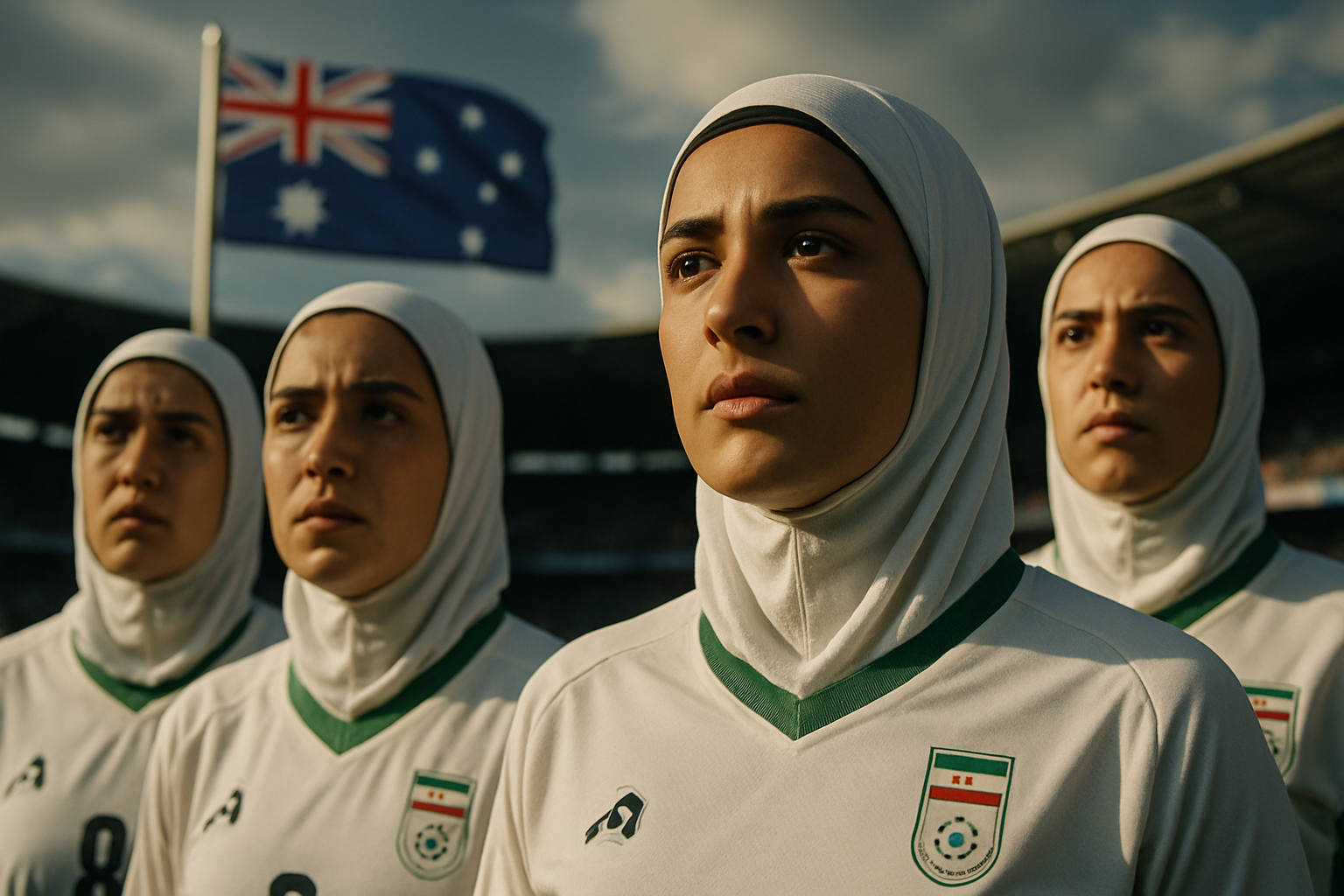
Australia has granted asylum to five Iranian female football players while simultaneously introducing new visa restrictions that could prevent 7,000 Iranian nationals from entering the country, creating a stark contradiction in the government's approach to Iranian immigration that has drawn widespread criticism.
Home Affairs Minister Tony Burke confirmed Tuesday that humanitarian visas had been granted to five members of Iran's women's national football team, who had been labeled "wartime traitors" by Iranian state television for refusing to sing the national anthem during their Asian Cup matches on the Gold Coast. However, just hours after these visas were approved, the government proposed changes to the Migration Act that would allow officials to block temporary visa holders from specific countries.
The Football Players' Dramatic Escape
The asylum grants came after a tense standoff that began when Iranian state media condemned the women's team as "wartime traitors" for their silent protest during the national anthem before matches. The players, fearing for their safety upon return to Iran, sought protection from Australian authorities following their elimination from the AFC Women's Asian Cup.
According to extensive reporting from our archives, the crisis reached its peak when hundreds of protesters surrounded the team bus after their final match, with video evidence showing at least one player making an apparent international distress signal from inside the vehicle. The crowd was heard shouting "Let them go," demonstrating public support for the athletes' safety rather than hostility.
"These women are not political activists. They are athletes who want to be safe,"
— Tony Burke, Home Affairs Minister
The Australian Federal Police conducted a coordinated extraction operation in the early hours of March 10, moving the players from their Gold Coast hotel to secure locations. The operation followed international pressure, including direct intervention from US President Donald Trump, who warned Australia it would be making a "terrible humanitarian mistake" if the players were "forced back to Iran, where they will most likely be killed."
The Broader Iranian Crisis Context
The asylum case occurs against the backdrop of unprecedented instability in Iran following the death of Supreme Leader Ali Khamenei on March 1, 2026, during ongoing military conflict. The Islamic Republic has faced its most dangerous period since the Cold War, with over 42,000 arrests related to women's rights protests since 2022 and systematic persecution of those who challenge government policies.
Iranian women face severe restrictions on movement, education, and professional activities under the current regime. The football players' silent protest during the national anthem represented a peaceful form of dissent that triggered immediate danger, with state media's "wartime traitors" labeling creating life-threatening circumstances for the athletes.
Contradictory Visa Policies Spark Criticism
The timing of the proposed Migration Act changes has drawn sharp criticism from opposition politicians and advocacy groups, who have labeled the government's approach "hypocritical." The new restrictions would grant officials broad powers to deny visas to nationals from specific countries, potentially affecting thousands of Iranians seeking legitimate entry to Australia.
The proposed changes represent a significant departure from Australia's traditional case-by-case assessment approach to visa applications. Critics argue that while the government publicly champions the protection of Iranian athletes, it simultaneously implements policies that could deny sanctuary to other Iranians facing persecution.
International Sporting Community Response
The crisis has highlighted significant gaps in international sporting bodies' protection mechanisms for athletes facing persecution. FIFA and the Asian Football Confederation have faced criticism for inadequate frameworks to protect players who engage in peaceful protests on global sporting platforms.
Several A-League clubs, including Brisbane Roar, have offered training facilities and professional support to the Iranian players remaining in Australia, demonstrating solidarity from the Australian football community. This practical support provides not just safety but potential pathways for the athletes to continue their sporting careers without fear of persecution.
"This represents a template-setting case for how the international sports community can coordinate protective responses for athletes facing systematic persecution."
— Football Industry Analyst
Complex Individual Decisions
The situation has revealed the complex human factors involved in asylum cases. According to recent reports, one of the initially protected players changed her mind after speaking with Iranian embassy officials and departed Brisbane voluntarily, highlighting the psychological pressures facing athletes caught between personal safety and cultural or family ties.
This development demonstrates that asylum processes involve ongoing individual choice rather than one-time decisions, with players able to reassess their circumstances as situations evolve. The voluntary nature of the asylum process has been maintained throughout, ensuring individual agency despite the extreme circumstances created by Iranian state persecution.
Historical Precedent and Future Implications
Australia's response represents a significant precedent for international protection of athletes facing persecution for symbolic protests. The case establishes frameworks for balancing sports participation with human rights protection, potentially influencing how other nations respond to similar crises.
The success of the protective operation may encourage other threatened Iranian athletes to seek international protection, while also providing a template for sporting communities worldwide to coordinate humanitarian responses. However, the simultaneous visa restrictions raise questions about the consistency and comprehensiveness of Australia's humanitarian commitments.
Regional Implications
The crisis has broader implications for Iranian participation in international sports, particularly with Iran officially withdrawing from the 2026 FIFA World Cup due to ongoing military conflicts. This marks the first time in tournament history that a qualified nation has withdrawn due to geopolitical circumstances, highlighting the impossible position facing Iranian athletes.
The approximately 200,000 Iranian-Americans in Los Angeles, known as "Tehrangeles," had anticipated supporting their national team on home soil, but the withdrawal reflects the broader challenges facing Iranian sports participation internationally during this period of unprecedented political instability.
Government Defense of Dual Approach
Government officials have defended the apparently contradictory policies by emphasizing different objectives. The asylum grants are positioned as protection for individuals facing immediate persecution, while the visa restrictions target what officials describe as systematic abuse of legal migration channels.
This dual approach reflects the complex challenges facing democratic governments in balancing humanitarian obligations with domestic immigration management, particularly during periods of international crisis and heightened security concerns.
Looking Forward
The Iranian football players' case represents a intersection of sports, politics, and human rights in the 21st century. The successful international coordination that prevented potential persecution has established important precedents for protecting athletes engaged in peaceful symbolic protests on global sporting platforms.
However, the simultaneous introduction of broader visa restrictions raises fundamental questions about the coherence and sustainability of Australia's humanitarian policies. As the situation continues to evolve, the contrast between protecting high-profile athletes while potentially restricting access for other Iranians seeking safety will likely remain a point of significant political and ethical debate.
The case ultimately demonstrates both the capacity for successful international humanitarian intervention and the complex political realities that can simultaneously limit such protection, creating ongoing challenges for comprehensive and consistent human rights policy in an increasingly interconnected world.