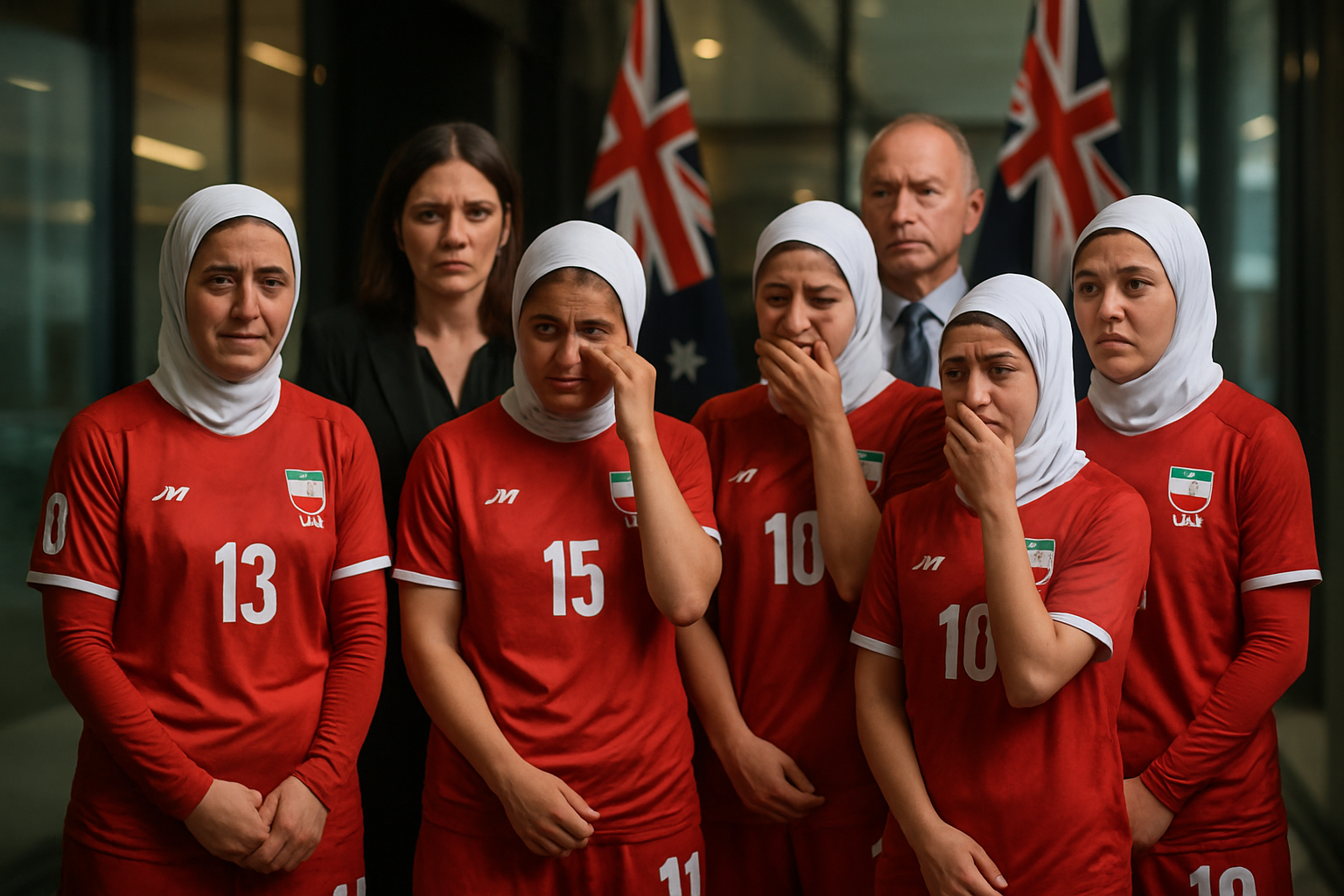
Five Iranian female soccer players have been granted humanitarian visas by Australia following a dramatic midnight escape from their handlers during the AFC Women's Asian Cup on the Gold Coast, marking one of the most significant sports asylum cases in recent history.
The players—Fatemeh Pasandideh, Zahra Ghanbari, Zahra Sarbali, Atefeh Ramazanzadeh, and Mona Hamoudi—were assisted by the Australian Federal Police in what officials described as a carefully coordinated operation that culminated in Home Affairs Minister Tony Burke personally granting humanitarian visas at 1:30 AM on March 10.
A Desperate Bid for Freedom
The asylum request emerged after the Iranian women's national team faced severe criticism from Iranian state television for refusing to sing the national anthem during their opening match against Australia. State media branded the players "wartime traitors," warnings that human rights observers said placed their lives in "imminent danger" upon return to Iran.
The dramatic escape unfolded over 48 hours, beginning when Australian officials waited on the sidelines of Iran's final tournament match, signaling to players that assistance was available. Video footage captured one player making what appeared to be an international distress signal from their team bus window, prompting hundreds of supporters to surround the vehicle shouting "Let them go."
"It took 48 hours but just one tiny window of opportunity for five Iranian footballers to make their fateful escape from handlers and successfully seek asylum in Australia overnight."
— Australian Federal Police Official
International Pressure and Intervention
The case gained unprecedented international attention when U.S. President Donald Trump personally contacted Australian Prime Minister Anthony Albanese, warning that Australia would be "making a terrible humanitarian mistake" if the players were "forced back to Iran, where they will most likely be killed." Trump indicated the United States would accept the athletes if Australia declined to act.
The intervention came amid Iran's most dangerous political crisis since the Cold War, following the death of Supreme Leader Ali Khamenei in Operation Epic Fury on March 1, and the arrest of over 42,000 protesters since 2022. Women in Iran face systematic oppression with severe restrictions on movement, education, and professional activities.
Home Affairs Minister Burke detailed the asylum process in parliament, emphasizing that Australia was "moved by the plights of these brave women" who had demonstrated extraordinary courage in seeking protection. The decision received rare bipartisan support from the Coalition government, reflecting the gravity of the humanitarian situation.
Broader Context of Athlete Persecution
This case represents the latest in a troubling pattern of Iranian athletes using international sporting platforms for peaceful dissent, particularly regarding women's rights issues. Previous incidents have resulted in bans, harassment, and persecution of athletes upon their return to Iran.
The players' silent protest during the national anthem—a form of symbolic resistance that has become common among Iranian athletes—triggered the harsh response from state media. Human rights experts noted that the "wartime traitors" label represented a dangerous escalation that could have put the athletes at physical risk.
"These women showed incredible bravery in standing up for their beliefs, and Australia has a proud tradition of offering protection to those who need it most."
— Tony Burke, Home Affairs Minister
A Test Case for Sports Governance
The asylum case has become a critical test for international sporting bodies regarding athlete protection rights versus political persecution. Growing calls have emerged for FIFA and the Asian Football Confederation to implement stronger protection mechanisms for athletes facing persecution for symbolic protests.
Sports governance experts describe this as a "template-setting moment" for the international community's response to athletes facing persecution. The successful intervention demonstrates the capacity for coordinated protective responses when athletes face systematic persecution, particularly women and symbolic protesters.
The decision also contrasts sharply with global trends toward restrictive immigration policies, showing how high-profile humanitarian cases can override standard restrictive policies through sustained international pressure.
Life in Australia and Future Prospects
The five players are now able to begin new lives in Australia, with the humanitarian visas providing immediate protection and the possibility to apply for permanent residency. The decision allows them to potentially continue their football careers without fear of persecution for their peaceful protests.
Prime Minister Albanese has indicated Australia remains open to assisting other Iranian athletes or activists facing similar threats, stating that the nation "will always stand up for human rights and provide sanctuary for those who need it."
The remaining members of the Iranian women's team departed Australia amid heavy security, with supporters continuing to express concerns about their safety upon return to Iran. Video footage showed emotional scenes as some players appeared reluctant to board transport to the airport.
Implications for International Sports
This case establishes important precedents for athlete asylum cases and high-profile humanitarian situations. It demonstrates how international sports can become flashpoints for broader social and political tensions, while highlighting the intersection between athletic competition and human rights advocacy.
Legal experts note the decision may influence similar cases worldwide, providing a framework for other nations when athletes face persecution for symbolic protests or human rights advocacy. The successful intervention also raises questions about protection for other Iranian athletes and activists facing similar threats under the current regime.
The asylum grants represent more than individual rescue—they symbolize the international community's commitment to protecting those who courageously stand up for fundamental human rights, even when doing so puts their own safety at risk. For these five women, Australia has provided not just sanctuary, but hope for a future where their talents can flourish without fear.