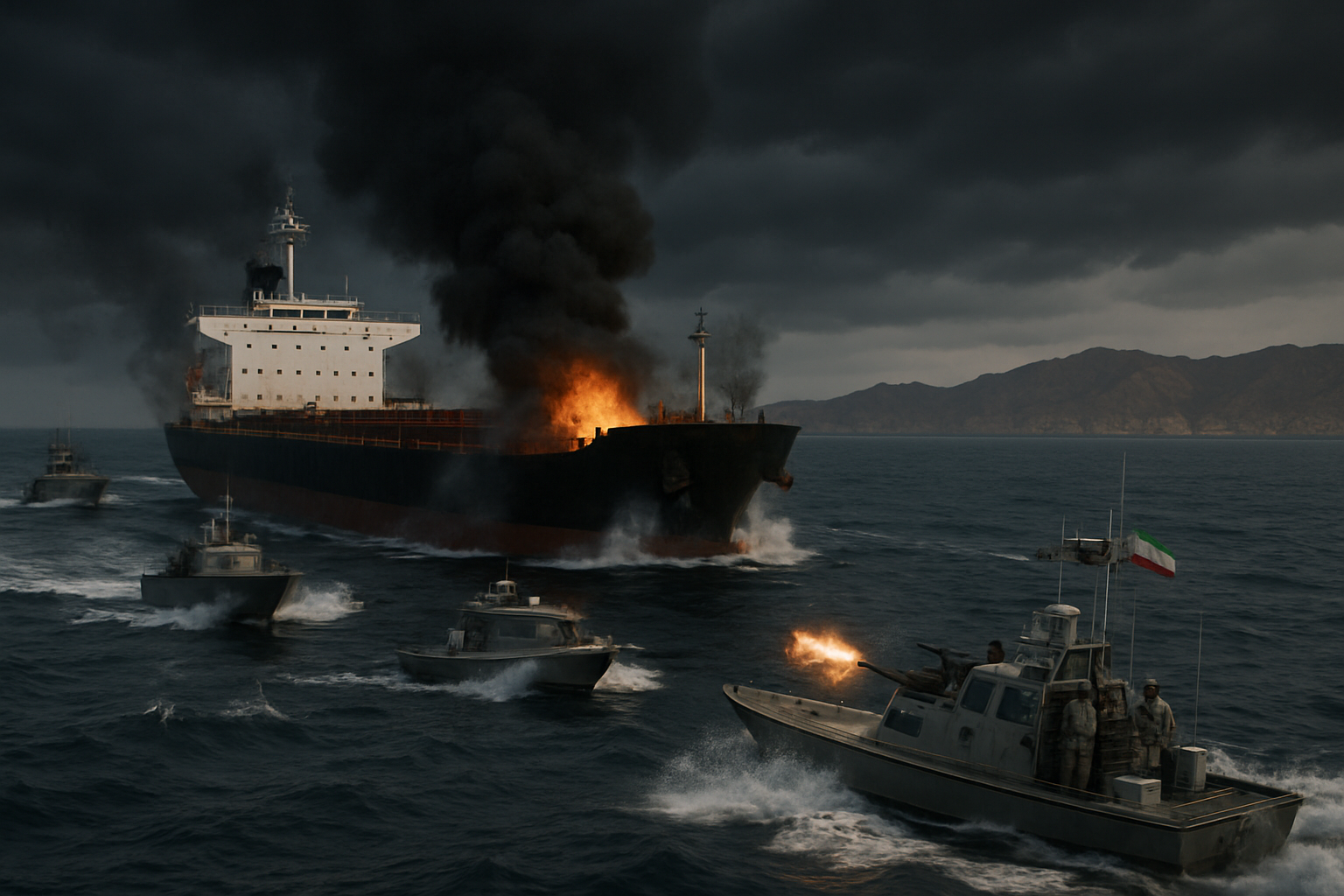
An Iranian naval vessel opened fire on a cargo ship near Oman in the strategically important Strait of Hormuz, causing major damage to the vessel's bridge but no casualties among the 24-member crew, according to multiple international maritime security agencies.
The attack occurred approximately 15 nautical miles (28 kilometers) northwest of Oman's coast, with the UK Maritime Trade Operations (UKMTO) confirming receipt of an incident report at 12:10 AM local time. The container ship, identified by various sources as being targeted by an Iranian Revolutionary Guard patrol vessel, successfully extinguished fires by 4:26 AM Kuwait time.
Details of the Maritime Attack
According to Norwegian broadcaster NRK, the container ship suffered extensive damage to its bridge structure after being fired upon by Iranian Revolutionary Guard forces. The ship's captain immediately notified UKMTO, which serves as a crisis and emergency response center for international civilian shipping operations.
Greek maritime publication Naftemporiki confirmed that the Iranian vessel had "ignored repeated warnings" from Iranian military forces before the attack commenced. The incident represents the latest escalation in ongoing tensions affecting the critical shipping waterway that handles approximately 40% of global seaborne oil transit.
Portuguese news agency RTP reported that the maritime security agency UKMTO, which monitors vessels worldwide, announced that the container ship was struck by Iranian gunfire off Oman's coast, causing damage but resulting in no casualties among the crew.
Strategic Importance of the Strait of Hormuz
The Strait of Hormuz represents one of the world's most critical maritime chokepoints, with the 21-mile waterway serving as the primary transit route for approximately 40% of global seaborne oil shipments. Any disruption to shipping in this narrow passage between Iran and Oman has immediate implications for global energy markets and supply chains.
This latest incident follows months of escalating tensions in the region, with Iranian forces previously deploying thousands of naval mines throughout the waterway, effectively closing it to commercial traffic during earlier phases of the ongoing crisis. The strategic waterway connects the Persian Gulf with the Gulf of Oman and the broader Indian Ocean shipping lanes.
Historical Context of Regional Maritime Tensions
The attack comes against the backdrop of the most severe maritime crisis in the region since the 1980s. Previous escalations have included:
- Iranian deployment of 2,000-6,000 naval mines throughout the strait
- Attacks on multiple commercial vessels, including the Thai-flagged Mayuree Naree cargo ship
- Systematic targeting of oil tankers and container ships
- Implementation of Iranian "vetting procedures" requiring coordination with authorities for passage
International maritime organizations have previously established emergency frameworks for merchant vessel evacuation, with over 20,000 seafarers having been stranded on more than 3,200 vessels during peak crisis periods.
International Response and Maritime Security
The International Maritime Organization (IMO) has maintained emergency protocols for the region, with Secretary-General Kitack Lim calling for urgent international support for maritime security operations. Multiple nations, including the UK, France, Germany, Italy, Japan, and the Netherlands, have pledged support for securing shipping routes through coordinated naval operations.
"From the moment a zone is designated a warlike zone, sailors have the right not to be on a ship that will pass through it."
— Charalampos Avgousti, OMEPEGE-SEK Secretary-General
The UK has led coordination efforts among over 40 countries to establish international coalitions aimed at ensuring free passage through the strait. These efforts have included diplomatic initiatives alongside naval presence to deter further attacks on commercial shipping.
Economic and Energy Security Implications
Previous disruptions to Strait of Hormuz shipping have triggered severe global energy crises, with oil prices reaching historic peaks of $119.50 per barrel for Brent crude. The International Energy Agency (IEA) has maintained strategic petroleum reserve releases totaling 400 million barrels - the largest deployment in the agency's 50-year history.
Major shipping companies including Maersk and MSC have previously suspended operations in the region during periods of heightened tension, stranding billions of dollars worth of cargo and affecting global supply chains for automotive, electronics, and textile manufacturing.
Regional Security Architecture
The incident highlights ongoing challenges to regional security cooperation, with Gulf Arab states including Saudi Arabia, the UAE, Qatar, and Egypt working to maintain diplomatic consensus despite Iranian attacks on their territories. Previous Iranian operations have resulted in casualties across the region, including civilian deaths in Abu Dhabi and injuries at airports in Kuwait and Qatar.
European security has also been affected, with Iranian drone attacks on Cyprus marking the first attack on European territory since World War II, prompting unprecedented naval coalition responses including vessels from the UK, Spain, Italy, France, the Netherlands, and Greece.
Ongoing Diplomatic Efforts
Despite the maritime attack, regional powers including Pakistan have continued mediation efforts, with Islamabad hosting indirect discussions between various parties. The "message relay system" innovation has demonstrated middle power diplomacy capabilities in bridging major adversaries when traditional diplomatic mechanisms have failed.
However, fundamental disagreements over nuclear programs, ballistic missile development, and regional proxy support continue to complicate comprehensive resolution efforts, with negotiations repeatedly failing over structural obstacles that have persisted since 2018.
Implications for Global Trade
The latest attack underscores the vulnerability of global trade networks to geopolitical tensions in strategic chokepoints. The Strait of Hormuz represents a single-point failure for modern logistics systems, with no realistic alternative routes capable of handling the volume of energy and commercial shipments that typically transit the waterway.
Recovery timelines for maritime operations depend entirely on military and diplomatic developments, unlike weather-related disruptions that follow predictable patterns. Traditional monetary policy tools have proven limited in effectiveness against structural geopolitical disruptions affecting critical infrastructure.
The incident serves as a stark reminder of the ongoing challenges to international maritime security and the need for sustained diplomatic engagement to prevent further escalation in one of the world's most strategically important waterways. As tensions persist, the international community continues to grapple with balancing energy security needs against the complex geopolitical realities of the region.