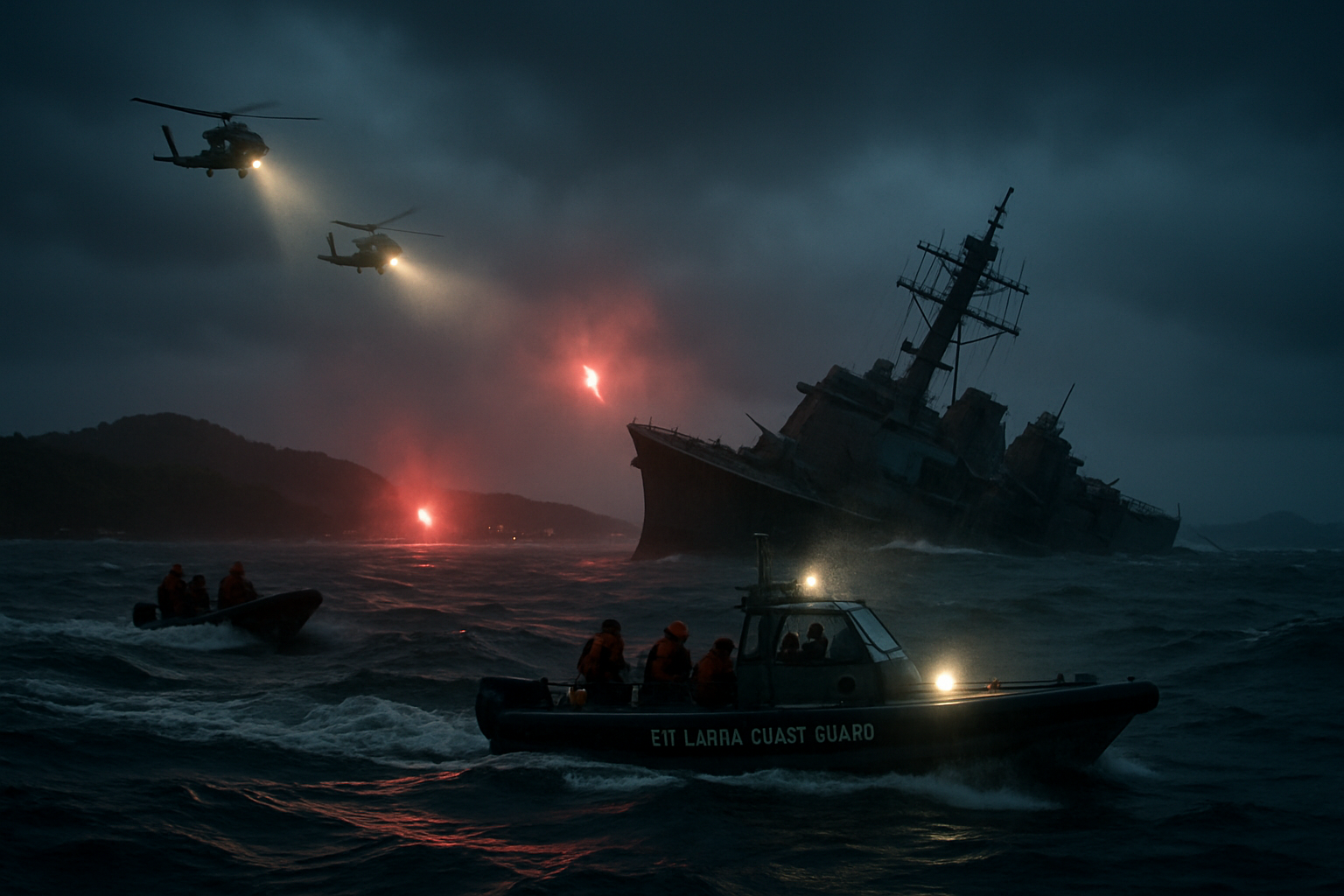
An Iranian warship has sunk in the Indian Ocean off the coast of Sri Lanka, with Sri Lankan authorities confirming the rescue of 32 survivors while approximately 100-150 personnel remain missing following what defense sources describe as a submarine attack by unidentified forces.
The vessel, identified as the IRIS Dena, a Moudge-class frigate of Iran's Southern Fleet, issued a distress signal early Wednesday morning from approximately 40 nautical miles off the southwestern city of Galle. Sri Lankan Foreign Minister Vijitha Herath confirmed to parliament that the Iranian naval vessel had sunk, prompting a massive international rescue operation.
Rescue Operations and Casualties
Sri Lankan naval forces responded immediately to the distress call received at approximately 5:08 AM local time, dispatching two navy ships and coordinating air force assets for the rescue operation. The Sri Lankan navy successfully rescued 32 injured personnel who were transported to a state-run hospital in Galle for treatment.
However, the scale of the tragedy remains unclear, with conflicting reports about the total number of missing personnel. Sources within Sri Lanka's navy and defense ministry initially reported that 101 people were missing, while other sources suggest the figure could be as high as 150. Several bodies have been recovered from the sea, though exact numbers have not been officially confirmed.
"What we know at this point is that 79 people were rescued and brought to the hospital and one of them was seriously injured. Another 101 are believed to be missing," a Sri Lankan naval spokesperson initially reported, though these figures were later disputed by other officials.
Submarine Attack Claims
The most alarming aspect of this incident involves reports from Sri Lankan defense sources claiming the vessel was attacked by a submarine. Multiple sources within Sri Lanka's navy and defense ministry told international media that the IRIS Dena had been targeted in what appears to be a deliberate attack, though the identity of the attacking submarine remains unknown.
The defense sources emphasized that it was unclear who was responsible for the attack, raising serious questions about the incident's implications for regional maritime security. A Sri Lankan navy spokesman later rejected reports about the cause of the sinking, stating that the circumstances remained under investigation.
The IRIS Dena was reportedly armed with missiles and torpedoes and had the capability to carry a helicopter, making it a significant naval asset for Iran's maritime operations in the Indian Ocean region.
International Response and Investigation
The incident has prompted immediate international attention, with various nations monitoring the developing situation. The sinking of an Iranian naval vessel in international waters off Sri Lanka raises complex questions about maritime security and potential international law violations if the submarine attack claims are confirmed.
Iranian authorities have yet to release an official statement regarding the incident, though the loss of such a significant naval vessel would represent a major blow to Iran's naval capabilities in the Indian Ocean. The IRIS Dena was part of Iran's effort to project naval power beyond the Persian Gulf region.
Sri Lankan authorities have emphasized their commitment to the ongoing rescue operation, with Foreign Minister Herath stating that rescue efforts would continue as long as there was hope of finding additional survivors. The joint operation involves both naval vessels and aircraft searching the waters around the incident site.
Regional Maritime Security Implications
This incident occurs against the backdrop of heightened tensions in the region, particularly following recent military escalations involving Iran. The suspected submarine attack, if confirmed, would represent a significant escalation in maritime warfare tactics and raise questions about the security of international shipping lanes in the Indian Ocean.
The Indian Ocean serves as a critical maritime corridor for international trade, with ships carrying approximately 80% of global seaborne oil trade passing through its waters. Any threat to maritime security in this region has far-reaching implications for global commerce and energy supplies.
The timing of this incident is particularly significant given recent tensions involving Iran's naval operations and the broader geopolitical situation in the Middle East and South Asia. Iran has been expanding its naval presence in the Indian Ocean as part of its broader regional strategy.
Technical Aspects of the Incident
The IRIS Dena, as a Moudge-class frigate, represented one of Iran's more advanced naval vessels, equipped with sophisticated radar systems and defensive capabilities. The fact that such a vessel could be successfully targeted and sunk raises questions about the attacking submarine's capabilities and the circumstances that allowed the attack to succeed.
Maritime security experts note that submarine attacks on surface vessels are relatively rare in modern naval warfare, making this incident particularly significant if the submarine attack claims are verified. The ability to successfully target and sink a well-equipped frigate suggests advanced submarine warfare capabilities.
Ongoing Developments
Search and rescue operations continue as authorities work to locate the remaining missing personnel. The Sri Lankan government has committed significant naval and air assets to the rescue effort, while international maritime authorities monitor the situation.
The investigation into the cause of the sinking continues, with Sri Lankan authorities working to determine the exact circumstances that led to the loss of the vessel. The potential confirmation of a submarine attack would have significant implications for regional maritime security and international law.
The international community awaits further details about this developing situation, which could have far-reaching implications for maritime security in one of the world's most important shipping corridors. The incident serves as a stark reminder of the ongoing tensions and potential for conflict in strategically important maritime regions.