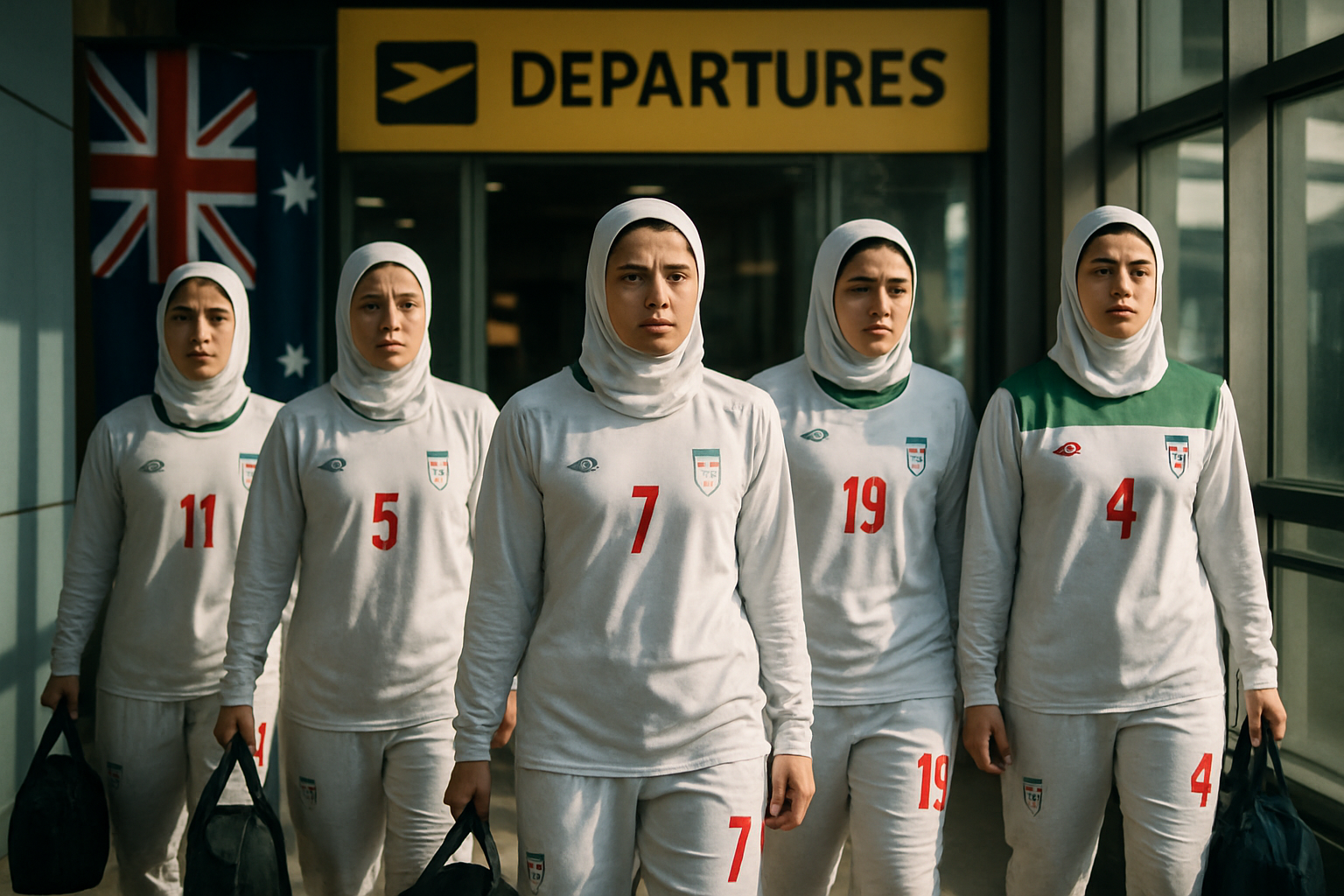
Five Iranian women's football players have been granted humanitarian visas by Australia after a dramatic midnight escape from their government handlers during the AFC Women's Asian Cup, marking a significant victory for athlete protection amid escalating political tensions in Iran.
The asylum grants, announced Tuesday by Australian Prime Minister Anthony Albanese, followed days of mounting international pressure and fears for the players' safety after they refused to sing Iran's national anthem before matches, a gesture that Iranian state television condemned as an act of "wartime traitors."
"Australians have been moved by the plight of these brave women," Albanese told a news conference in Canberra, confirming the humanitarian visas had been approved following police intervention to extract the women from their Iranian government handlers.
The Anthem Protest That Sparked International Crisis
The controversy began when Iranian women's team players remained silent during the national anthem before their opening match against Australia in the AFC Women's Asian Cup. The symbolic protest, occurring amid Iran's ongoing political crisis following Supreme Leader Khamenei's death on March 1 and subsequent regional conflicts, triggered harsh condemnation from Iranian state media.
Iranian commentators labeled the players as "wartime traitors," creating what human rights observers described as "imminent danger" for the athletes. The team's silence during the anthem was widely interpreted as a peaceful protest against the Islamic Republic's systematic oppression of women, particularly following the massive crackdown that has resulted in over 42,000 arrests since the 2022 women's rights protests.
Video footage later emerged showing one player making what appeared to be an international distress signal from inside the team bus as hundreds of supporters surrounded the vehicle, shouting "Let them go" in a display of solidarity rather than hostility.
Police Extraction and Secret Operation
According to multiple sources, Australian Federal Police coordinated a dramatic 1:30 AM extraction operation on March 10 from the Royal Pines resort on the Gold Coast. The five players - reportedly including team captain Zahra Ghanbari and other key squad members - had made secret asylum requests after being labeled as traitors by Iranian state television.
Home Affairs Minister Tony Burke personally granted the visas following what officials described as a 48-hour coordinated operation. The players were immediately moved to an undisclosed location under police protection, with Burke emphasizing that the athletes "want to be clear they are not political activists. They are athletes who want to be safe."
The operation represented unprecedented cooperation between federal authorities, with Burke confirming that talks had been ongoing for several days to ensure the athletes' safety through systematic protective measures.
Trump's Direct Presidential Intervention
In an extraordinary development, US President Donald Trump personally contacted Prime Minister Albanese to warn that Australia would be "making a terrible humanitarian mistake" if the players were "forced back to Iran, where they will most likely be killed."
Trump's intervention, described as unprecedented presidential involvement in a sports asylum case, included an indication that the United States would accept the athletes if Australia declined to provide protection. This high-level diplomatic pressure demonstrated the international significance of the case and the genuine fears for the players' safety.
The involvement of the US President highlighted how the case had transcended sports to become a critical test of international solidarity with Iranian women facing systematic persecution.
Broader Context of Iran's Crisis
The asylum grants occurred during what experts describe as Iran's most dangerous period since the Cold War. The death of Supreme Leader Khamenei on March 1, ongoing Middle East conflicts, and the systematic crackdown on women's rights have created an environment where symbolic protests carry deadly consequences.
Nobel laureate Narges Mohammadi remains imprisoned despite international calls for her release, and the regime has shown zero tolerance for any form of dissent. Iranian athletes have increasingly found themselves caught between representing their country on international platforms and maintaining personal conscience in the face of systematic oppression.
The use of the "wartime traitors" label by Iranian state TV was particularly ominous, as it has historically been associated with severe punishment including imprisonment and potentially execution. Human rights experts warned that return to Iran would likely result in harsh retribution for the players.
International Sports Community Response
The case has prompted urgent calls for stronger protection mechanisms for athletes facing persecution for peaceful symbolic protests. FIFA and the AFC have faced growing pressure to develop comprehensive frameworks protecting athletes' rights while navigating complex geopolitical pressures.
Sports governance experts describe this as a template-setting moment that demonstrates how athletics have become flashpoints for broader social and political tensions in the 21st century. The successful protection of the Iranian players could encourage other threatened athletes to seek international sanctuary.
Asylum Process and Future Implications
The players are currently staying at an undisclosed location under police protection, with potential pathways to permanent residency being discussed. Burke confirmed that the asylum process was designed to ensure the athletes' safety while providing opportunities to continue their football careers without fear of persecution.
The case establishes important precedents for athlete asylum situations globally, demonstrating the international community's capacity to coordinate protective responses when athletes face persecution for symbolic protests. It may also encourage other Iranian athletes facing similar threats to seek international protection.
Australia's decision occurred despite global trends toward more restrictive immigration policies, showing how high-profile humanitarian cases can override standard restrictive policies through international pressure and public sympathy. The bipartisan political support for the humanitarian visas was particularly notable in Australia's often-divisive immigration debate.
Remaining Team Members and Ongoing Concerns
Journalist Amber Schultz spoke with remaining Iranian team members as they boarded Malaysian Airlines flight MH140 from Sydney airport, with some players expressing that "Iran is home" despite the controversy. The departure of the remaining squad members occurred amid continued security concerns and questions about their safety upon return.
The successful asylum grants for five players may have prevented potential persecution while establishing a framework that other threatened Iranian athletes could potentially use. However, it also highlights the impossible position facing Iranian athletes who must choose between representing their country and maintaining personal conscience.
Historical Significance and Global Impact
This case represents a rare humanitarian victory amid increasingly restrictive global immigration trends. The successful international coordination demonstrated the capacity for democratic nations to provide sanctuary when systematic persecution threatens peaceful protesters.
The intersection of athletics and human rights in the 21st century has created new challenges for international sports governance, requiring innovative approaches that balance competitive integrity with fundamental human rights protection. The Iranian women's case may become a defining moment for how the international community responds to athlete persecution.
As the five players begin new lives in Australia with legal protection and the freedom to continue their athletic careers, their case serves as both inspiration for other threatened athletes and a warning about the systematic persecution facing Iranian women who dare to make symbolic protests on global sporting platforms.
The success of this operation required unprecedented international solidarity, demonstrating that when democratic institutions work together, they can provide meaningful protection for those facing persecution for peaceful symbolic protests against authoritarian regimes.