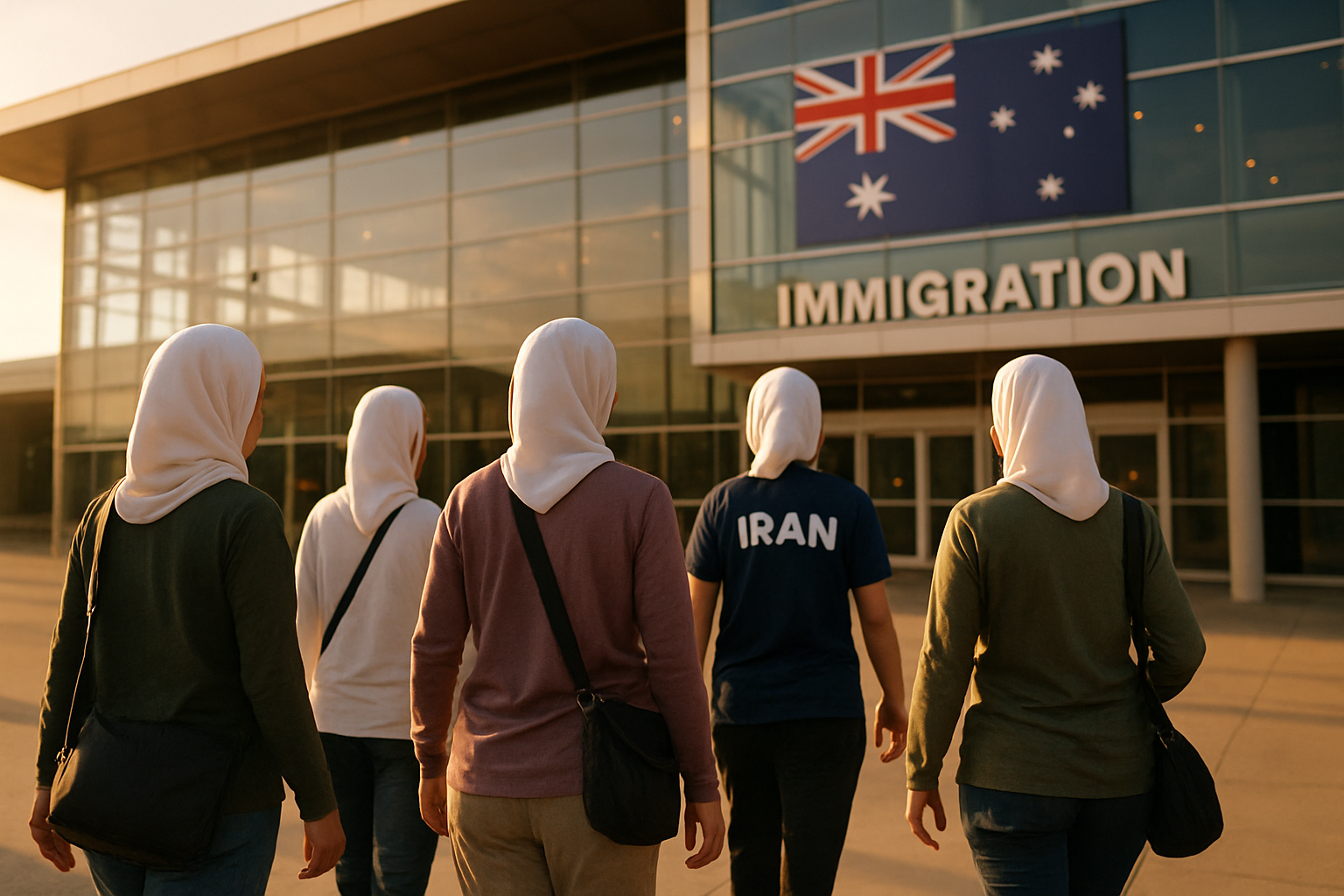
Five Iranian women's football players have been granted humanitarian visas by Australia after escaping their team hotel with assistance from the Australian Federal Police, following fears of persecution for their refusal to sing the national anthem during AFC Women's Asian Cup matches.
The dramatic operation unfolded over several days on Australia's Gold Coast, culminating in Prime Minister Anthony Albanese personally announcing the asylum grants at a Tuesday press conference in Canberra. "Australians have been moved by the plight of these brave women," Albanese said. "They're safe here, and they should feel at home here."
The Players and Their Escape
Australian Home Affairs Minister Tony Burke identified the five players as captain Zahra Ghanbari, midfielder Fatemeh Pasandideh, defender Atefeh Ramezanizadeh, midfielder Mona Hamoudi, and goalkeeper Zahra Sarbali Alishah. The players are now staying at an undisclosed location under police protection.
The escape operation, described by sources as taking place at around 1:30 AM on March 10, involved the Australian Federal Police meeting secretly with the players at the Royal Pines resort while supporters bombarded the team with messages of support. Time was running out as Iranian handlers grew increasingly suspicious of the players' behavior.
"They want to be clear they are not political activists. They are athletes who want to be safe,"
— Tony Burke, Australian Home Affairs Minister
Video footage from the Gold Coast showed hundreds of protesters surrounding the Iranian team bus after their final match, with at least one player appearing to make an international distress signal from the bus window. The crowd was heard shouting "Let them go," demonstrating public support for the players rather than hostility.
The Anthem Controversy
The crisis began during Iran's opening match against Australia in the AFC Women's Asian Cup, when the Iranian team remained silent during their national anthem. This symbolic protest triggered a harsh response from Iranian state television, which condemned the players as "wartime traitors" - a dangerous escalation that human rights observers warned could put the athletes at physical risk.
The silence occurred against the backdrop of Iran's broader political crisis, with the country experiencing its most dangerous period since the Cold War following the death of Supreme Leader Ali Khamenei on March 1, 2026. The timing of the protest, combined with Iran's ongoing crackdown on women's rights that has resulted in over 42,000 arrests since 2022, created an impossible situation for the players.
International Pressure and Trump's Intervention
The case attracted unprecedented international attention, including direct intervention from US President Donald Trump. Trump contacted Prime Minister Albanese personally, warning that Australia would be "making a terrible humanitarian mistake" if the players were "forced back to Iran, where they will most likely be killed." Trump indicated the United States would accept the athletes if Australia declined to grant asylum.
This presidential intervention in a sports asylum case was unprecedented and demonstrated the high-stakes nature of the situation. Multiple governments issued statements supporting the players' safety, while human rights organizations closely monitored their wellbeing throughout the tournament.
A Pattern of Athlete Persecution
The Iranian women's case follows a disturbing pattern of Iranian athletes using international sporting platforms for peaceful dissent, particularly regarding women's rights issues. Previous incidents have resulted in bans, harassment, and persecution of athletes upon their return to Iran.
The situation highlights the impossible position facing Iranian athletes who must choose between representing their country and following their conscience. The use of the "wartime traitors" label by Iranian state media represented a dangerous escalation from previous responses to athlete protests.
Australian Response and Historical Precedent
Australia's decision to grant asylum represents a rare example of bipartisan political support for a humanitarian case. The Coalition government provided backing for the humanitarian visas despite the complex diplomatic implications.
This contrasts with Australia's typically restrictive immigration policies, demonstrating how high-profile humanitarian cases can override standard restrictive approaches through international pressure and public sympathy. The case may establish a template for athlete asylum situations and high-profile humanitarian exceptions to immigration restrictions.
AFC Women's Asian Cup Context
The asylum crisis overshadowed what was intended to be a celebration of women's football in Asia. The tournament, being held across Australia, was meant to showcase the growth of women's football in the region, but instead became a flashpoint for broader geopolitical tensions.
The remaining Iranian team members departed Australia amid security concerns, while the five players who stayed began their new lives in a country that has committed to their protection and integration.
Implications for Sports Governance
The case has prompted calls for stronger protection mechanisms within international sports organizations like FIFA and the AFC. Currently, there are limited formal protections for athletes who face persecution for symbolic protests or political statements made during international competitions.
The incident represents a critical test case for the balance between sporting neutrality and athlete protection rights. It raises questions about what responsibilities sports governing bodies have when athletes face genuine safety threats due to their participation in competition.
Looking Forward
Burke indicated that Australia remains open to assisting other Iranian athletes facing similar threats, suggesting this may not be an isolated case. The success of the asylum grants could encourage other threatened Iranian athletes to seek international protection.
For the five players now in Australia, the focus shifts to rebuilding their lives and potentially continuing their football careers in a country where they can play without fear of persecution. Their case stands as a powerful symbol of international solidarity and the capacity of sports to transcend political boundaries while highlighting fundamental human rights issues.
The Iranian women's successful asylum case represents the intersection of athletics and human rights in the 21st century, demonstrating both the power of international advocacy and the ongoing challenges faced by athletes who dare to make peaceful protests on the world's biggest stages.