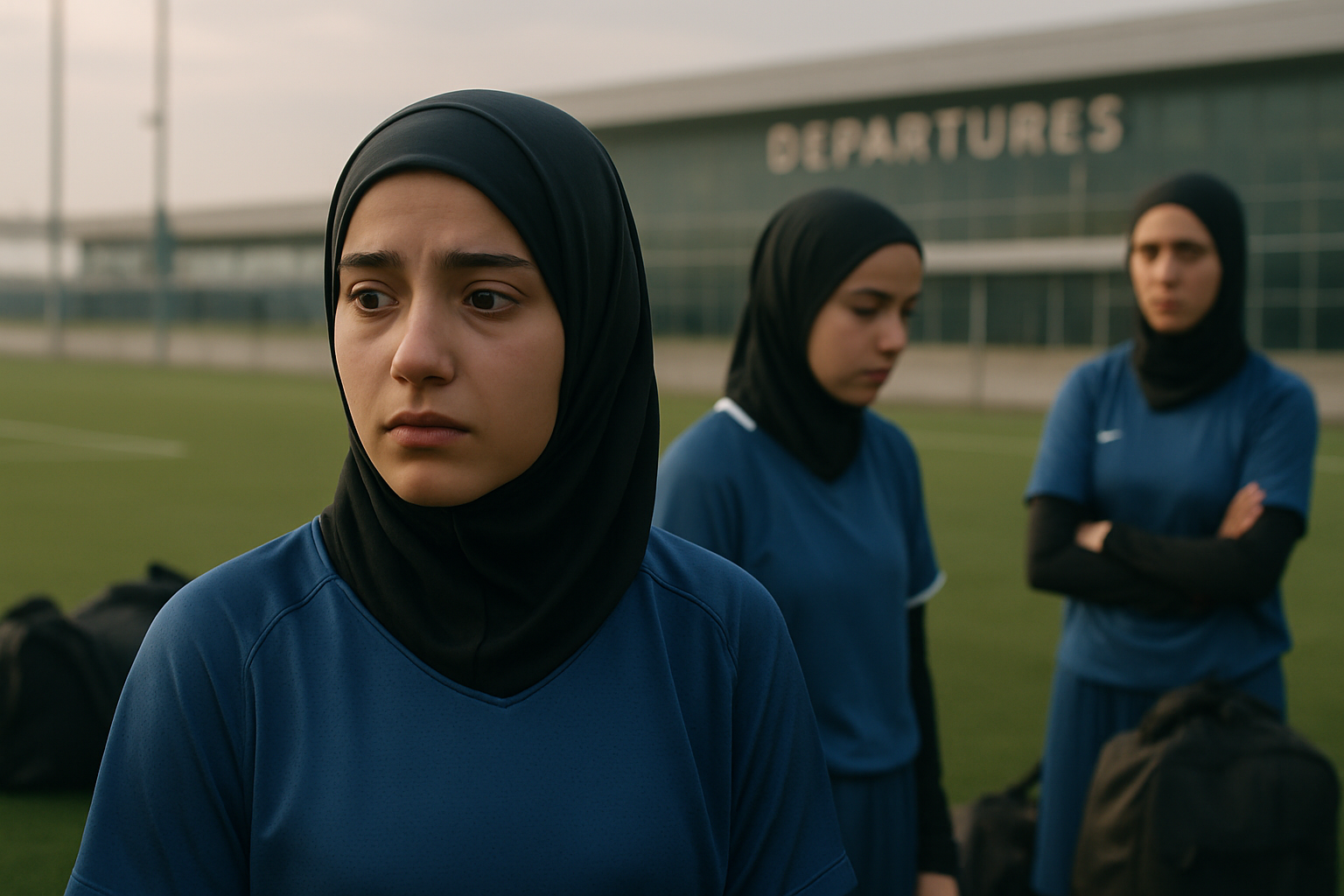
Three additional Iranian women's football team members have withdrawn their asylum applications in Australia and opted to return to Iran, bringing to four the total number of players who have reversed their initial decisions to seek humanitarian protection after being labeled "wartime traitors" by Iranian state television.
The reversals mark a significant development in what became the most high-profile athlete asylum case in recent memory, following the team's refusal to sing the Iranian national anthem during their AFC Women's Asian Cup matches on Australia's Gold Coast in March 2026. The symbolic protest, conducted during Iran's escalating conflict with the United States and Israel, triggered harsh condemnation from Iranian state media and raised serious safety concerns for the players.
Complex Individual Decisions Under Pressure
According to multiple Australian media sources, three more players have contacted Iranian embassy officials to withdraw their asylum applications, following an earlier player who made the same decision after speaking with departed teammates. The decisions highlight the complex psychological and cultural pressures facing athletes caught between personal safety and ties to family and homeland.
Home Affairs Minister Tony Burke confirmed the voluntary nature of these decisions while revealing that the remaining players have been relocated to secure locations for their continued protection. The Australian government had initially granted asylum to seven Iranian women's team members after what became known as the "midnight extraction" operation from their Gold Coast hotel in early March.
"These are deeply personal decisions that each individual has the right to make,"
— Tony Burke, Home Affairs Minister
The reversals underscore the ongoing internal struggle many athletes face when forced to choose between representing their country and ensuring their personal safety. Several players reportedly cited concerns about family members in Iran and uncertainty about building new lives in Australia as factors in their decision-making process.
International Pressure and Trump Intervention
The case gained unprecedented international attention when US President Donald Trump personally contacted Australian Prime Minister Anthony Albanese, warning that Australia would be making a "terrible humanitarian mistake" if the players were forced to return to Iran, where they would "most likely be killed." Trump's intervention proved decisive in the Australian government's decision to grant humanitarian visas to the players.
The crisis began when the Iranian women's team remained silent during the national anthem before their match against Australia, triggering Iranian state TV's condemnation of the players as "wartime traitors" amid the broader Middle East conflict. This labeling created immediate physical danger for the athletes, prompting their protective extraction by Australian Federal Police in the early hours of March 10.
Sporting Community Support
Despite some players' decisions to return, the Australian football community has demonstrated remarkable solidarity with those who remain. Brisbane Roar and other A-League clubs opened their doors to the Iranian players, offering training facilities, professional support, and career continuation opportunities.
This sporting community response represents a significant template for how professional football organizations can provide not just safety but practical pathways for athletic careers when athletes face persecution for peaceful symbolic protests. The support extends beyond mere humanitarian gestures to concrete professional development opportunities.
Geopolitical Context and Regional Impact
The asylum crisis occurred during Iran's most dangerous period since the Cold War, following the death of Supreme Leader Ali Khamenei in March 2026 and the subsequent regional conflict. The athletes found themselves in an impossible position of representing a country whose policies endangered their lives for peaceful expressions of conscience.
Iranian media reports suggest that some players traveled via Malaysia as part of their journey back to Iran, indicating complex logistics as the crisis continues to evolve with players making different individual decisions about safety versus return to their homeland.
The Iranian Football Federation had earlier claimed that women's team members were being "taken hostage" in Australia and threatened to withdraw Iran's men's team from the 2026 FIFA World Cup in protest. Iran ultimately did withdraw from the World Cup, marking the first time a qualified nation has withdrawn due to geopolitical conflict in tournament history.
Template for Athlete Protection
The case has established important precedents for international athlete protection from persecution for symbolic protests. Critics have highlighted gaps in FIFA and Asian Football Confederation protection mechanisms, generating calls for stronger international sporting body responses to systematic athlete persecution.
The success of the initial protective intervention demonstrates the international community's capacity to coordinate responses when athletes face life-threatening situations for peaceful protests on global sporting platforms. However, the subsequent reversals highlight the complex human factors beyond immediate physical safety that influence such decisions.
Ongoing Complexities
The situation remains fluid, with Home Affairs Minister Burke revealing that the total number of team members involved in asylum requests may reach nine, indicating the crisis extends beyond the original group. This evolving dynamic demonstrates that asylum processes involve ongoing individual choice rather than one-time decisions, with players able to change their minds as circumstances develop.
The voluntary nature of both the initial asylum requests and the subsequent reversals has been consistently emphasized by Australian officials, maintaining the principle that these are personal decisions made by the athletes themselves despite the extreme circumstances they face.
For those players who remain in Australia, the government has confirmed they have potential permanent residency pathways and the freedom to continue their athletic careers without persecution. The successful international coordination that enabled their protection has established a framework for protecting athletes who engage in peaceful symbolic protests while highlighting the ongoing complexity of systematic persecution that requires continued protective mechanisms.
Broader Implications for Sports and Politics
The Iranian women's football asylum saga represents a watershed moment in the intersection of sports and politics in the 21st century. It demonstrates both the successful capacity for international protection and the complex individual decision-making factors that include psychological pressures, cultural ties, and uncertainty about life in a new country.
The case illustrates that successful international protection frameworks can provide safety, but individual decisions involve considerations that extend far beyond immediate physical safety to encompass family relationships, cultural identity, and personal agency even in extreme circumstances.
As the situation continues to evolve, it serves as a template for understanding both the protective capacity of the international community and the deeply human complexity inherent in sports-political intersection crises in the modern era. The decisions made by these athletes—whether to stay or return—reflect the fundamental principle that even in the most difficult circumstances, individual choice and agency remain paramount in determining one's own future.