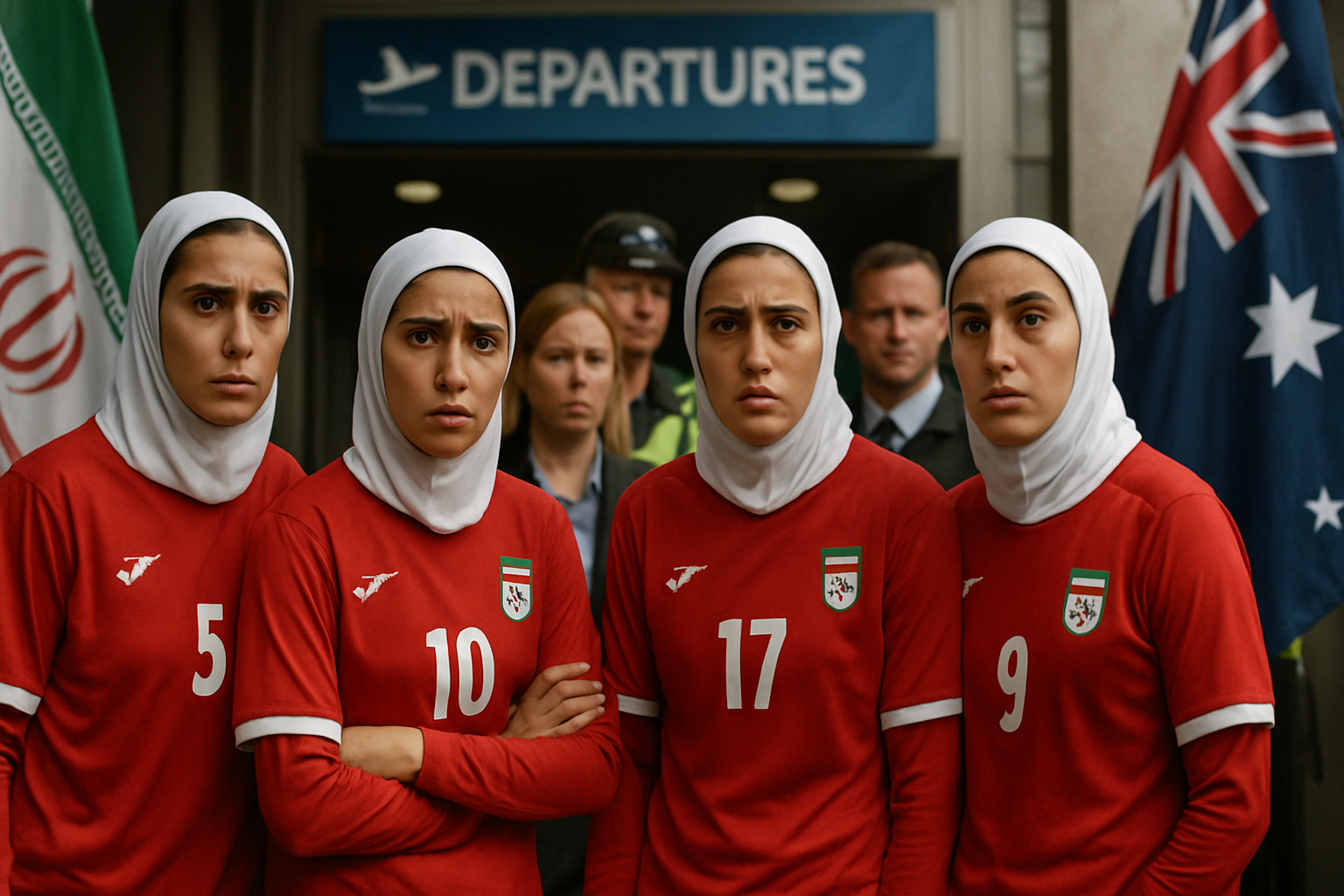
Seven members of Iran's women's national football team have sought asylum in Australia following the completion of the AFC Women's Asian Cup, according to sources within the Department of Home Affairs, marking an unprecedented crisis in international sports and human rights.
Home Affairs Minister Tony Burke confirmed that border force officials made multiple representations to the players at Sydney Airport before their scheduled departure, with the ABC understanding that a total of seven team members have now applied for protection visas. The developments follow an earlier asylum crisis that saw five players successfully granted humanitarian protection after a dramatic midnight escape from their Gold Coast hotel.
Escalating Concerns Over Player Coercion
The latest asylum applications come amid mounting fears that remaining Iranian team members are being coerced by their handlers. SBS News reports that after five players were initially granted asylum, concerns are growing over whether the remaining team members can safely seek protection without facing severe repercussions.
"She can't make a decision"
— Source close to the team, speaking anonymously about one player's situation
The crisis began when Iranian state television condemned the women's team as "wartime traitors" for remaining silent during the national anthem before their AFC Women's Asian Cup matches against Australia. This act of peaceful protest triggered harsh condemnation from Iranian authorities, with commentators warning that the players' lives were in "imminent danger."
International Intervention and Diplomatic Pressure
The asylum crisis gained international attention after unprecedented intervention from US President Donald Trump, who personally contacted Australian Prime Minister Anthony Albanese. Trump warned that Australia would be "making a terrible humanitarian mistake" if the players were "forced back to Iran, where they will most likely be killed," according to sources familiar with the conversation.
The intervention proved decisive in the Australian government's decision-making process, with Trump indicating that the United States would accept the athletes if Australia declined to provide protection. This marked an unusual instance of presidential involvement in an international sports asylum case.
Iran's Response and Escalating Tensions
Iranian Football Federation head Mehdi Taj has escalated the rhetoric, claiming that members of the women's team in Australia were "taken hostage" after they applied for asylum. In an extraordinary move, Iran has suggested that its men's soccer team may skip the upcoming FIFA World Cup as a result of the women's team defections.
This threat represents a significant escalation in the diplomatic fallout from the asylum crisis, potentially affecting Iran's participation in the world's most-watched sporting event. Iran is drawn in Group G alongside Belgium, New Zealand, and Egypt, with matches scheduled in Inglewood, California, and Seattle.
Broader Context of Iran's Political Crisis
The asylum crisis occurs against the backdrop of Iran's most dangerous political period since the Cold War. Supreme Leader Ali Khamenei was killed on March 1, 2026, during Operation Epic Fury, creating a massive power vacuum and regional instability. The Iranian regime has conducted over 42,000 arrests since the 2022 women's rights protests, while Nobel Peace Prize laureate Narges Mohammadi remains imprisoned despite international calls for her release.
The women's football team found themselves caught between representing their country and their personal conscience, facing an impossible choice that has become emblematic of the broader struggle for women's rights in Iran.
Historical Precedent for Athlete Protection
The Australian government's decision to grant asylum to Iranian athletes represents a significant precedent in international sports law and human rights protection. Minister Burke emphasized that the players "want to be clear they are not political activists. They are athletes who want to be safe."
The case has prompted renewed calls for FIFA and the Asian Football Confederation to establish stronger protection mechanisms for athletes facing persecution for symbolic protests. Sports governance experts describe this as a template-setting moment for how international sporting bodies should respond when athletes face persecution for peaceful expression.
International Support and Coalition Building
The asylum crisis has generated unprecedented international support, with hundreds of protesters surrounding the team bus at the Gold Coast and shouting "Let them go." Video footage showed at least one player making what appeared to be an international distress signal from inside the bus, highlighting the players' desperation.
The case has received rare bipartisan political support in Australia, with the Coalition government providing backing for the humanitarian visa grants despite typically restrictive immigration policies. This demonstrates how high-profile humanitarian cases can override standard policy frameworks through international pressure and public sympathy.
Implications for Sports and Human Rights
The crisis represents a critical intersection of athletics and human rights in the 21st century, demonstrating both the vulnerability of athletes under authoritarian regimes and the capacity for international solidarity. The successful asylum grants may encourage other threatened Iranian athletes to seek international protection.
However, the situation also raises complex questions about the relationship between sports and politics. While the players have stressed they are not political activists, their silent protest during the national anthem has been interpreted as a powerful statement about women's rights in Iran.
Looking Forward: Uncertain Future for Iranian Sports
The resolution of the asylum crisis leaves significant questions about the future of Iranian participation in international sports. With the men's team threatening to boycott the World Cup and growing international scrutiny of Iran's treatment of athletes, the regime faces difficult choices about balancing domestic control with international sporting prestige.
For the seven women who have sought asylum, the path ahead involves complex legal processes and the challenge of rebuilding their lives and potentially their sporting careers in a new country. Australia has indicated its willingness to assist other threatened Iranian athletes, suggesting this may not be an isolated case.
The Iranian Women's Soccer Team asylum crisis stands as a watershed moment in international sports, establishing precedents for athlete protection while highlighting the ongoing struggle for human rights in Iran. As the players begin their new lives in Australia under police protection, their courage in choosing safety over compliance has resonated far beyond the football pitch, inspiring others facing similar impossible choices between conscience and coercion.