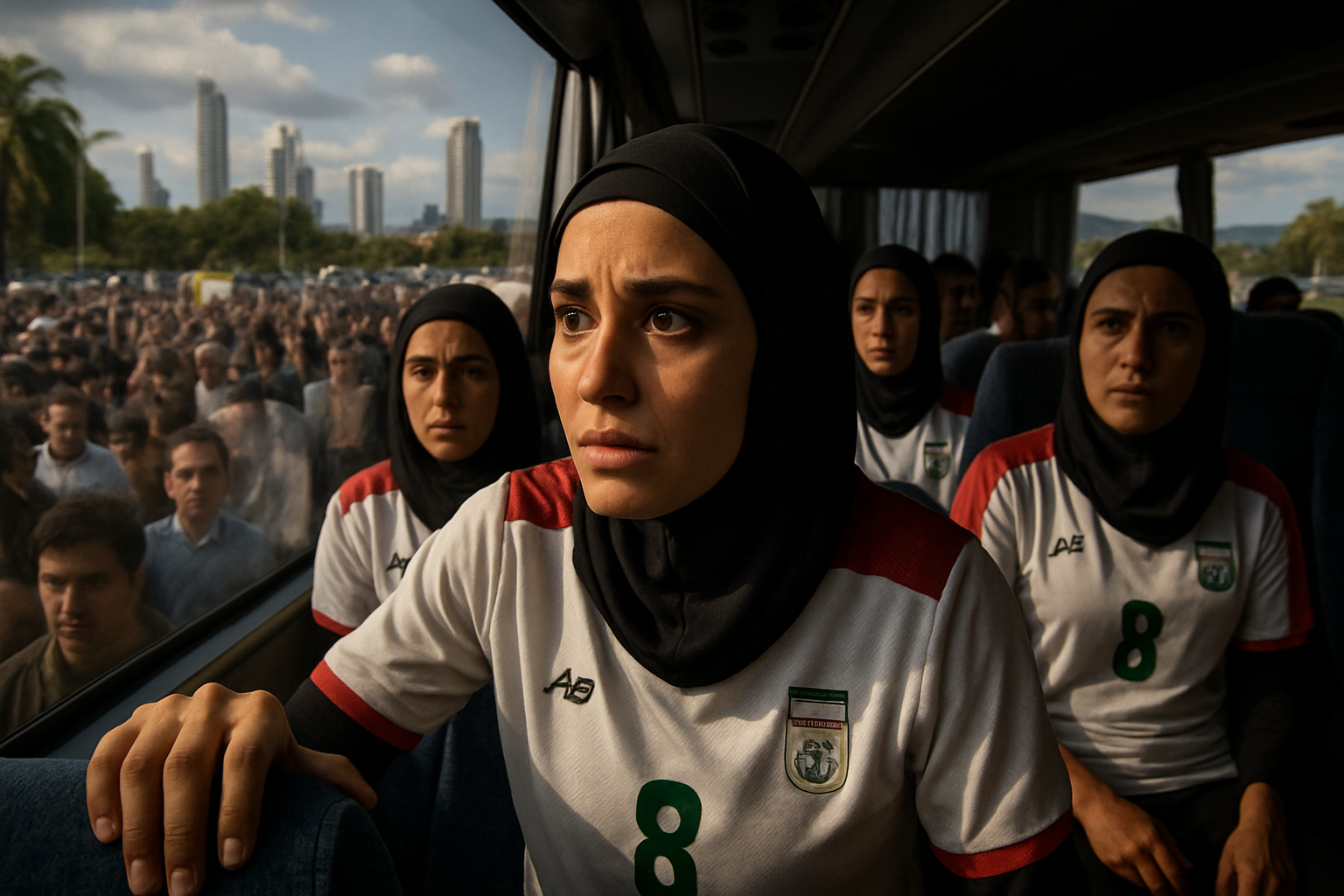
Five players from Iran's women's football team have escaped from their handlers at a Gold Coast hotel and are now under police protection, as international pressure mounts on Australia to grant the entire team asylum following their symbolic protest against the Iranian regime.
The women, who are now being safeguarded by Australian authorities, fear severe persecution if they return home after being labeled "wartime traitors" by Iranian state television for refusing to sing the national anthem during their opening match against Australia at the AFC Women's Asian Cup in Queensland.
International Pressure Intensifies
US President Donald Trump has joined the chorus of voices urging Australia to protect the Iranian players, declaring that Australia would be "making a terrible humanitarian mistake" if the women were "forced back to Iran, where they will most likely be killed." Trump's statement comes as the crisis has escalated from a sporting controversy to a major international human rights issue.
The Iranian team's silent protest during the national anthem before their match against Australia sparked immediate condemnation from Tehran, with state media describing the players as having placed themselves in "imminent danger" through their act of defiance. This harsh rhetoric has only intensified international concerns about the team's safety.
Pattern of Iranian Athlete Persecution
This incident represents the latest in a series of Iranian athletes using international sporting platforms for peaceful dissent against regime policies, particularly regarding women's rights. Previous incidents have resulted in bans, harassment, and persecution of athletes upon their return to Iran, creating an impossible choice between representing their country and following their conscience.
"The team remained silent during the anthem before the match against Australia, triggering harsh response from Iranian state media. Players were described as 'intimidated and surveilled' throughout their Gold Coast stay."
— Human Rights Observers
The broader context of Iran's domestic crisis adds urgency to the situation, with over 42,000 arrests documented since the 2022 protests and Nobel Peace Prize laureate Narges Mohammadi recently sentenced to additional prison time, demonstrating the regime's zero-tolerance approach to dissent.
Gold Coast Crisis Unfolds
Dramatic footage has emerged showing hundreds of protesters surrounding the Iranian women's team bus after their final AFC Women's Asian Cup match. Video evidence captured at least one player making what appeared to be an international distress signal from inside the bus window to the crowd outside, with people heard shouting "Let them go."
The incident occurred as the team was eliminated from the tournament, with protesters gathering outside the stadium as the bus attempted to leave. The crowd's actions suggested concern for the players rather than hostility, representing a dangerous escalation from the earlier anthem silence controversy.
Trump's Diplomatic Intervention
President Trump's intervention in the crisis marks a significant escalation in international diplomatic pressure. His statement that the situation represents an opportunity for the Iranian people to "take back their country" aligns with his broader policy of explicit regime change advocacy regarding Iran.
Trump has indicated that if Australia doesn't act, Washington would be prepared to take in the athletes, demonstrating the high-stakes nature of this humanitarian crisis that has captured global attention.
Broader Iranian Crisis Context
The women's football team crisis is unfolding against the backdrop of the most dangerous Middle East situation since the Cold War, with nuclear diplomacy having completely collapsed despite breakthrough negotiations in Geneva. Iran's Supreme Leader Ali Khamenei was killed in March 2026 during US-Israeli "Operation Epic Fury" strikes, leading to massive regional conflict and the largest international evacuation since the Arab Spring.
This broader regional instability has created additional complications for any potential return of the athletes to Iran, where the political situation remains highly volatile with over 18,000 flights cancelled worldwide due to regional conflicts and energy markets in turmoil.
Athletic Achievement Overshadowed
The political controversy has overshadowed what should have been a celebration of women's football at the AFC Women's Asian Cup. Australia defeated Iran 4-0 in their opening match, but the post-match jersey exchanges between Australian and Iranian players symbolized sport transcending political boundaries despite the underlying tensions.
Tournament organizers have been working to ensure athlete safety, but the extent of protection available remains unclear as the situation evolves from a sporting event into an international diplomatic crisis.
Human Rights at Stake
Human rights observers and security experts have expressed serious concerns about the team's wellbeing both during the tournament and especially regarding any potential return to Iran. The use of apparent international distress signals represents a deeply troubling development that has intensified calls for protective action.
The situation has become a template-setting moment for sports governance and human rights protection in the modern era, with critical questions about protecting athletes' rights to peaceful expression while navigating complex geopolitical pressures.
International Response
The international sporting community and human rights organizations are closely monitoring the situation, with growing calls for FIFA and AFC intervention to protect the players. There is mounting pressure for concrete measures to ensure athlete safety versus political persecution.
The crisis highlights how sports have become flashpoints for broader social and political tensions, representing a test case for the international community's response when athletes face persecution for symbolic protests while representing their country under authoritarian rule.
Looking Forward
As the situation continues to develop, the Iranian women's football team crisis has evolved from a sporting controversy into a defining moment for international human rights protection. The team's return to Iran raises serious safety questions given state media's "traitors" labeling and explicit threats.
The international community now faces a critical test of its commitment to athlete protection and human rights, with the resolution likely to establish important precedents for how similar situations are handled in the future. The courage shown by these athletes in taking a stand for their beliefs has brought global attention to the ongoing struggles for women's rights and freedom of expression in Iran.
With multiple countries now involved and President Trump's direct intervention, the crisis has become a major international diplomatic issue that extends far beyond the football pitch, potentially influencing broader discussions about human rights, sports governance, and the protection of athletes who risk everything to speak out for their beliefs.