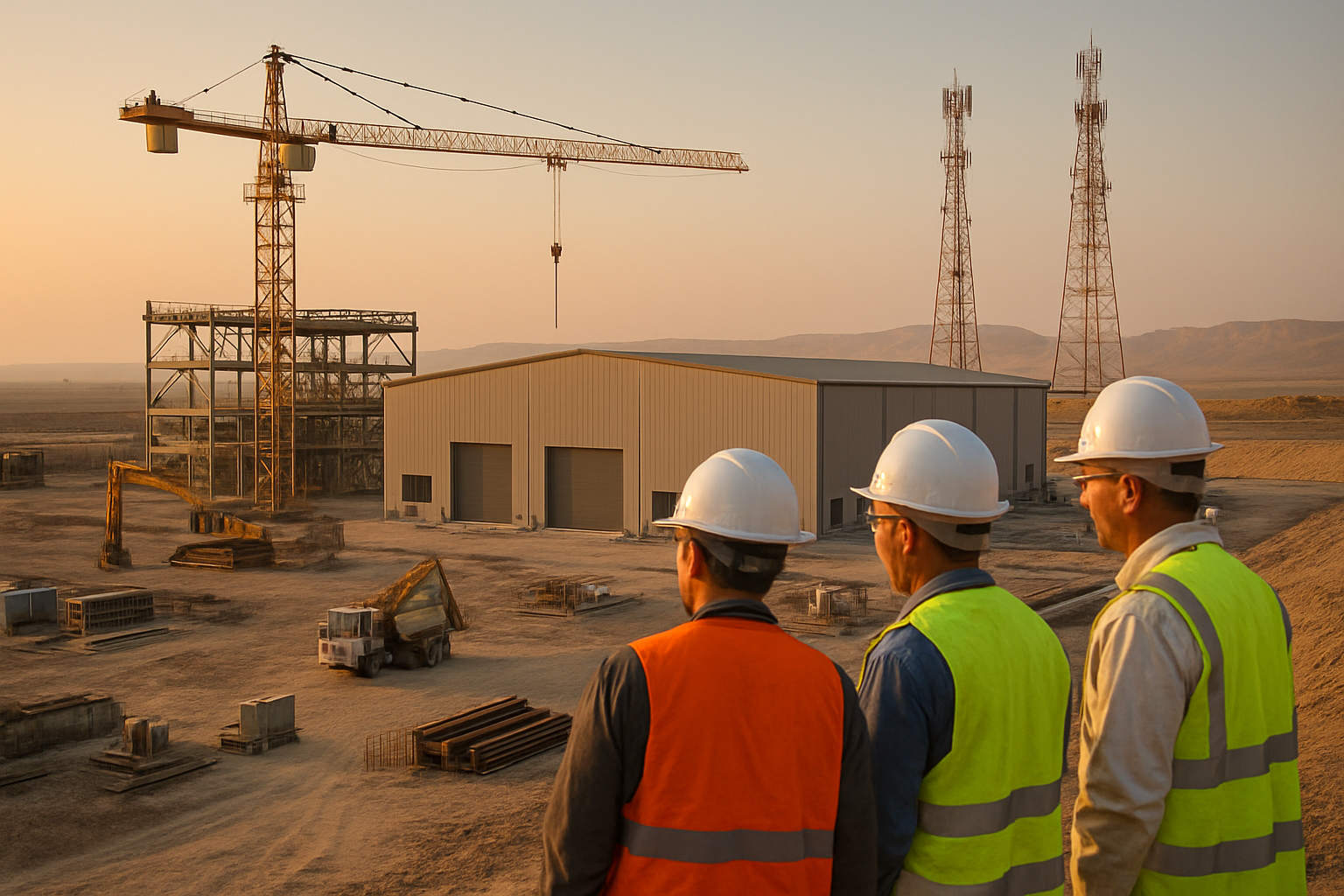
Iraq is experiencing a significant infrastructure development surge with multiple major projects coming online, including a $110 million U.S. telecommunications contract and new industrial manufacturing facilities, marking a pivotal moment in the country's economic diversification strategy.
$110 Million VSAT Contract Enhances Communications Infrastructure
The U.S. State Department has approved a substantial Foreign Military Sale (FMS) to Iraq for Very Small Aperture Terminals (VSATs) and related equipment worth an estimated $110 million. The landmark contract, announced in February 2026, will be executed by Network Innovations of Frederick, Maryland, as the principal contractor.
According to the State Department's certification delivered to Congress, the Government of Iraq has requested to purchase additional Very Small Aperture Terminal infrastructure to enhance its telecommunications capabilities. The VSAT technology will provide crucial satellite communication links across Iraq's vast territory, supporting both military and civilian applications.
"The State Department has made a determination approving a possible Foreign Military Sale to the Government of Iraq of Very Small Aperture Terminals (VSATs) and related equipment for an estimated cost of $110 million."
— U.S. State Department, Official Statement
Industrial Production Capabilities Expand
Parallel to telecommunications infrastructure improvements, Iraq is significantly expanding its industrial production capabilities through two major new manufacturing facilities that demonstrate the country's commitment to reducing import dependencies and developing domestic industrial capacity.
Hematite Production Plant Launches in Maysan
A new hematite production facility with an annual capacity of approximately 400,000 tonnes has been inaugurated in Maysan Governorate, launched by the Military Industrialization Authority. Ali Mohsen Khudair, Director General of the General Company for Military Industries, explained that the facility represents the 35th project implemented by the company.
The hematite plant serves multiple strategic applications including the manufacture of high-resistance cement, oil well operations, paper production, and various other industrial uses. Additionally, the facility will produce calcium carbonate (CaCO3), further diversifying its output capabilities.
According to officials, the company plans to export surplus production in the future, positioning Iraq as a potential regional supplier of these critical industrial materials. The project aligns with broader plans to expand local industrial production and reduce dependence on imported materials.
Eco-Friendly Sulfuric Acid Plant Operations
Al-Furat General Company, a subsidiary of the Ministry of Industry and Minerals, has completed construction of a state-of-the-art environmentally friendly sulfuric acid production plant using advanced technology and Iraqi expertise. The facility represents a significant upgrade from previous industrial capabilities.
Director General Ali Qasim Al-Shammari confirmed that the old sulfuric acid plant was completely dismantled and replaced with a modern facility designed and built using in-house capabilities, meeting approved environmental standards. The project demonstrates Iraq's growing technical expertise in industrial engineering and environmental compliance.
Engineering and technical teams prepared comprehensive studies, designs, and layouts for the new plant in coordination with Al-Mustansiriya University's consultancy office. The facility incorporates modern equipment, integrated systems, and a central control unit, operating using double-absorption technology with a design capacity of 40 tonnes per day.
The plant achieved full production capacity in mid-September 2025 and continues to operate successfully, providing critical industrial chemicals for various manufacturing applications while maintaining environmental protection standards.
Strategic Context and Economic Implications
These infrastructure developments occur within the broader context of Iraq's economic diversification strategy, aimed at reducing the country's heavy dependence on oil revenues and building a more resilient, multi-sectoral economy. The projects demonstrate increased coordination between military, civilian, and academic institutions in developing indigenous technological capabilities.
The timing of these announcements aligns with global infrastructure investment trends, as countries worldwide accelerate modernization efforts to support post-pandemic economic recovery and adapt to changing technological requirements. Iraq's approach combines foreign technology partnerships with domestic capacity building, creating a foundation for sustained industrial growth.
Technology Transfer and Local Expertise
A notable aspect of Iraq's infrastructure development strategy is the emphasis on technology transfer and building local technical expertise. The sulfuric acid plant project exemplifies this approach, with Iraqi teams taking primary responsibility for design, construction, and operation while incorporating international best practices.
The collaboration between the Al-Furat General Company and Al-Mustansiriya University highlights the integration of academic research capabilities with industrial production requirements, creating a model for future technology development projects.
Future Development Pipeline
Officials indicate that these recent projects represent initial phases of a broader industrial development program. The General Company for Military Industries has additional projects under development as part of expanding local industrial production capabilities across multiple sectors.
The success of the hematite and sulfuric acid facilities could serve as templates for similar industrial projects, potentially attracting additional international investment and partnerships while building Iraq's reputation as an emerging industrial hub in the Middle East region.
Regional and International Implications
Iraq's infrastructure development surge contributes to broader Middle Eastern economic integration trends, as regional countries seek to diversify their economies and develop complementary industrial capabilities. The telecommunications infrastructure improvements through the VSAT contract will enhance Iraq's connectivity with regional and international partners.
The industrial projects position Iraq as a potential supplier of specialized materials and chemicals to regional markets, creating new trade relationships and reducing regional dependence on imports from distant suppliers.
These developments demonstrate Iraq's commitment to rebuilding its industrial base while maintaining environmental standards and developing local technical expertise, creating a foundation for sustained economic growth and regional economic integration.