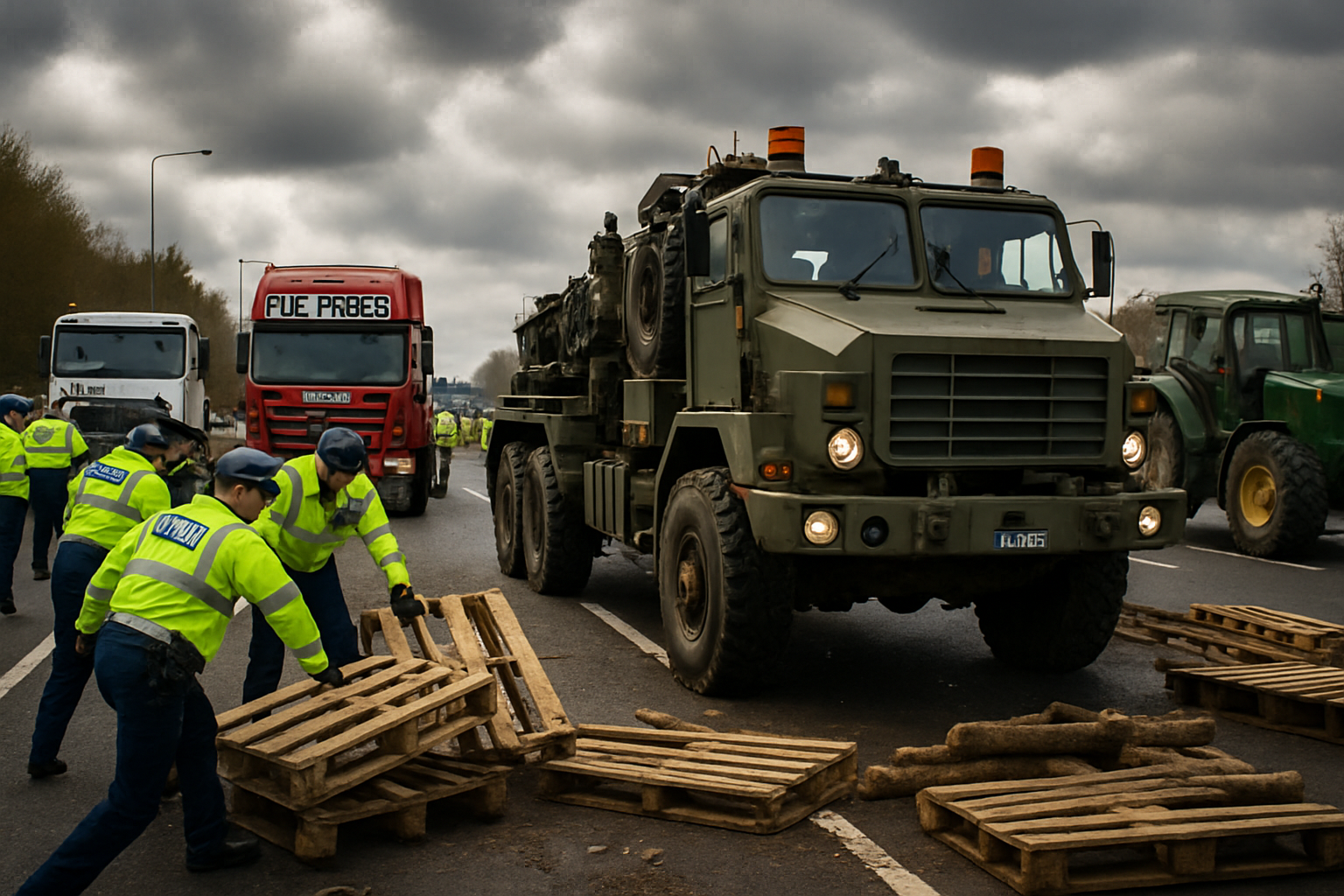
Irish security forces moved decisively to clear fuel protest blockades on Sunday morning, deploying Defense Forces heavy equipment to break through barriers constructed by protesters who have brought much of Ireland to a standstill during six days of demonstrations over soaring fuel costs.
Footage posted on social media by An Garda Síochána showed a Defense Forces heavy-lift recovery truck – nicknamed 'the Beast' – driving through barriers constructed with pallets and logs at various protest sites across the country. The dramatic intervention comes as the Irish government prepares to hold an emergency Cabinet meeting to address the transportation crisis that has disrupted vital fuel depots and major port access.
Scale of the Ongoing Crisis
The protests, now entering their sixth consecutive day, have created the most significant transportation disruption in Ireland since the European fuel crisis began in early 2026. Trucks and tractors continue to block access to vital fuel depots and Dublin Port, while vehicles clogging traffic have led to closures of sections of the main highway around Dublin, as well as other major roadways including the M50, M1, M7, M8, and M18 motorways.
Around 20 large vehicles and tractors remained on O'Connell Street and the nearby quays in Dublin at 8am on Sunday, with dozens of protest participants and supporters maintaining their presence despite the early morning Garda operation. Protest spokespersons described feeling "ambushed" by what they characterized as a late-night police operation to clear demonstrators.
Government Response Under Pressure
The Irish government has condemned the protests as "wrong," with senior officials stating that the blockades break the law by preventing people's mobility and access to livelihoods. However, authorities have emphasized their respect for peaceful protest rights while drawing a clear distinction between lawful demonstration and disruptive blockades.
"While we respect the right to peaceful protest, these blockades are preventing essential services and disrupting the lives of ordinary citizens trying to get to work, access healthcare, and maintain their livelihoods."
— Government spokesperson
The emergency Cabinet meeting scheduled for Sunday represents the government's most significant response to the crisis since protests began. Ministers are expected to discuss additional measures beyond the existing €235 million emergency package that provided 20 cents per liter reduction on diesel and 15 cents on petrol – measures protesters have dismissed as insufficient.
Economic Impact and Public Disruption
The protests have created severe disruptions across Ireland's transportation network. Dublin Bus services are experiencing significant delays, the Luas tram system faces ongoing disruption, and petrol stations across the country are running critically low on fuel supplies. Hospital appointments have been delayed, with officials citing "unnecessary heartache" for families trying to access essential services.
Transport operators report that fuel costs have risen from €120-130 to €190 per fill, adding €2,000-3,000 to weekly business expenses. These dramatic increases come as heating oil approaches €2 per liter, which protesters describe as "brazen rip-offs" by fuel suppliers.
International Context
Ireland's fuel protests are part of a broader European crisis triggered by ongoing Middle East tensions that have disrupted global energy supplies. The closure of the Strait of Hormuz, which handles 40% of global oil transit, has created unprecedented supply chain disruptions affecting fuel markets worldwide.
Similar protests have erupted across Europe, with coordinated demonstrations in Norway's "Dieselbrølet" (Diesel Roar) movement and extensive disruptions in Serbia. The crisis has forced the International Energy Agency to deploy its largest strategic petroleum reserve release in history – 400 million barrels from 32 countries.
Clearing Operations and Security Response
The deployment of Defense Forces equipment represents a significant escalation in the government's response to the protests. The heavy-lift recovery vehicle used to break through protest barriers demonstrates the authorities' determination to restore normal transportation flows, particularly around critical infrastructure like Dublin Port.
Police operations in Galway also saw successful clearance of docks barriers, with multiple protest sites across the country now facing coordinated security force interventions. The synchronized nature of these operations suggests careful planning by authorities to minimize the potential for confrontation while effectively ending the blockades.
Protesters' Demands and Government Negotiations
Fuel protest organizers have secured meetings with government officials and announced they will ease some blockades while maintaining pressure for comprehensive fuel tax reform. Their demands extend beyond the current emergency package to include broader reductions in excise duties and carbon taxes that make up a significant portion of fuel costs in Ireland.
The protesters argue that Ireland's comprehensive fuel tax structure, including excise duties and carbon taxes, compounds the impact of rising wholesale prices, creating an unsustainable burden for transport operators and ordinary motorists alike.
Long-term Implications
The ongoing crisis represents a template-setting moment for European energy security policy and crisis management approaches. As Ireland grapples with balancing environmental objectives against immediate economic pressures, the government faces difficult decisions about fuel taxation policy during a global energy emergency.
Transport industry representatives warn of potential sector collapse if fuel costs remain at current levels, while lower-income households face disproportionate impacts from the rising costs of essential transportation. The resolution of Ireland's fuel protests may influence similar movements across Europe as governments struggle to protect consumers from volatile global energy markets.
With the emergency Cabinet meeting approaching and security forces having demonstrated their capability to clear blockades, the coming days will be crucial in determining whether Ireland can find a sustainable balance between fiscal responsibility, environmental commitments, and the immediate economic needs of its citizens during an unprecedented global energy crisis.