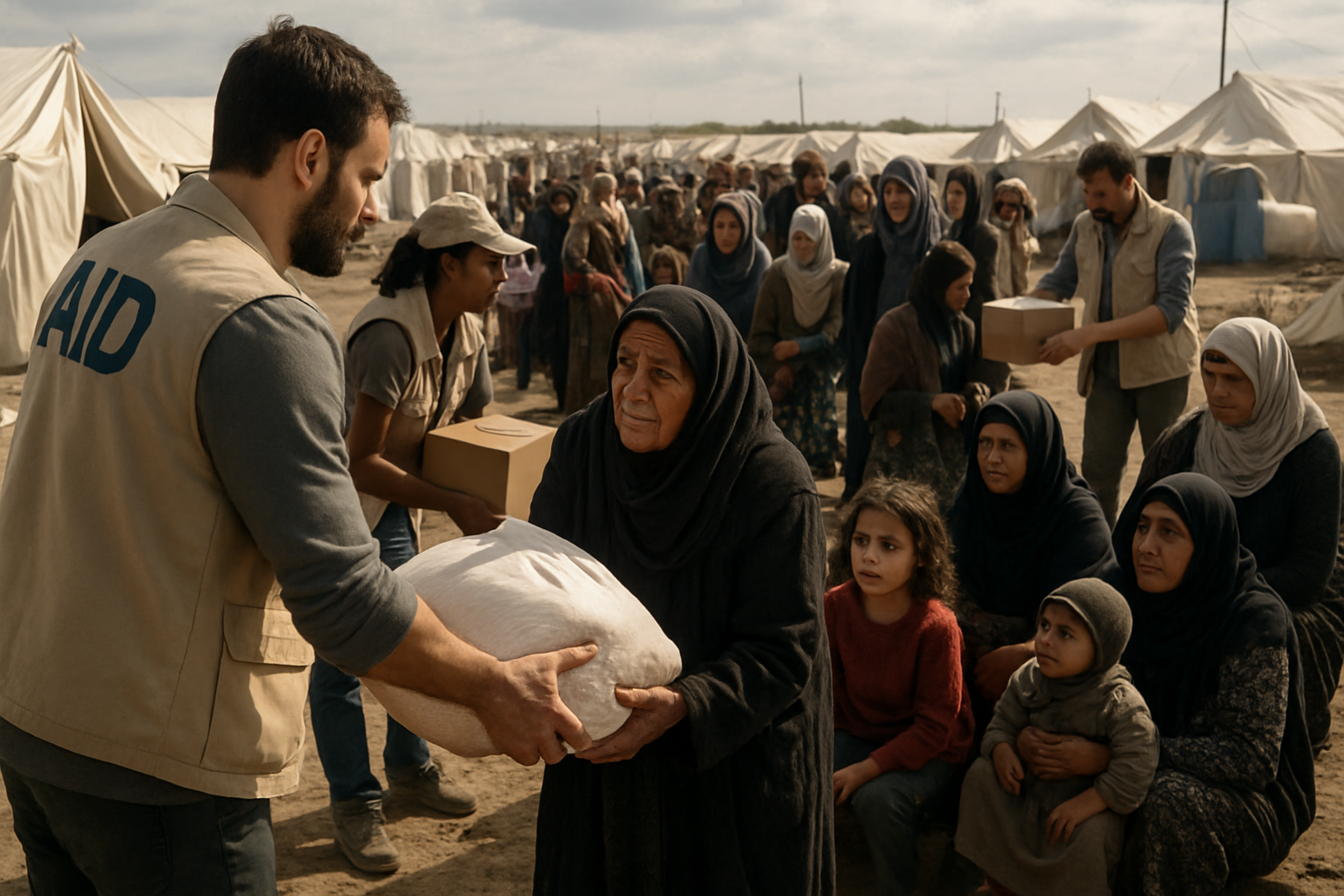
Ireland is implementing a significant policy shift requiring Ukrainian refugees to either pay for their own accommodation or accept substantial financial incentives to return to Ukraine, while in eastern Democratic Republic of Congo, joint military operations by Ugandan and Congolese forces have successfully rescued more than 200 civilians from Allied Democratic Forces (ADF) camps.
The Irish policy change represents a fundamental departure from the country's previous open-door approach to Ukrainian refugees who have been fleeing the war since Russia's February 2022 invasion. Under the new framework, Ukrainian refugees will face a binary choice: either transition to self-funded housing arrangements or accept what sources describe as "generous financial support" to facilitate their voluntary return to Ukraine.
Ireland's Refugee Policy Transformation
The policy shift reflects broader changes across European refugee support systems as the Ukraine conflict enters its fourth year. Ireland joins several European nations reassessing long-term refugee accommodation policies amid mounting fiscal pressures and housing shortages. The new approach signals a transition from emergency humanitarian response to longer-term integration expectations.
This development comes against the backdrop of broader European migration policy transformations. In February 2026, the European Parliament approved historic asylum changes allowing deportations to "safe" third countries through a center-right/far-right alliance, marking the most significant shift in refugee policy since the 2015-2016 refugee crisis. Greece is leading a coalition with Germany, Netherlands, Austria, and Denmark to establish African external processing centers for rejected asylum seekers.
The timing of Ireland's announcement coincides with increasing economic pressures across Europe, where 89% of Europeans demand greater unity in migration policy while 72% express border security concerns, according to recent Eurobarometer polling. However, the policy specifically targets Ukrainian refugees rather than asylum seekers from other regions, highlighting the complex calculus governments face in managing different refugee populations.
Military Success in Eastern Congo
Meanwhile, in a significant security development in eastern Democratic Republic of Congo, joint forces from the Uganda People's Defence Forces (UPDF) and the Armed Forces of the Democratic Republic of the Congo (FARDC) have achieved a major tactical success against the Allied Democratic Forces (ADF), a terrorist organization with links to ISIS.
The coordinated assault targeted an ADF stronghold west of the River Epulu in Ituri Province, where the terrorist group had been holding civilians captive. The operation resulted in the rescue of more than 200 civilians who had been trapped in the militant camp under harsh conditions.
The ADF, originally a Ugandan rebel group, has expanded its operations across the border into eastern DRC, where it has conducted systematic attacks against civilian populations, recruitment of child soldiers, and other grave human rights violations. The group's presence in the mineral-rich eastern Congo region has contributed to ongoing instability that has displaced millions of people and created one of the world's largest humanitarian crises.
Broader Humanitarian Context
These developments occur within a broader context of escalating global humanitarian needs. Ukraine continues to face systematic targeting of civilian infrastructure, with recent attacks leaving over 1,170 buildings in Kyiv without adequate heating during sub-zero temperatures. The systematic destruction of energy infrastructure has been characterized by international observers as "energy terrorism" that violates Geneva Conventions protections for civilian populations.
The situation in eastern DRC represents another dimension of the global displacement crisis. The region has been plagued by conflict for decades, with various armed groups competing for control of valuable mineral resources including cobalt, lithium, and coltan that are essential for global technology supply chains. Recent estimates suggest that over 16,000 families have been displaced across ten Afghan provinces due to various security incidents, while the WHO has been forced to deliver emergency oxygen to only 23 hospitals nationwide due to security and funding concerns.
"The rescue of over 200 civilians demonstrates the importance of regional cooperation in addressing cross-border security threats that have displaced millions of people across the Great Lakes region."
— Regional Security Analyst
International Response and Implications
The Irish policy shift reflects broader tensions in European refugee policy as governments struggle to balance humanitarian commitments with domestic political and economic pressures. The policy comes amid ongoing peace negotiations between Ukraine and Russia, though talks have been indefinitely suspended due to the Iran crisis consuming US foreign policy attention. Previous diplomatic breakthroughs, including a 314-prisoner exchange in February 2026, have created a framework that could potentially be reactivated when regional conditions permit.
The success of the Uganda-DRC joint operation against ADF strongholds demonstrates the potential for regional military cooperation in addressing transnational security threats. The operation builds on previous collaborative efforts to combat armed groups that have terrorized civilian populations across the Great Lakes region for decades.
Both developments highlight the complex nature of contemporary humanitarian challenges, where traditional approaches to refugee support and regional security cooperation must adapt to evolving circumstances. The Irish policy requires Ukrainian refugees to make difficult choices about their futures, while the military success in Congo provides hope for protecting vulnerable civilian populations from terrorist groups.
Looking Forward
As Ireland implements its new refugee policy framework, close monitoring will be essential to ensure that vulnerable populations retain access to necessary protection while encouraging sustainable integration pathways. The success of the policy will likely influence approaches across Europe as other nations grapple with similar challenges in managing long-term refugee populations.
The military success in eastern DRC, while significant, represents one operation in a broader struggle against armed groups that continue to threaten civilian populations across the region. Sustained international support for regional security cooperation will be essential to build on this success and address the root causes of instability that have created massive displacement crises.
Both developments underscore the urgent need for comprehensive international approaches to humanitarian crises that address immediate protection needs while building sustainable solutions for displaced populations and conflict-affected communities worldwide.