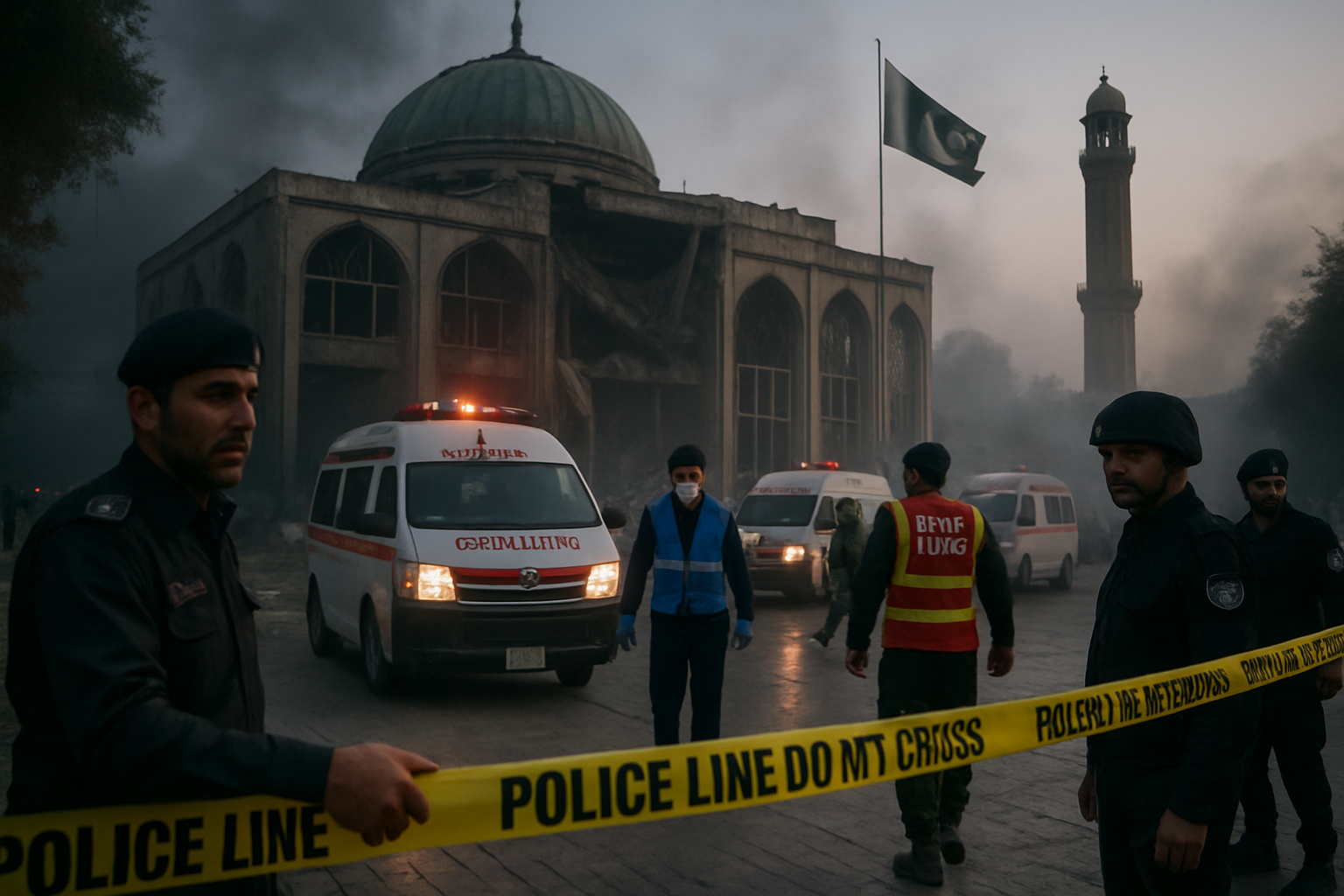
The Islamic State terror group claimed responsibility for a devastating suicide bombing at a Shiite mosque in Pakistan's capital that killed at least 36 people and wounded 169 others during Friday prayers, marking the deadliest attack in Islamabad in nearly two decades.
The attack occurred at the Imambargah Qasr-i-Khadijatul Kubra mosque in the Tarlai area on the outskirts of Islamabad on February 6, 2026. According to Pakistani officials, the suicide bomber attempted to enter the main prayer hall but was stopped by security guards at the entrance. The attacker then detonated his explosive vest among worshippers in what Defence Minister Khawaja Asif described as the "last row" of the mosque.
Dr. Aneeza Jalil, a spokesperson at the Pakistan Institute of Medical Sciences (PIMS), confirmed that the death toll had risen to 36 by Saturday, with nine patients remaining in "very serious condition." She reported that 149 injured victims and 28 bodies were brought to PIMS following the attack. HBS Hospital separately confirmed three additional deaths from the incident.
ISIS Claims Responsibility
The Islamic State group formally claimed responsibility for the attack through its propaganda channels, marking another deadly assault on Pakistan's Shiite minority community. The Sunni extremist organization has previously targeted Shiite Muslims, who comprise approximately 15-20% of Pakistan's population, as part of its sectarian campaign.
The bombing represents the second major terrorist attack in Pakistan's heavily secured capital in less than three months. On November 11, 2025, a suicide bomber killed 12 people and injured 36 others in an attack at the Judicial Complex in G-11, highlighting ongoing security vulnerabilities despite heightened protective measures.
Government Response and Investigation
Prime Minister Shehbaz Sharif strongly condemned the attack and directed the Health Minister to personally oversee treatment of the wounded. An emergency was declared across Islamabad as authorities mobilized resources to respond to the crisis.
"Acts of terror and violence against civilians and places of worship are unacceptable. The people of Pakistan deserve safety, dignity, and the ability to practice their faith without fear."
— U.S. State Department Statement
Defence Minister Khawaja Asif provided details about the attack sequence, explaining that over 400 worshippers were present when the bomber struck. Federal Minister Talal Chaudhry suggested the attacker may have been an Afghan national, though this has not been independently verified.
Punjab Chief Minister Maryam Nawaz responded by canceling Basant festivities and declaring three days of mourning. The Islamabad Capital Territory Police have launched a comprehensive investigation into the security breach.
International Condemnation
The international community swiftly condemned the terrorist attack. The United States offered sincere condolences to the victims' families and reaffirmed its commitment to supporting Pakistan's counter-terrorism efforts. China, Russia, Canada, and the United Nations also expressed solidarity with Pakistan and condemned the violence.
Hezbollah issued a statement calling the attack carried out by "Takfiri extremists" a reflection of enduring sectarian violence in the region. Kuwait and Yemen were among other nations that denounced the bombing.
Security Implications and Context
The attack exposes significant security vulnerabilities in Pakistan's capital, despite extensive protective measures implemented following previous incidents. After the November judicial complex bombing, authorities established numerous police checkpoints throughout the city and implemented daily traffic barricades to monitor suspicious activities.
The mosque bombing occurs amid broader security challenges facing Pakistan. In early February 2026, Pakistani forces concluded major counter-terrorism operations in Balochistan province, killing over 400 militants from the Baloch Liberation Army following coordinated separatist attacks across multiple cities.
The targeting of the Shiite mosque follows a disturbing pattern of sectarian violence in Pakistan. The January 2023 bombing of a mosque in Peshawar killed over 100 people, while numerous other attacks have specifically targeted religious minorities and their places of worship.
Regional Security Concerns
Pakistani officials have alleged involvement by Afghanistan and India in facilitating the attack, though both countries have firmly rejected these accusations as baseless. The Taliban government in Afghanistan, through spokesman Abdul Qahar Balkhi, condemned the bombing and denied any connection.
The incident highlights ongoing concerns about the Islamic State's operational capabilities in the region, despite counter-terrorism efforts by Pakistani security forces. ISIS-Khorasan (ISIS-K), the group's regional affiliate, has maintained a presence across the Afghanistan-Pakistan border region and has claimed responsibility for previous attacks in both countries.
Victims and Community Impact
The attack has devastated the local Shiite community, which has faced repeated targeting by extremist groups. Funeral prayers for the victims were held on Saturday as families mourned their losses and the broader community grappled with the trauma of the assault on their place of worship.
Medical facilities across Islamabad mobilized to treat the wounded, with PIMS and other hospitals working around the clock to provide care for the 169 injured victims. The severity of injuries has raised concerns that the death toll could continue to rise.
Looking Forward
The Islamabad mosque bombing represents a significant escalation in terrorist activity targeting Pakistan's capital and its religious minorities. The attack's success in breaching security at a major religious site raises critical questions about intelligence gathering, protective measures for vulnerable communities, and the government's broader counter-terrorism strategy.
As Pakistan continues to face multiple security challenges from separatist movements in Balochistan to cross-border terrorism, the protection of religious minorities and their institutions remains a pressing priority. The international community's support for Pakistan's counter-terrorism efforts will likely prove crucial in addressing the evolving threat landscape and preventing future attacks.
The investigation into the bombing continues as authorities work to identify those responsible and prevent similar attacks. The resilience of Pakistan's diverse communities in the face of such violence will be tested as the nation mourns its latest victims of terrorism.