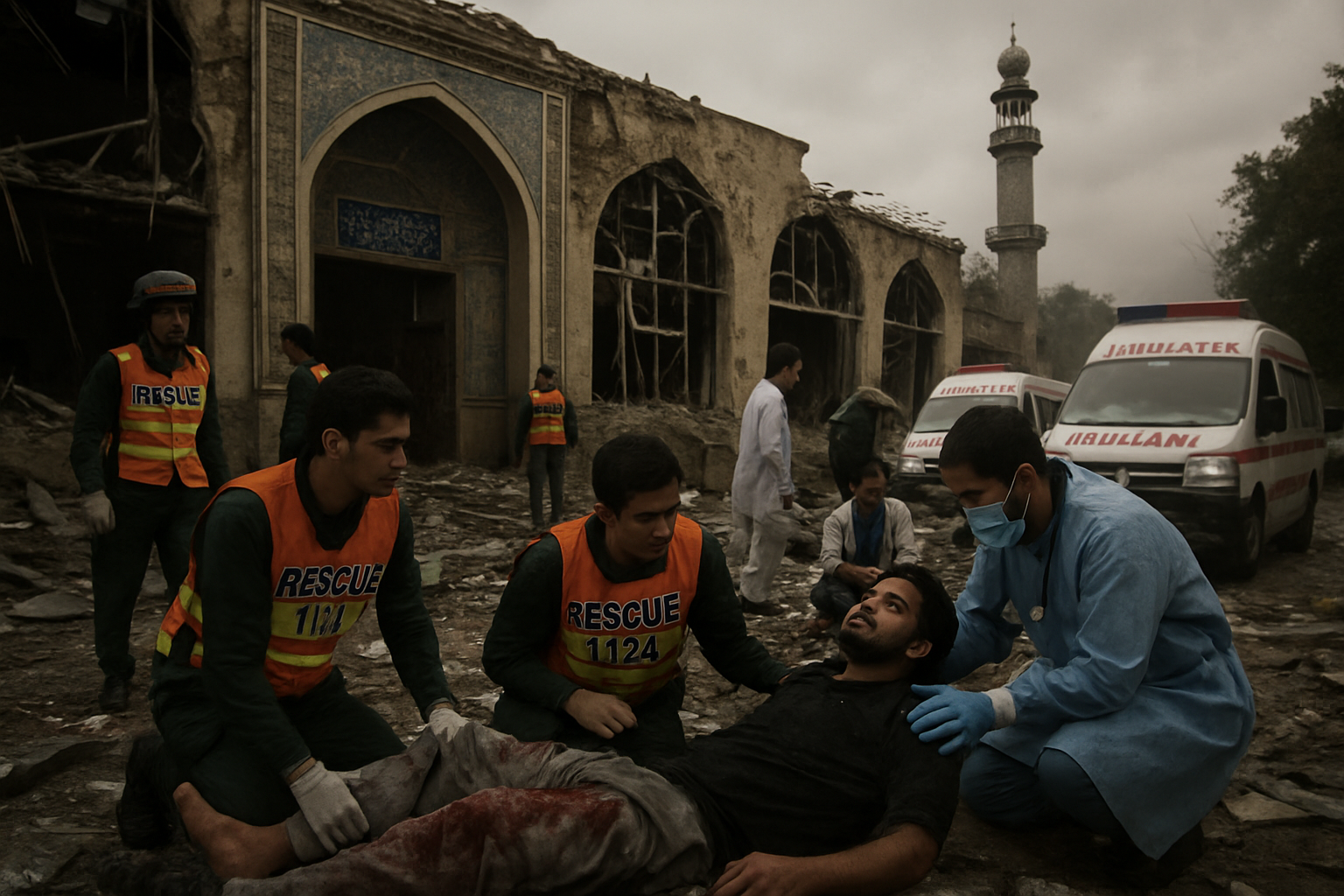
A suicide bomber killed at least 31 people and wounded 169 others during Friday prayers at a Shiite Muslim mosque in Pakistan's capital Islamabad on February 6, 2026, in what authorities are calling the deadliest attack in the city in recent years.
The explosion occurred at the Imambargah Khadijah-tul-Kubra in the Tarlai area on the outskirts of Islamabad as hundreds of worshippers had gathered for the weekly congregational prayers. The attack represents a rare but devastating breach of security in Pakistan's heavily guarded capital.
Attack Details and Immediate Response
According to eyewitness accounts and official reports, the suicide bomber attempted to enter the mosque but was confronted by security guards at the entrance. Unable to penetrate further into the building, the attacker detonated his explosive device among worshippers in "the last row," according to Defence Minister Khawaja Asif.
"We had just begun the prayer when we heard the sound of gunfire, followed by a powerful explosion. I got injured as well. At that time, the mosque hall was full, with more than 400 worshippers inside."
— Syed Ameer Hussain Shah, 47, Worshipper
Islamabad's Deputy Commissioner Irfan Memon confirmed the casualty figures, stating that 31 people lost their lives while 169 others were wounded and transported to hospitals including the Pakistan Institute of Medical Sciences (PIMS) and Polyclinic Hospital.
Images from the scene showed bloodied bodies lying on the carpeted mosque floor, surrounded by shards of glass, debris, and panicked worshippers. Dozens of wounded were seen lying in the mosque's garden as emergency responders worked to evacuate casualties.
Government Response and Security Measures
Prime Minister Shehbaz Sharif strongly condemned the attack and directed Health Minister to personally oversee the treatment of wounded victims. An emergency has been imposed across Islamabad as authorities launched a comprehensive investigation.
"The perpetrators of the blast must be identified and brought to justice. No one will be allowed to spread violence and discord in the country."
— Prime Minister Shehbaz Sharif
In response to the tragedy, Punjab Chief Minister Maryam Nawaz announced the cancellation of Basant festivities scheduled for the weekend, declaring three days of mourning in solidarity with the victims' families.
Minister of State for Interior Talal Chaudhry revealed that initial investigations suggest the bomber may have been an Afghan national, though this has not been officially confirmed. The disclosure has raised fresh questions about cross-border security and the screening of foreign nationals.
Political Accusations and Regional Tensions
Defence Minister Khawaja Asif made serious allegations following the attack, suggesting involvement by India and Afghanistan in the bombing. In a statement on social media platform X, Asif claimed "it has been proved that the terrorist networks of India and Afghanistan are behind this incident."
These accusations come amid heightened tensions in the region, particularly following Pakistan's recent counter-terrorism operations in Balochistan where Pakistani forces killed over 400 militants in February 2026 operations against the Baloch Liberation Army (BLA).
Sectarian Context and Historical Patterns
The attack on the Shiite mosque highlights Pakistan's ongoing struggle with sectarian violence, particularly targeting the country's Shiite Muslim minority, who comprise approximately 15-20% of Pakistan's population. Extremist groups have historically targeted Shiite religious sites, considering them heretical.
This bombing represents the deadliest attack in Islamabad since January 2023, when a blast at a mosque in the northwestern city of Peshawar killed more than 100 people. The rarity of such attacks in Pakistan's heavily fortified capital makes this incident particularly significant for national security assessments.
Pakistan has witnessed a rising wave of militancy in recent years, though attacks have been less frequent in Islamabad compared to other regions. The last major suicide attack in the capital occurred in November 2025, which killed 12 people.
International Condemnation
The attack has drawn widespread international condemnation. The Islamic Emirate of Afghanistan strongly denounced the bombing through spokesman Abdul Qahar Balkhi, stating that such attacks "violate the sanctity of religious rites and mosques and target worshippers and civilians," describing them as "contrary to Islamic and human values."
Regional partners and international observers have expressed sympathy with the families of victims and called for swift justice for the perpetrators.
Security Implications and Investigation
The Islamabad Capital Territory Police have launched a comprehensive investigation into the attack, with security sources suggesting possible foreign links. The investigation is examining how the bomber was able to reach the mosque despite security measures in place.
The attack occurs amid broader security challenges facing Pakistan, including ongoing counter-terrorism operations in Balochistan and concerns about spillover effects from regional conflicts. Pakistan's security apparatus is now reassessing protection protocols for religious sites, particularly those serving minority communities.
Healthcare Response
Medical facilities in Islamabad mobilized immediately to treat the wounded, with PIMS and Polyclinic hospitals receiving the majority of casualties. Healthcare officials report that several victims remain in critical condition, and the death toll could potentially rise.
Emergency medical teams worked through the night to stabilize patients, with some requiring specialized trauma surgery. The scale of casualties strained local medical resources, prompting authorities to coordinate with nearby facilities.
Regional Security Concerns
This attack comes at a time of heightened security concerns across South Asia. Pakistan recently concluded major military operations in Balochistan that resulted in significant militant casualties, while the broader region faces ongoing challenges from various extremist groups.
The timing and target selection suggest careful planning by the perpetrators, aimed at maximizing casualties during the well-attended Friday prayers. Security analysts note that attacks on religious minorities often seek to inflame sectarian tensions and undermine social cohesion.
The incident raises questions about Pakistan's counter-terrorism strategies and the effectiveness of security measures protecting vulnerable communities. It also highlights the ongoing challenge of preventing lone-wolf or small-cell attacks that are difficult to detect through traditional intelligence means.
Moving Forward
As Pakistan mourns the victims of this tragic attack, authorities face the dual challenge of providing justice for the bereaved families while strengthening security measures to prevent future incidents. The investigation's findings will likely influence Pakistan's approach to both domestic security and regional cooperation in counter-terrorism efforts.
The attack serves as a stark reminder of the persistent security challenges facing Pakistan and the vulnerability of religious minorities to extremist violence. It underscores the need for continued vigilance and comprehensive strategies to combat terrorism while protecting the fundamental right to religious freedom and practice.
The coming days will be crucial as investigators work to uncover the network behind this attack and as Pakistani society grapples with yet another tragedy targeting innocent worshippers. The resilience of Pakistan's diverse communities will be tested as the nation seeks to heal from this devastating assault on its social fabric.