A devastating suicide bombing at a Shia mosque in Islamabad during Friday prayers has claimed the lives of 31 people and wounded 169 others, marking the deadliest terrorist attack to strike Pakistan's capital in nearly two decades. The Islamic State group claimed responsibility for the assault that has shocked the nation and prompted widespread international condemnation.
The attack occurred at the Imam Bargah Qasr-e-Khadijatul Kubra mosque in the Tarlai area on the outskirts of Islamabad during Friday prayers, when the facility was packed with over 400 worshippers. According to Pakistan's Defense Minister Khawaja Asif, the suicide bomber was stopped at the mosque entrance by security guards but managed to detonate his explosive vest among worshippers in the "last row" of the prayer hall.
Attack Details and Emergency Response
The bombing sent shockwaves through Pakistan's heavily guarded capital, where such large-scale attacks are extremely rare. Emergency services responded immediately, with casualties being rushed to multiple hospitals including PIMS (Pakistan Institute of Medical Sciences) and Polyclinic Hospital. Dr. Aneeza Jalil, a spokesperson for PIMS, confirmed the death toll and reported that several victims remain in critical condition.
Pakistani security forces immediately cordoned off the area and launched a comprehensive investigation. According to sources, arrests have been made in the vicinity, including individuals connected to the suspected bomber, who officials suggest may have been of Afghan nationality.
"This is an atroz crimen contra la humanidad y una flagrante violación de los principios islámicos" (an atrocious crime against humanity and a flagrant violation of Islamic principles)
— Deputy Prime Minister Ishaq Dar
ISIS Claims Responsibility
The Pakistan branch of the Islamic State (ISIS-K) claimed responsibility for the attack through its propaganda channels, marking a significant escalation in the group's operations within Pakistan's borders. This represents the first major ISIS-claimed attack in Islamabad in recent years, highlighting the group's continued operational capabilities despite counter-terrorism efforts across the region.
The attack specifically targeted the Shia Muslim community, which comprises approximately 15-20% of Pakistan's population and has frequently been the target of sectarian violence by Sunni extremist groups. The timing during Friday prayers appears deliberately calculated to maximize casualties and psychological impact on the community.
Government Response and Security Measures
Prime Minister Shehbaz Sharif immediately condemned the attack and directed the Health Minister to personally oversee treatment of the wounded. An emergency has been declared across Islamabad, with security forces placed on high alert throughout the capital region.
Punjab Chief Minister Maryam Nawaz announced the cancellation of Basant festivities and declared a three-day period of mourning for the victims. Federal Minister Talal Chaudhry suggested the bomber may have been an Afghan national, though investigations are ongoing to confirm the attacker's identity and background.
Defense Minister Khawaja Asif has alleged possible involvement of Afghanistan and India in supporting the attack, though both countries have categorically rejected these accusations. The Taliban government in Afghanistan, through spokesman Abdul Qahar Balkhi, has condemned the attack and denied any involvement.
Funeral Proceedings and Community Grief
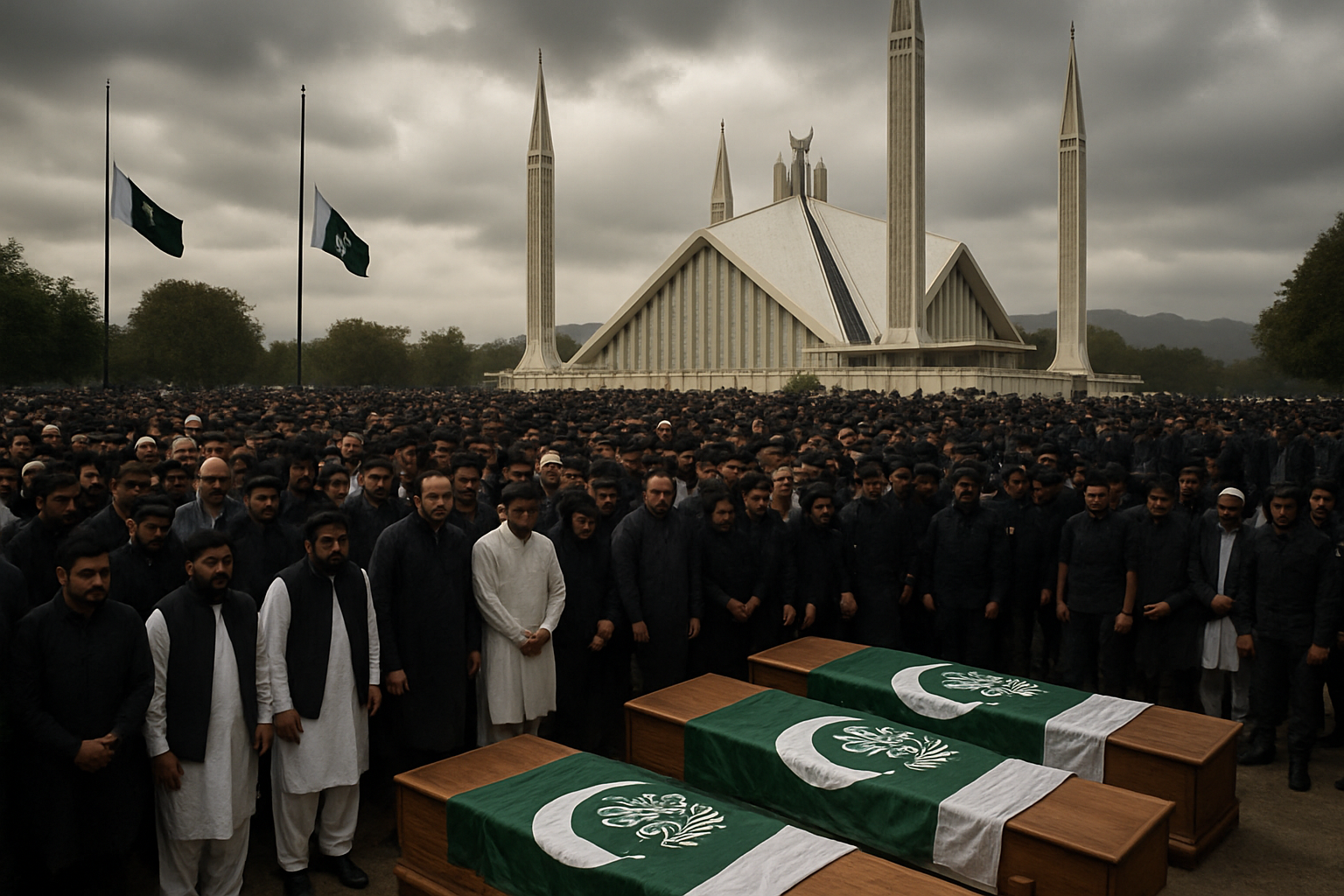
Thousands of mourners gathered on Saturday for funeral prayers for the victims, with heightened security measures in place throughout the ceremony. Snipers were positioned on rooftops while a significant police presence maintained order as families and community members bid farewell to their loved ones.
The scale of the gathering reflected the deep impact of the attack on Pakistan's Shia community and the broader population. Many attendees expressed both grief for the victims and anger at the security failures that allowed such a devastating attack to occur in the heavily protected capital.
Historical Context and Security Implications
This attack represents the deadliest incident to strike Islamabad since 2008, when 60 people were killed in a suicide truck bombing at the Marriott Hotel. The capital had remained relatively secure compared to other parts of Pakistan, making this assault particularly shocking for residents and security officials.
The bombing occurred amid broader security challenges facing Pakistan, including recent major counter-terrorism operations in Balochistan province that resulted in over 400 militant casualties in February 2026. The attack highlights the persistent threat posed by terrorist organizations despite ongoing military operations.
Previous major attacks on Shia targets include the January 2023 Peshawar mosque bombing that killed over 100 people, demonstrating the continued vulnerability of religious minorities to sectarian violence in Pakistan.
International Condemnation
The attack has prompted widespread international condemnation from governments and organizations worldwide. Belarus President Alexander Lukashenko offered condolences to Pakistan, emphasizing that the people of Belarus received news of the tragedy with "profound sorrow."
Malaysia's Prime Minister Anwar Ibrahim expressed solidarity with Pakistan and extended condolences to the families of victims, calling the deliberate attack on worshippers "an affront to the most basic norms of humanity." He emphasized confidence that authorities would conduct a thorough investigation and bring those responsible to justice.
The United States, China, Russia, Canada, the United Nations, and several Middle Eastern nations have also issued statements condemning the attack and expressing support for Pakistan's counter-terrorism efforts.
Ongoing Investigation
The Islamabad Capital Territory Police are leading the investigation into the attack, working with federal agencies to identify the perpetrators and any support networks. Officials are examining how the bomber managed to approach the mosque despite security measures and whether there were intelligence failures that could have prevented the attack.
The investigation is focusing on the bomber's background, potential connections to terrorist networks, and how the explosive device was constructed and transported to the target location. Security officials are also reviewing protection protocols for religious sites across the capital.
Sectarian Violence Concerns
Security analysts warn that the mosque attack could inflame existing sectarian fault lines in Pakistan's already volatile security landscape. The deliberate targeting of Shia worshippers during prayers represents a direct assault on religious freedom and community safety.
The attack occurs against the backdrop of broader regional security concerns, including the ongoing presence of various terrorist groups in neighboring Afghanistan and the challenge of monitoring cross-border terrorist movements. Experts emphasize the need for enhanced international cooperation to address transnational terrorism threats.
Looking Forward
As Pakistan mourns the victims of this devastating attack, questions remain about how to prevent similar incidents in the future. The bombing has highlighted the ongoing threat posed by ISIS and affiliated groups, despite years of counter-terrorism operations.
The government faces pressure to strengthen security measures for religious sites while maintaining the open and accessible nature of worship that is central to Pakistani society. The attack serves as a stark reminder of the persistent challenge of protecting vulnerable communities from extremist violence.
The international community's strong condemnation of the attack underscores the global nature of the fight against terrorism and the need for continued cooperation in addressing the root causes of extremist violence that threatens innocent civilians across the world.