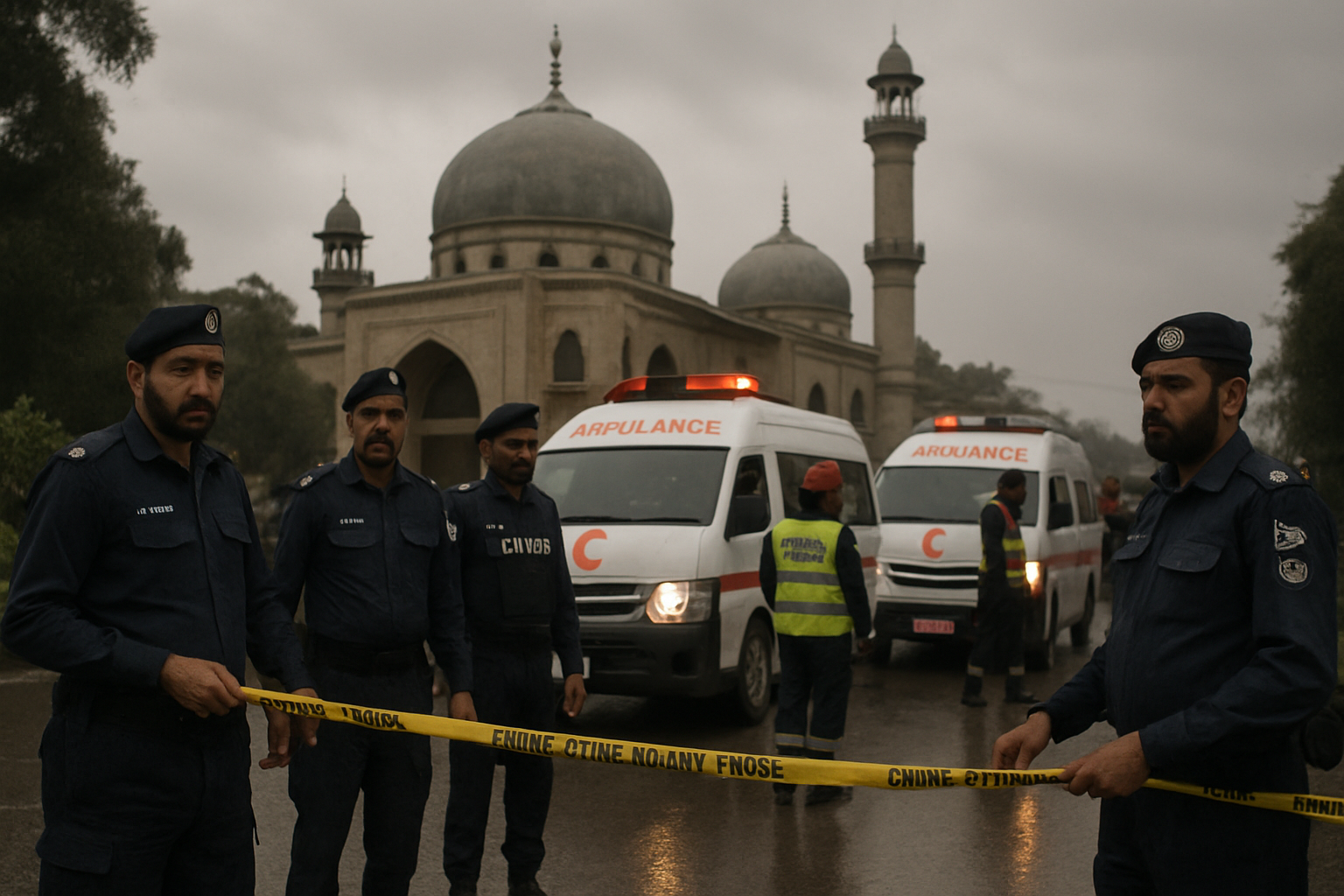
A suicide bomber struck a Shiite mosque during Friday prayers in Pakistan's capital Islamabad, killing at least 31 people and wounding more than 169 others in a devastating attack that has sent shockwaves through the nation's heavily-guarded capital.
The explosion occurred at the Imambargah Khadijah al-Kubra in the Tarlai area, located in the semi-urban outskirts of Islamabad. Images from the scene showed bloodied bodies scattered across the carpeted mosque floor, surrounded by shattered glass, debris, and panicked worshippers seeking safety in the aftermath of the blast.
Deputy Commissioner Islamabad Irfan Memon confirmed the rising casualty toll in a statement, saying: "The death toll in the blast has risen. A total of 31 people have lost their lives. The number of wounded brought to hospitals has risen to 169."
Attack Details and Security Response
According to security sources speaking on condition of anonymity, the suicide bomber was stopped at the mosque's gate but detonated himself when confronted by security personnel. The attacker was reportedly denied entry to the main prayer hall, which may have prevented an even higher death toll.
Pakistani Foreign Minister Bilawal Bhutto Zardari confirmed that a suicide bomber was responsible for the terrorist attack, while police official Zafar Iqbal described the scene at the time of the explosion during the packed Friday prayers.
Dozens of wounded victims were seen lying in the garden outside the imambargah as bystanders desperately called for help and emergency medical teams rushed to treat the injured. Ambulances transported victims to PIMS (Pakistan Institute of Medical Sciences), Polyclinic, and other hospitals across the capital.
Rare Attack in Heavily-Guarded Capital
Bombings are uncommon in Islamabad, which is known for its extensive security apparatus and heavy military presence. The attack represents one of the deadliest terrorist incidents in the capital in recent years, highlighting the persistent security challenges facing Pakistan despite ongoing counter-terrorism efforts.
Prime Minister Shehbaz Sharif has directed the Health Minister to personally oversee the treatment of the injured, while an emergency has been imposed across Islamabad. Security forces have cordoned off the area and launched an investigation into the attack.
"This senseless act of violence against innocent worshippers is an attack on our values and our way of life."
— Local Security Official
Regional Security Context
The attack comes amid a rising wave of militancy that has plagued Pakistan in recent years. Just days earlier, the country was dealing with major security operations in Balochistan province, where Pakistani forces concluded counter-terrorism operations against separatist militants that resulted in hundreds of casualties.
The targeting of a Shiite mosque also highlights the sectarian dimensions of Pakistan's security challenges, as minority religious communities have frequently been targeted by extremist groups operating in the region.
Initial reports from security sources suggest the attack may have foreign links, though investigations are still in their early stages. The timing and method of the attack bear hallmarks of sophisticated planning by experienced operatives.
International Condemnation
Azerbaijan was among the first countries to offer condolences to Pakistan over the deadly mosque attack, with other international partners expected to issue similar statements condemning the terrorist act.
The attack has drawn widespread condemnation from across the region, with neighboring countries expressing solidarity with Pakistan in the fight against terrorism and extremism.
Humanitarian Response
Emergency medical teams have been deployed to treat the wounded, with hospitals across Islamabad placed on high alert. The Pakistani Red Crescent and other humanitarian organizations are providing assistance to victims and their families.
Many of the injured are reported to be in critical condition, and authorities warn that the death toll may continue to rise as medical teams work to save lives. The blast caused significant structural damage to the mosque, with windows blown out and parts of the building's interior destroyed.
Ongoing Investigation
Islamabad Capital Territory Police are conducting a comprehensive investigation into the attack, with forensic teams gathering evidence from the blast site. Security footage from surrounding areas is being reviewed, and authorities are working to identify the bomber and any potential accomplices.
The investigation will focus on determining how the attacker managed to approach the mosque despite security measures, and whether there were any intelligence failures that could have prevented the tragedy.
As Pakistan mourns the victims of this heinous attack, questions remain about the country's ability to protect its citizens from the persistent threat of terrorism, particularly in the capital city that serves as the seat of government and houses numerous diplomatic missions.