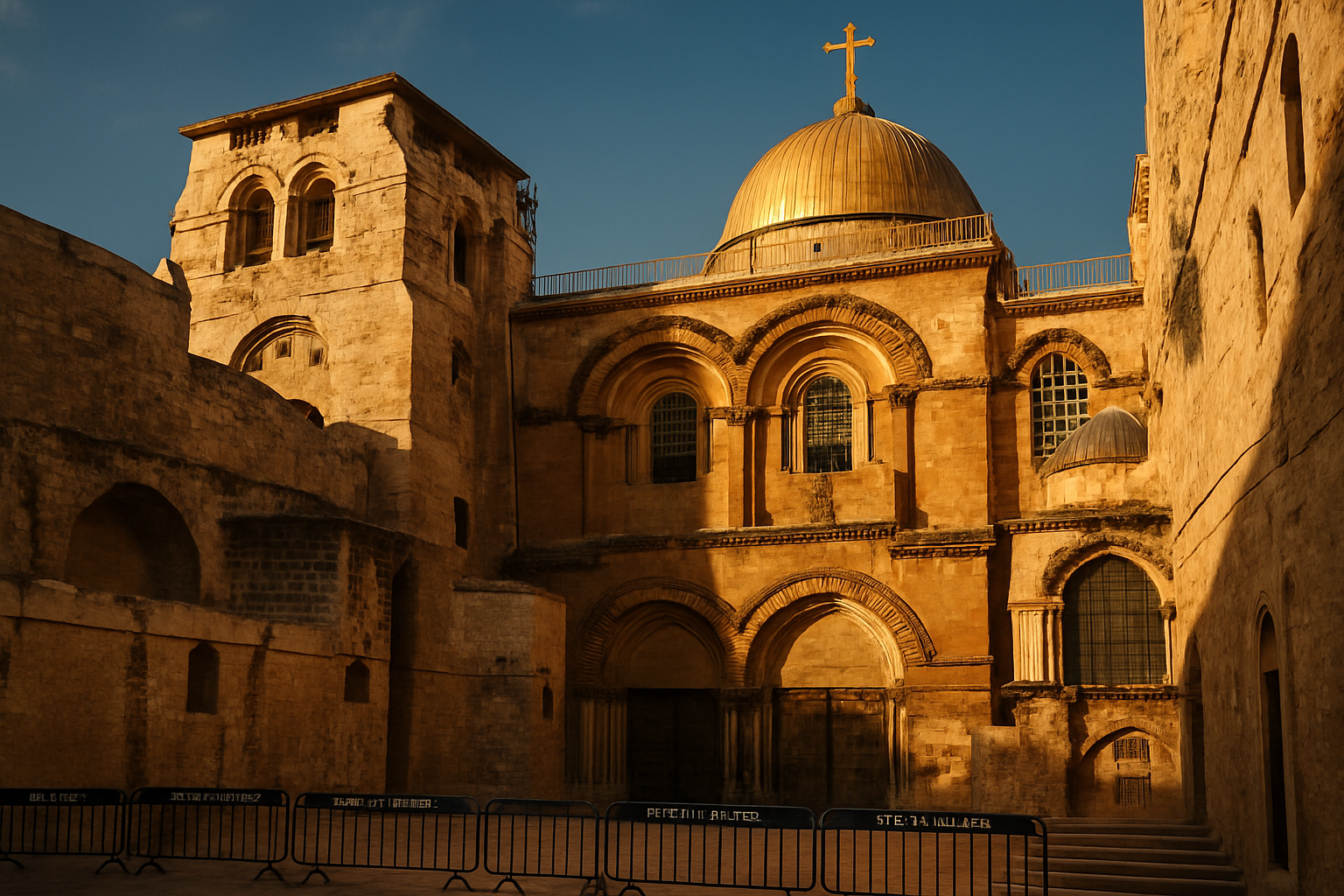
Israeli police prevented Cardinal Pierbattista Pizzaballa, the Latin Patriarch of Jerusalem, from entering the Church of the Holy Sepulchre to celebrate Palm Sunday mass on March 29, 2026, marking what church authorities describe as the first time in centuries that Catholic leaders have been barred from Christianity's holiest site during this sacred observance.
The unprecedented restriction occurred amid the most serious Middle East crisis since the Cold War, as the region enters its second month of devastating conflict following the death of Iran's Supreme Leader Ali Khamenei and the subsequent U.S.-Israeli "Operation Epic Fury" military campaign.
According to the Latin Patriarchate in Jerusalem, Israeli police prevented the church's senior leaders from entering to celebrate mass, stating: "For the first time in centuries, the Heads of the Church were prevented from celebrating the Palm Sunday Mass at the Church of the Holy Sepulchre. This incident is a grave precedent and disregards the sensibilities of billions of people around the world who, during this week, look to Jerusalem."
International Condemnation Emerges
The incident immediately triggered widespread international condemnation from European leaders and Vatican officials. Italian Prime Minister Giorgia Meloni condemned the action as an "offense to the faithful," while French President Emmanuel Macron denounced the decision. Italy's Foreign Minister Antonio Tajani summoned the Israeli ambassador to demand explanations.
Danish officials and multiple European leaders formally protested the restrictions, with Jordan condemning the actions as violations of international law. Eight Arab nations joined in formal condemnation, creating an unprecedented diplomatic consensus spanning traditional regional divisions.
"This incident is a grave precedent and disregards the sensibilities of billions of people around the world who, during this week, look to Jerusalem."
— Latin Patriarchate of Jerusalem
Security Context Amid Regional War
Israeli authorities cited security concerns related to the ongoing Iran war, with all Jerusalem Old City holy sites closed to worshippers who lack access to bomb shelters. The restrictions occurred during the most serious Middle East crisis since the Cold War, with over 18,000 flights cancelled globally, oil prices surpassing $100 per barrel, and the Strait of Hormuz effectively closed, affecting 40% of global oil transit.
The broader security situation has created unprecedented restrictions affecting multiple faiths simultaneously. Alongside the Catholic restrictions, Israeli authorities have limited access for 2 billion Muslims during Ramadan, including restrictions at the Al-Aqsa Mosque and bans on iftar meal distribution. This represents an unprecedented situation affecting all three Abrahamic faiths' access to their sacred sites in Jerusalem.
Historical Significance and Status Quo Violations
The Church of the Holy Sepulchre operates under the Ottoman-era "Status Quo" arrangement that carefully regulates Christian denominations' rights and access to the site. This ancient system, which has governed the church for centuries, was established to prevent conflicts between different Christian communities and has been maintained through various political changes in the region.
The overriding of this centuries-old arrangement demonstrates the exceptional nature of the current regional security situation. According to church historians, the last comparable restriction of such magnitude at the Holy Sepulchre occurred during periods of active warfare or extreme political upheaval, making this incident particularly significant for the global Christian community.
Papal Response and Vatican Diplomacy
Pope Leo XIV delivered his strongest condemnation of warfare yet during Palm Sunday Mass at St. Peter's Square, declaring that God rejects the prayers of leaders who start wars and have "hands full of blood." In unusually strong remarks, the Pope stated: "This is our God: Jesus, King of Peace, who rejects war, whom no one can use to justify war."
The papal intervention from the renovated Apostolic Palace represents the full engagement of papal authority in the crisis. Vatican diplomatic sources indicate this represents an evolution from expressions of "deep concern" to direct appeals to "those responsible" for the conflict.
Broader Religious Freedom Implications
The restrictions at the Holy Sepulchre occurred simultaneously with limitations affecting Muslim worship during the final days of Ramadan. Al-Aqsa Mosque has been restricted to limited numbers of worshippers, with Israeli forces banning the traditional iftar meal distribution in the mosque courtyards.
This convergence of restrictions on both Christian and Muslim religious observances during their respective holy seasons - Holy Week for Christians and the conclusion of Ramadan for Muslims - creates an unprecedented situation affecting an estimated 4.4 billion believers worldwide.

Regional Impact and Coalition Responses
The incident has strained regional diplomatic efforts during a critical period. An unprecedented coalition of Saudi Arabia, UAE, Qatar, and Egypt had been supporting diplomatic solutions to the broader Middle East crisis, but the religious restrictions have complicated these efforts as regional partners express concern about the treatment of religious minorities.
Cardinal Pizzaballa, who was prevented from entering the church, called for "prayers for peace" and indicated that the Latin Patriarchate would seek dialogue with Israeli authorities for future religious access restoration. The Cardinal had planned to celebrate the traditional Palm Sunday liturgy commemorating Jesus Christ's entry into Jerusalem, an observance that has continued at the Holy Sepulchre for centuries.
Global Christian Community Response
The restrictions have reverberated throughout the global Christian community, which numbers approximately 2.4 billion believers worldwide. Palm Sunday marks the beginning of Holy Week, the most sacred period in the Christian calendar, making the timing of the restrictions particularly significant for Christians worldwide who look to Jerusalem during this period.
Christian communities across Europe, the Americas, Africa, and Asia have expressed solidarity with the Jerusalem church leadership, with many organizing special prayers for religious freedom and peace in the Middle East. The incident has become a focal point for discussions about religious liberty during wartime and the protection of sacred sites in conflict zones.
International Law and Religious Rights
Legal experts have noted that the restrictions raise questions under international religious freedom protections and may constitute violations of the right to worship. The Church of the Holy Sepulchre is recognized as a site of universal religious significance, and its protection during conflicts is addressed under various international conventions.
The Ottoman-era Status Quo arrangement has been recognized by successive political authorities in the region and is considered part of the customary law governing Jerusalem's holy sites. The breaking of this arrangement without consultation with religious authorities represents a significant departure from established practice.
Looking Forward
As the Middle East crisis continues into its second month, religious leaders and international observers are calling for the restoration of religious access to sacred sites. The Latin Patriarchate has indicated it will continue seeking dialogue with Israeli authorities to ensure that religious observances can resume at Christianity's holiest site.
The incident represents a critical test of religious freedom during wartime and is likely to be remembered as a watershed moment in Jerusalem's complex balance between security concerns and religious liberty. With global attention focused on the region due to the ongoing conflict, the treatment of religious minorities and access to sacred sites has become a significant factor in international diplomatic efforts.
The coming days will be crucial in determining whether this unprecedented restriction was an isolated incident related to immediate security concerns or represents a broader shift in policies affecting religious communities in Jerusalem. For the 2.4 billion Christians worldwide and the broader international community committed to religious freedom, the resolution of this crisis will have implications extending far beyond the immediate conflict.