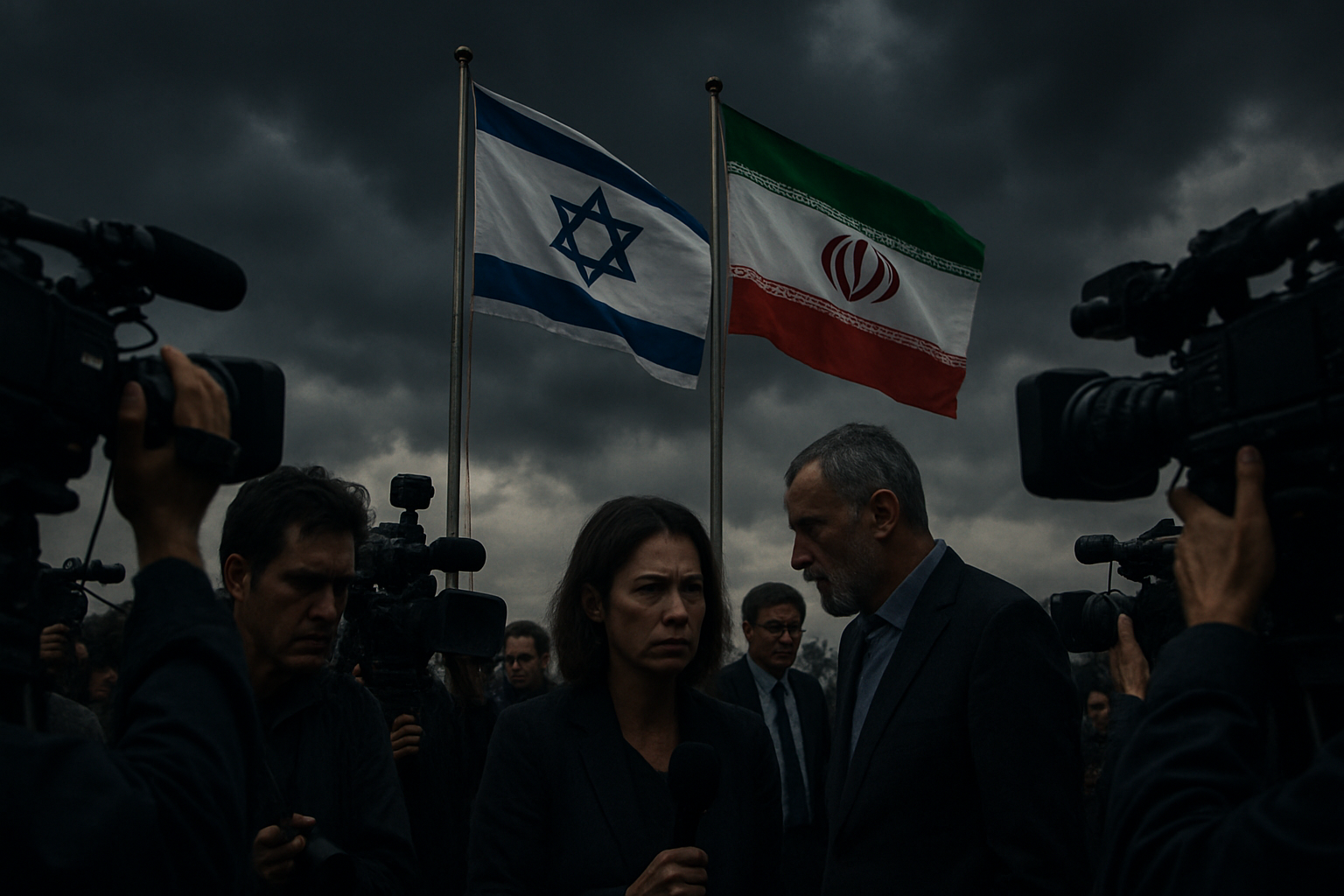
Israeli Defense Minister Israel Katz announced Wednesday that Iranian Intelligence Minister Esmail Khatib was "eliminated" in overnight strikes, marking another significant escalation in the three-week-old Middle East war that has become the most dangerous international crisis since the Cold War ended.
The announcement comes as the region continues to grapple with the aftermath of Operation Epic Fury, the largest coordinated US-Israeli military campaign since the 2003 Iraq invasion, which has fundamentally reshaped Middle Eastern geopolitics and triggered unprecedented global disruptions.
Khatib's Role in Iranian Power Structure
Esmail Khatib, who served as Iran's Minister of Intelligence and Security, played a crucial role in the Iranian government's internal security apparatus. According to Israeli military sources, Khatib was significantly involved in the arrest and killing of protesters during recent demonstrations throughout Iran, making him a high-priority target for Israeli forces.
The killing follows the confirmed death of Iran's Supreme Leader Ali Khamenei on March 1, which triggered the current constitutional succession crisis in Tehran. Khatib's elimination removes another critical pillar of Iran's security establishment during this period of unprecedented vulnerability for the Islamic Republic.
"Last night, Iran's Intelligence Minister Khatib was also eliminated. We will continue to pursue and eliminate all threats to the State of Israel."
— Israel Katz, Israeli Defense Minister
Expanded Military Authorization
In a significant policy shift, Minister Katz announced that he and Prime Minister Benjamin Netanyahu have authorized the military to kill any other senior Iranian official being targeted without requiring additional approval for each strike. This streamlined authorization process signals Israel's commitment to an accelerated campaign of targeted killings against Iran's leadership.
The authorization represents a dramatic escalation from previous Israeli operations, eliminating the bureaucratic delays that previously accompanied high-value target elimination decisions. Military analysts suggest this could lead to more frequent and rapid strikes against Iranian leadership figures.
Regional Context and Escalation
The strike on Khatib occurred within the broader context of Iran's massive retaliation campaign, designated "Operation True Promise 4," which the Islamic Revolutionary Guard Corps launched with the declaration that "no red lines remain." This campaign has systematically targeted Israeli cities, US military bases across the Gulf region, and civilian infrastructure in multiple countries.
Iranian forces have successfully struck targets in the UAE (killing one civilian in Abu Dhabi), Kuwait (injuring 32 people in airport drone strikes), Qatar (where Patriots intercepted 65 missiles and 12 drones, injuring 8), and Cyprus, where RAF Akrotiri was attacked in the first strike on European territory since World War II.
Global Crisis Dimensions
The ongoing conflict has triggered an unprecedented global aviation crisis, with over 18,000 flights cancelled worldwide - the most extensive disruption since COVID-19. Eight Middle Eastern countries have simultaneously closed their airspace, while Dubai International Airport, the world's busiest with 86 million passengers annually, remains completely shut down due to missile damage.
Energy markets have experienced severe volatility, with oil prices surging past $100 per barrel as Iran has effectively closed the Strait of Hormuz through naval mining operations. The waterway, which carries 40% of global seaborne oil transit, now contains an estimated 2,000-6,000 mines, stranding over 150 tankers worth billions in cargo.
Iranian Succession Crisis
The elimination of Khatib occurs during Iran's first hereditary succession in the Islamic Republic's 47-year history. Mojtaba Khamenei, son of the deceased Supreme Leader, has emerged as the favored successor, representing a fundamental shift from clerical to military governance as Revolutionary Guards consolidate unprecedented control over the Iranian state apparatus.
US intelligence assessments suggest that a Revolutionary Guards member will likely assume ultimate control, indicating Iran's transition toward hardline military governance during active warfare conditions.
International Response and Evacuations
The conflict has prompted the largest coordinated international evacuation since the Arab Spring in 2011, with Australia reporting 115,000 nationals trapped in the region and Germany coordinating the evacuation of 30,000 stranded tourists. The European Union has activated its ESTIA evacuation plan for Cyprus for the first time in the bloc's history.
An unprecedented naval coalition including HMS Dragon, Spanish frigates, and vessels from Italy, France, the Netherlands, and Greece has deployed to protect European territories following the Cyprus attack.
Diplomatic Breakdown
The current military escalation emerged from the complete breakdown of Geneva nuclear negotiations, despite achieving what negotiators called "broad agreement on guiding principles" - the most significant diplomatic progress since the JCPOA collapse in 2018.
The fundamental scope disagreement proved insurmountable: Iran maintained that ballistic missiles and regional proxies were "red lines" excluded from nuclear-only talks, while the US demanded comprehensive agreements including missiles, armed groups, and human rights issues.
Humanitarian Impact
The conflict has exacted a severe humanitarian toll across the region. Iran's Red Crescent reports over 787 civilian casualties from US-Israeli strikes, including the devastating Minab elementary school attack that killed between 53-85 students and staff during regular school hours.
In Lebanon, where Hezbollah joined the conflict following Khamenei's death, casualties have reached 826 killed with 832,000 displaced, while systematic targeting of medical personnel has resulted in 26 paramedics killed and 51 wounded since March 2.
Nuclear Governance Crisis
The crisis unfolds amid a broader nuclear governance breakdown, as the New START treaty between the US and Russia expired on February 5, marking the first time in over 50 years without bilateral nuclear constraints between the superpowers. Iran continues uranium enrichment at 60% purity, with over 400kg of weapons-grade material sufficient for multiple nuclear weapons.
Economic and Energy Implications
The conflict has triggered severe global economic disruptions beyond energy markets. Supply chains for automotive, electronics, and textiles industries have been severely impacted due to Gulf logistics dependence, while airlines have implemented emergency fuel surcharges as jet fuel costs jumped from $85-90 to $150-200 per barrel.
The International Energy Agency has released a record 400 million barrels from strategic reserves - the largest intervention in the agency's 50-year history - in an attempt to stabilize global oil markets.
Template-Setting Implications
UN Secretary-General António Guterres has described the crisis as "the greatest test of multilateral cooperation and crisis management in the modern era." The rapid transition from diplomatic framework to military confrontation demonstrates the fragility of crisis management mechanisms in the multipolar era.
The success or failure of containing this escalation will establish precedents for 21st-century conflict resolution approaches, affecting how future territorial and nuclear disputes are managed globally. Stakes include regional war prevention, global energy security, nuclear governance credibility, and international law enforcement mechanisms.
Looking Ahead
As the conflict enters its third week, President Trump has demanded Iran's "unconditional surrender" and claimed the right to personally choose Iran's next Supreme Leader, effectively eliminating near-term diplomatic solutions. Pentagon operations are prepared to continue through September, far beyond initial 4-6 week timelines.
The elimination of Esmail Khatib represents another critical blow to Iran's security establishment during this succession crisis. Combined with the broader regional escalation, it signals that the Middle East's most dangerous crisis since the Cold War's end shows no signs of de-escalation.
March 18, 2026, may well be remembered as a watershed moment in international relations, determining whether diplomatic solutions or military confrontations become the preferred approach to resolving 21st-century territorial and nuclear disputes worldwide.