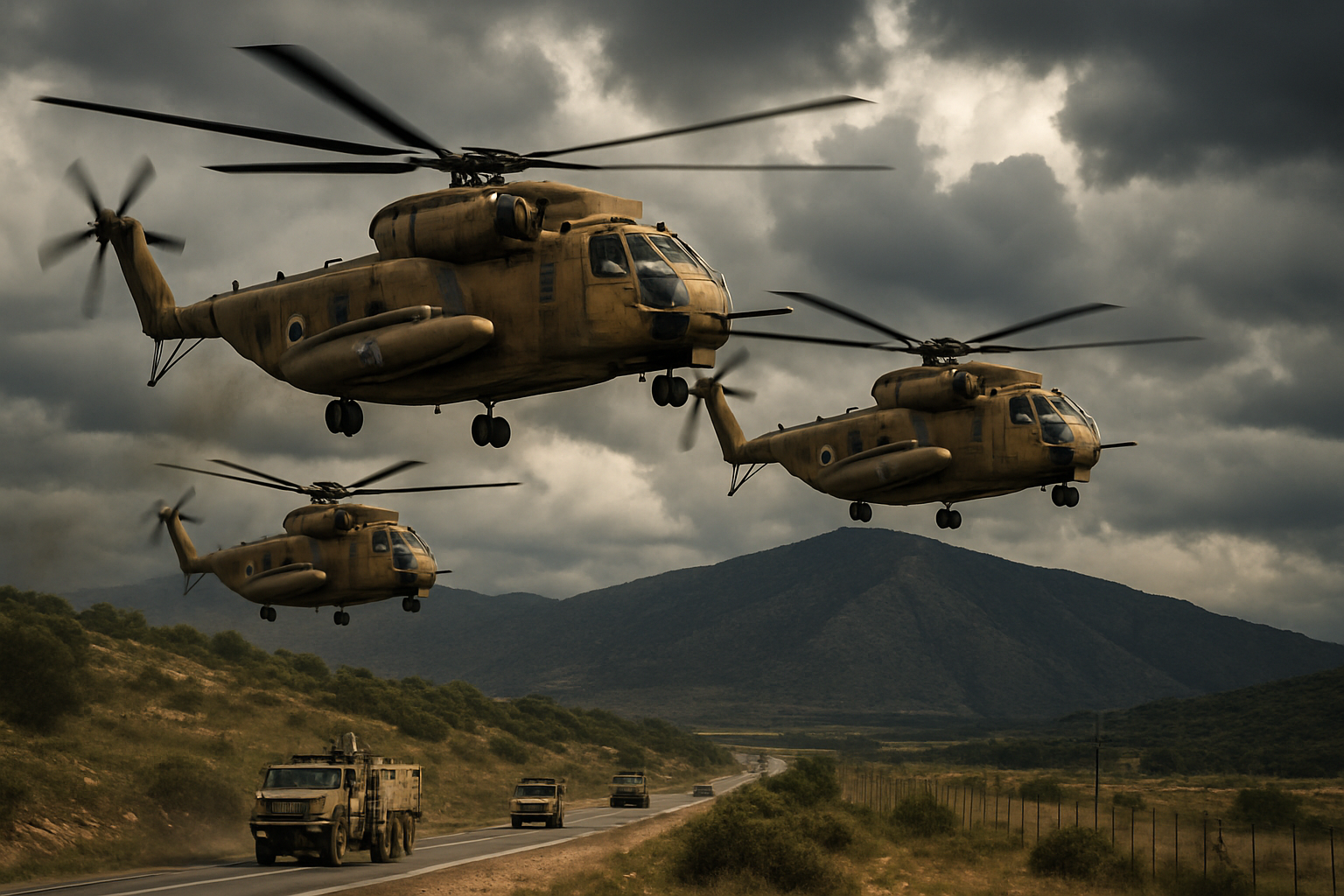
Israeli military forces conducted extensive operations across southern Lebanon on April 12, 2026, killing at least 11 people and wounding dozens more in what represents the latest escalation of a regional conflict that has dramatically reshaped Middle Eastern geopolitics over the past month.
According to reports from multiple sources, including the Lebanese National News Agency (NNA), Israeli strikes targeted various locations throughout southern Lebanon, resulting in casualties among both combatants and civilians. The operations mark a continuation of military activities that have fundamentally altered the regional security landscape since the collapse of previous ceasefire arrangements.
Broader Regional Context
These latest strikes occur within the framework of a much larger regional crisis that began in March 2026 with the death of Iranian Supreme Leader Ali Khamenei and has since evolved into what UN Secretary-General António Guterres has described as "the greatest test of multilateral cooperation in the modern era."
The current Lebanon-Israel military confrontation stems directly from the complete collapse of the November 2024 US-French brokered ceasefire between Israel and Hezbollah. That agreement, which had held for over a year despite minor violations, broke down completely in March 2026 when Hezbollah faced what sources described as an "impossible choice" between maintaining the ceasefire and responding to Iranian pressure following Khamenei's death.
"The resistance is the only option available to us now,"
— Hezbollah official statement, March 2026
Hezbollah's decision to choose "Iranian solidarity over Lebanese sovereignty" effectively pulled Lebanon into the broader Iran-Israel confrontation, transforming what had been a contained bilateral conflict into a multi-front regional war affecting millions of civilians across multiple countries.
Humanitarian Crisis Deepens
The human cost of the ongoing conflict has been devastating. Lebanese health authorities report that over 1.2 million Lebanese civilians—representing approximately 25% of the country's population—have been displaced since the March escalation began. Emergency shelters have been overwhelmed, with thousands of families forced to sleep on the streets of Beirut as traditional support systems reach breaking point.
Of particular concern to international humanitarian organizations is the systematic targeting of medical personnel and facilities. Since March 2, 2026, at least 26 paramedics have been killed and 51 wounded in what appears to be a deliberate pattern of attacks on emergency responders. The deadliest single incident occurred at the Burj Qalaouiyah healthcare center in the Bint Jbeil district, where 12 medical workers including doctors, nurses, and paramedics were killed in an Israeli strike.
Israeli military spokesman Avichai Adraee has justified these attacks by claiming that Hezbollah uses "ambulances extensively for military purposes," allegations that Hezbollah officials have categorically denied. International legal experts warn that such systematic targeting of clearly marked medical assets constitutes potential violations of the Geneva Conventions and could constitute war crimes requiring international investigation.
Military Operations and Strategic Implications
Israeli Defense Forces have expanded their operations well beyond the positions they held under the November 2024 ceasefire agreement. IDF Chief of Staff Lieutenant General Eyal Zamir has declared that the current operations are "just beginning" with "several weeks" of continued ground operations planned.
The military campaign has included the destruction of critical civilian infrastructure, most notably the strategic Qasmiyeh Bridge over the Litani River, and the issuance of demolition orders for civilian homes near the border. These actions represent a shift from purely military targets to broader infrastructure warfare that Lebanese President Michel Aoun has condemned as "collective punishment" and a violation of sovereignty.
Hezbollah, with an estimated force of 20,000 fighters, has responded with over 40 military operations targeting northern Israeli sites, with some attacks reaching as far as Haifa. The organization has declared "direct confrontations" with Israeli forces in southern Lebanon, marking a significant operational escalation from its previous strategy of restraint.
Global Implications and Economic Impact
The regional conflict has generated unprecedented global disruptions affecting international aviation, energy markets, and supply chains. Over 18,000 flights have been cancelled worldwide—the most severe aviation crisis since the COVID-19 pandemic—with Dubai International Airport, the world's busiest, remaining closed due to missile damage.
Energy markets have been particularly affected, with oil prices surging past $100 per barrel for the first time since 2014. Iran's closure of the Strait of Hormuz, through which 40% of global oil transit flows, has forced the International Energy Agency to authorize the largest strategic reserve release in its 50-year history—400 million barrels.
Natural gas prices have increased by 24% in Europe and 78% in the United States, while major shipping companies including Maersk and MSC have suspended operations in the Persian Gulf due to security concerns.
Diplomatic Efforts and Future Prospects
Despite the military escalation, diplomatic initiatives continue. French President Emmanuel Macron has offered to host direct Israel-Lebanon talks in Paris—the first such negotiations since the ceasefire collapse. However, the fundamental challenge remains the loophole in the broader US-Iran "Islamabad Accord" ceasefire, brokered by Pakistan, which explicitly excludes Lebanon from its scope.
This exclusion has created what VP JD Vance acknowledged as a "legitimate misunderstanding" with Iran, which insists that any sustainable ceasefire must be comprehensive across all fronts. Iran has threatened to withdraw from regional talks unless the Lebanon violations cease, potentially undermining what many consider the last hope for a negotiated settlement.
"We cannot accept a peace that covers some conflicts while ignoring others. The Lebanese people deserve the same protection as all others in this region."
— Iranian Foreign Ministry statement, April 2026
International Response and Legal Concerns
The international community has responded with unified condemnation of the targeting of civilians and medical personnel. The United Kingdom has expressed being "deeply troubled" by the developments, while France has called the attacks "unacceptable." Italy has specifically condemned the "bombing of the civilian population."
The World Health Organization has launched a $30.3 million emergency appeal for five Middle Eastern countries, noting that healthcare systems are "under severe strain." The systematic attacks on medical facilities and personnel have prompted calls for international investigations into potential war crimes.
The targeting of UN peacekeepers has added another dimension to international concerns. A UNIFIL base near Mais al-Jabal was struck, wounding one peacekeeper in what represents the first major breach of peacekeeping arrangements since the November 2024 ceasefire was implemented.
Looking Forward
The current crisis represents what many analysts describe as a "template-setting moment" for 21st-century conflict resolution. The rapid transition from diplomatic engagement to military confrontation demonstrates the fragility of negotiated peace arrangements when underlying political tensions remain unresolved.
Success in containing the Lebanon crisis and preventing broader regional war will have implications extending decades beyond current events, potentially establishing precedents for how the international community manages conflicts in an increasingly multipolar world order. Failure, conversely, could accelerate the trend toward military solutions over diplomatic ones, with consequences for regional stability, energy security, and global governance credibility.
As the crisis enters what many consider a critical phase, the stakes could not be higher for the millions of civilians caught in the crossfire and for the broader international system tasked with maintaining peace and security in an increasingly complex global environment.