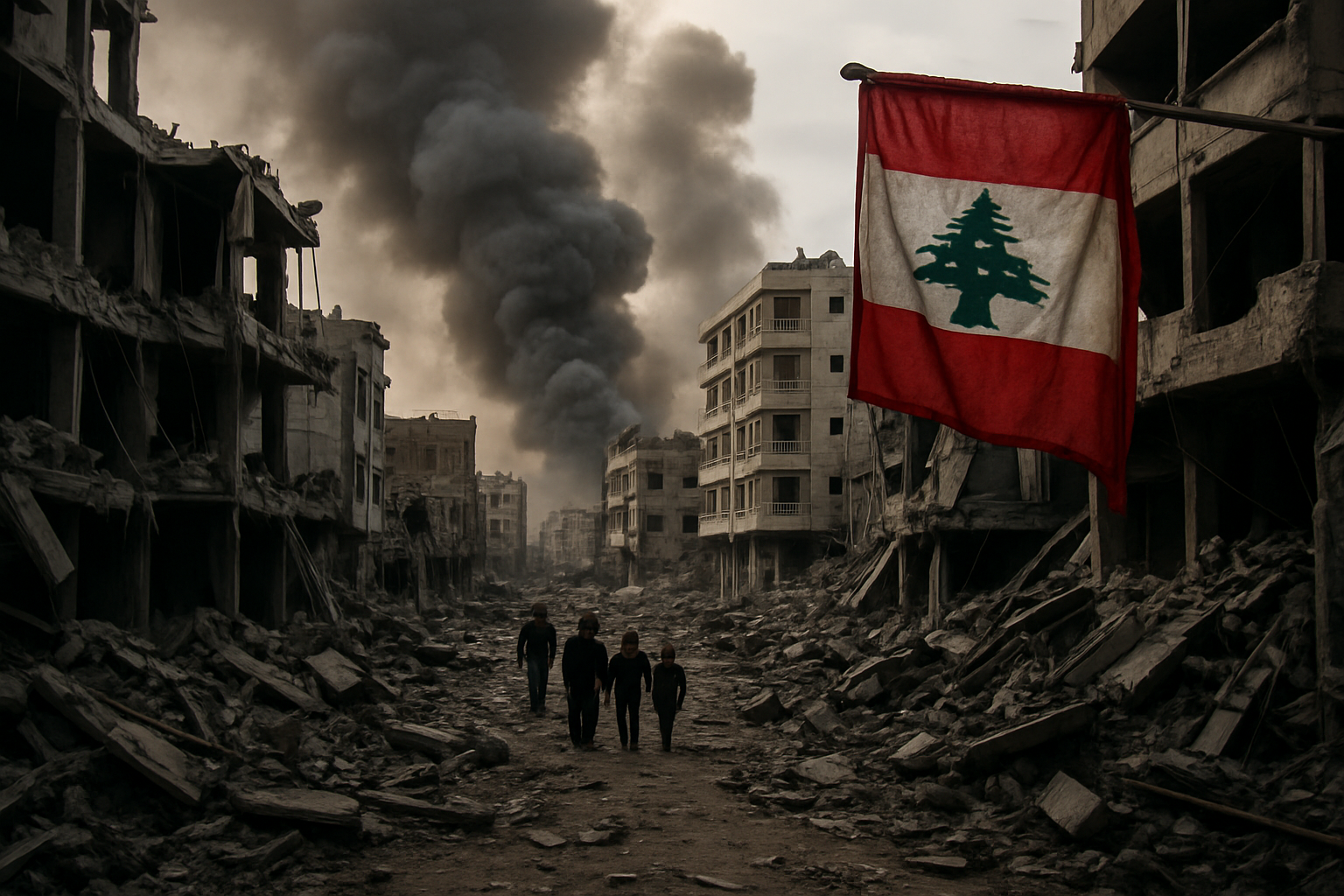
Israeli military operations expanded significantly across multiple fronts on March 29-30, 2026, as Prime Minister Benjamin Netanyahu ordered broader security zones in southern Lebanon while Palestinian casualties continued mounting in Gaza and an unprecedented diplomatic crisis erupted over restricted access to Christianity's holiest site in Jerusalem.
Lebanon Operations Intensify
Netanyahu announced during a visit to northern Israel that Israeli forces would "fundamentally change the situation in the north" through expanded military operations in southern Lebanon. The Prime Minister declared Israel would expand its "existing security strip," marking a significant escalation in the fourth week of the broader Middle East conflict.
IDF Chief Eyal Zamir described the operations as "just beginning" with "several weeks" of continued ground operations planned. Israeli forces destroyed the strategic Qasmiyeh Bridge over the Litani River and issued demolition orders for border homes, representing a shift from targeting military assets to critical civilian infrastructure.
The November 2024 US-French brokered ceasefire between Israel and Hezbollah has completely collapsed after holding for over a year. Hezbollah faced an "impossible choice" between maintaining the ceasefire versus Iranian pressure for retaliation following Supreme Leader Ali Khamenei's death on March 1, ultimately choosing Iranian solidarity and declaring "resistance the only option."
Mounting Palestinian Casualties
Palestinian casualties continued to rise across multiple fronts, with reports of deaths in Gaza's Zeitoun neighborhood and Khan Younis area. According to Palestinian sources, Israeli forces killed two Palestinians, including Ahmed Oweidah and Hassan al-Malh, in strikes near the Shafi'i Mosque in the Zeitoun neighborhood south of Gaza City.
In southern Lebanon, Israeli airstrikes killed five people and injured two others in the town of Shaqra, according to the Lebanese Health Ministry. The attacks are part of ongoing military escalation that has resulted in over 1,238 total fatalities according to regional health authorities.
A United Nations peacekeeping force member was killed in an explosion in southern Lebanon, according to UNIFIL reports. An investigation has been launched, though circumstances surrounding the incident remain unclear.
Historic Religious Freedom Crisis
In an unprecedented move that sparked international condemnation, Israeli police prevented Cardinal Pierbattista Pizzaballa, the Latin Patriarch of Jerusalem, from entering the Church of the Holy Sepulchre for Palm Sunday mass on March 29. This marked what religious authorities described as the "first time in centuries" such restrictions occurred at Christianity's holiest site.
"For the first time since centuries, the Latin Patriarch of Jerusalem and the father of the Church of the Holy Sepulchre were prevented by Israeli police from celebrating Palm Sunday mass."
— Latin Patriarchate of Jerusalem, Joint Statement
Italian Prime Minister Giorgia Meloni condemned the action as an "offense to the faithful," while French President Emmanuel Macron and Spanish Prime Minister Pedro Sánchez issued formal protests. The unprecedented restriction affected Christian worshippers during Holy Week, one of the most sacred periods in the Christian calendar.
Regional Humanitarian Crisis
The humanitarian situation in Lebanon has reached catastrophic levels, with over 800,000 Lebanese displaced according to recent estimates. The systematic targeting of medical personnel has resulted in 26 paramedics killed and 51 wounded since March 2, raising serious concerns about violations of international humanitarian law.
The deadliest attack on medical facilities occurred at the Burj Qalaouiyah healthcare center, where 12 medical workers were killed. Israeli military spokespeople have threatened to strike ambulances and medical facilities, claiming Hezbollah use without providing evidence—allegations that Hezbollah categorically denies.
Gaza Ceasefire Violations Continue
The broader conflict occurs against the backdrop of over 1,600 documented ceasefire violations in Gaza since October 2025, resulting in more than 680 Palestinian deaths during what was supposed to be a truce period. The Gaza Civil Defense has been forced to shut down operations due to fuel shortages, while the Rafah crossing remains severely restricted with only 27 Palestinians able to cross daily versus a 200-person quota.
International Diplomatic Response
The crisis has prompted unprecedented international diplomatic activity. French President Emmanuel Macron offered to host direct Israel-Lebanon talks in Paris—the first such negotiations since the November 2024 ceasefire collapse.
UN Secretary-General António Guterres visited Beirut and called the regional situation the "greatest test of multilateral cooperation in the modern era." Turkey has warned Israel of committing "new genocide" under the pretext of targeting Hezbollah, while Sweden has provided 65 million kronor in humanitarian aid.
The religious restrictions in Jerusalem have drawn condemnation across traditional diplomatic divisions, with eight Arab nations joining European leaders in formal protests. The restrictions affect not only 2.4 billion Christians during Holy Week but also 2 billion Muslims during Ramadan, creating an unprecedented situation affecting all three Abrahamic faiths' access to sacred sites.
Military Escalation Context
Hezbollah, estimated to have 20,000 fighters, has conducted over 40 operations targeting northern Israeli military sites, with some reaching as far as Haifa. The organization has declared "direct confrontations" with Israeli forces in southern Lebanon, marking a significant operational escalation from previous restraint strategies.
The broader crisis occurs within the context of the Iran-Israel war that began following Khamenei's death on March 1. The conflict has caused global disruption with over 18,000 flights cancelled worldwide, oil prices surpassing $100 per barrel, and the closure of the Strait of Hormuz affecting 40% of global oil transit.
Looking Forward
Defense Minister Katz has warned that Lebanon could face territorial losses unless Hezbollah is disarmed, linking the return of displaced populations to Israeli security guarantees. The expansion of Israeli control raises questions about sovereignty and potential de facto annexation concerns similar to other occupied territories.
UN peacekeepers have come under attack, with the UNIFIL base near Mais al-Jabal being struck and one peacekeeper wounded. UNIFIL spokeswoman Kandice Ardiel described the situation as "precarious and volatile," affecting both peacekeepers and civilians evacuating southern Lebanon.
The March 29-30 developments represent a critical juncture in determining whether the crisis can be contained through diplomatic intervention or will evolve into broader regional warfare with devastating humanitarian consequences. The template-setting nature of this conflict extends far beyond current events, with implications for 21st-century conflict resolution mechanisms and international law enforcement that could influence global governance for decades to come.