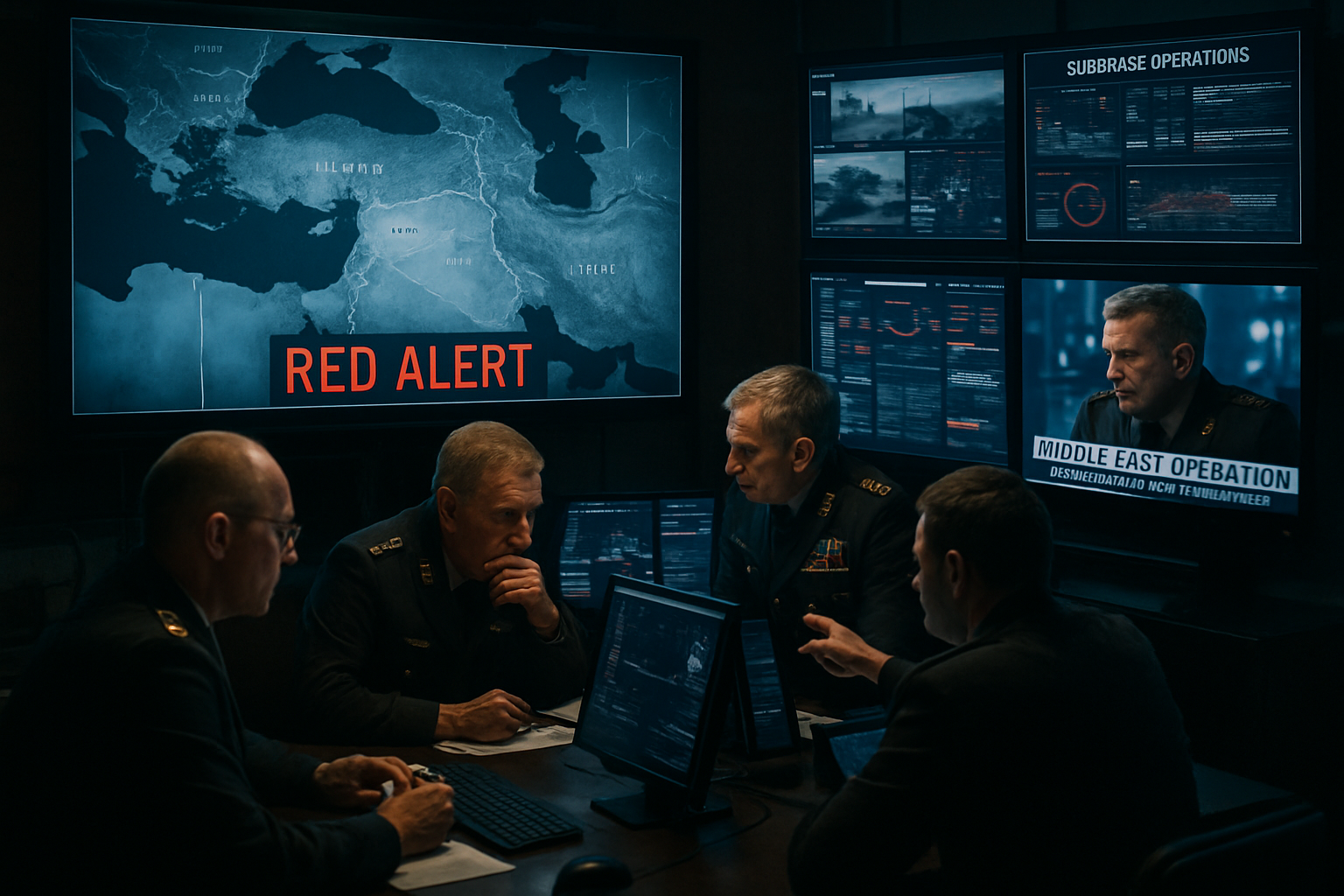
Israel launched devastating airstrikes on two Iranian naval cruise missile production facilities in Tehran on Wednesday, marking a significant escalation in Middle East tensions as the United States prepares to deploy 3,000 paratroopers from the 82nd Airborne Division to the Gulf region.
The Israeli Defense Forces (IDF) confirmed strikes on what they described as key facilities for developing long-range naval cruise missiles, operating under Iran's Ministry of Defense command. According to military sources, the targeted installations were part of Iran's broader missile development program that has raised international concerns about regional security.
The attacks come as the Middle East faces its most dangerous crisis since the Cold War ended, with Operation Epic Fury entering its 25th day following the death of Iranian Supreme Leader Ali Khamenei on March 1. The conflict has already cost over $30 billion and triggered the largest international evacuation since the Arab Spring.
US Military Deployment
Pentagon sources confirm plans to deploy approximately 3,000 troops from the 82nd Airborne Division to the Middle East within the coming days, with the division headquarters expected to relocate to coordinate operations across the region. This represents the largest US military deployment to the area since the 2003 Iraq invasion.
The deployment comes amid what White House spokesperson Karoline Leavitt described as continuing US operations against Iran "without interruption," with military objectives remaining ongoing despite diplomatic efforts to contain the crisis.
"US operations against Iran are continuing without interruption, and efforts to achieve military objectives remain ongoing."
— Karoline Leavitt, White House Spokesperson
Regional Impact and Response
Iran's Islamic Revolutionary Guard Corps has claimed responsibility for regional strikes, including attacks on US military positions and Gulf state infrastructure. The IRGC declared "no red lines remain" in their systematic targeting of what they consider hostile assets across the region.
Kuwait has been particularly affected, with the National Guard successfully intercepting and downing six drones, including five unmanned aircraft, across protected sites. However, drone attacks struck a fuel tank at Kuwait International Airport on Wednesday, triggering a fire that was quickly contained by emergency teams. No casualties were reported, but the incident highlighted the vulnerability of critical infrastructure to asymmetric attacks.
The Kuwait National Guard issued reassuring statements emphasizing that radiation from neighboring countries poses no threat to Kuwaiti territory, addressing public concerns amid the regional conflict.
Global Diplomatic Efforts
The crisis has prompted unprecedented diplomatic activity, with Secretary of State Marco Rubio planning emergency travel to France this week to engage with skeptical Group of Seven allies about the Iran war. The conflict has sent global fuel prices soaring, creating economic pressures that are testing international unity.
European leaders have expressed growing concern about the trajectory of the conflict, particularly after Iranian drones struck RAF Akrotiri in Cyprus—marking the first attack on European territory since World War II. This prompted an unprecedented naval coalition response involving British, Spanish, Italian, French, Dutch, and Greek vessels.
Economic and Humanitarian Consequences
The conflict has created a global aviation crisis with over 18,000 flights cancelled worldwide—the most severe disruption since COVID-19. Eight Middle Eastern countries have closed their airspace simultaneously, effectively severing Europe-Asia flight corridors.
Energy markets remain in turmoil, with oil prices surging past $100 per barrel and the International Energy Agency releasing a record 400 million barrels from strategic reserves—the largest intervention in the agency's 50-year history. Iran's mining of the Strait of Hormuz with an estimated 2,000-6,000 naval mines has effectively closed the waterway that carries 40% of global oil transit.
Humanitarian organizations report that Iran's Red Crescent has documented over 787 civilian casualties from the ongoing military operations, while Lebanon faces a massive displacement crisis with over 832,000 people forced from their homes as Hezbollah joined the conflict.
Nuclear Diplomacy Breakdown
The current military escalation follows the complete collapse of nuclear diplomacy, despite what negotiators described as the most progress since the 2018 JCPOA breakdown. Geneva talks had achieved "broad agreement on guiding principles," but fundamental disagreements over scope proved insurmountable.
Iran sought to limit negotiations to nuclear issues only, while the US demanded comprehensive discussions including ballistic missiles, proxy groups, and human rights concerns. Iran continues uranium enrichment at 60% purity levels, with over 400 kilograms of weapons-grade material—sufficient for multiple nuclear weapons if weaponized.
Congressional Oversight
The escalating costs and scope of military operations have prompted unprecedented congressional scrutiny. Senator Richard Blumenthal expressed being "more concerned than ever" about potential ground troop deployment, with conflict unpopularity reaching historically low levels at just 25% public support.
The Pentagon has quietly prepared operations extending through September, far beyond the administration's initial 4-6 week timeline. Financial markets have emerged as what analysts describe as the "ultimate constraint" on further escalation, with global stock indices experiencing severe declines.
Template-Setting Crisis
UN Secretary-General António Guterres has called the current situation the "greatest test of multilateral cooperation in the modern era." The rapid transition from diplomatic breakthrough to military confrontation demonstrates what experts describe as the fragility of crisis management in the multipolar era.
The stakes include regional war prevention, global energy security, nuclear governance credibility, and international law enforcement—all testing post-World War II order principles simultaneously. Success in containing the crisis could provide a framework for future nuclear dispute resolution, while failure may accelerate military solutions for decades, encouraging global proliferation and undermining diplomatic credibility worldwide.
As Israeli Defense Minister Israel Katz announced plans to establish a large security buffer zone in southern Lebanon, controlling approximately 10% of Lebanese territory, the conflict continues to expand beyond its original bilateral scope into a regional confrontation with global implications extending far beyond the Middle East.