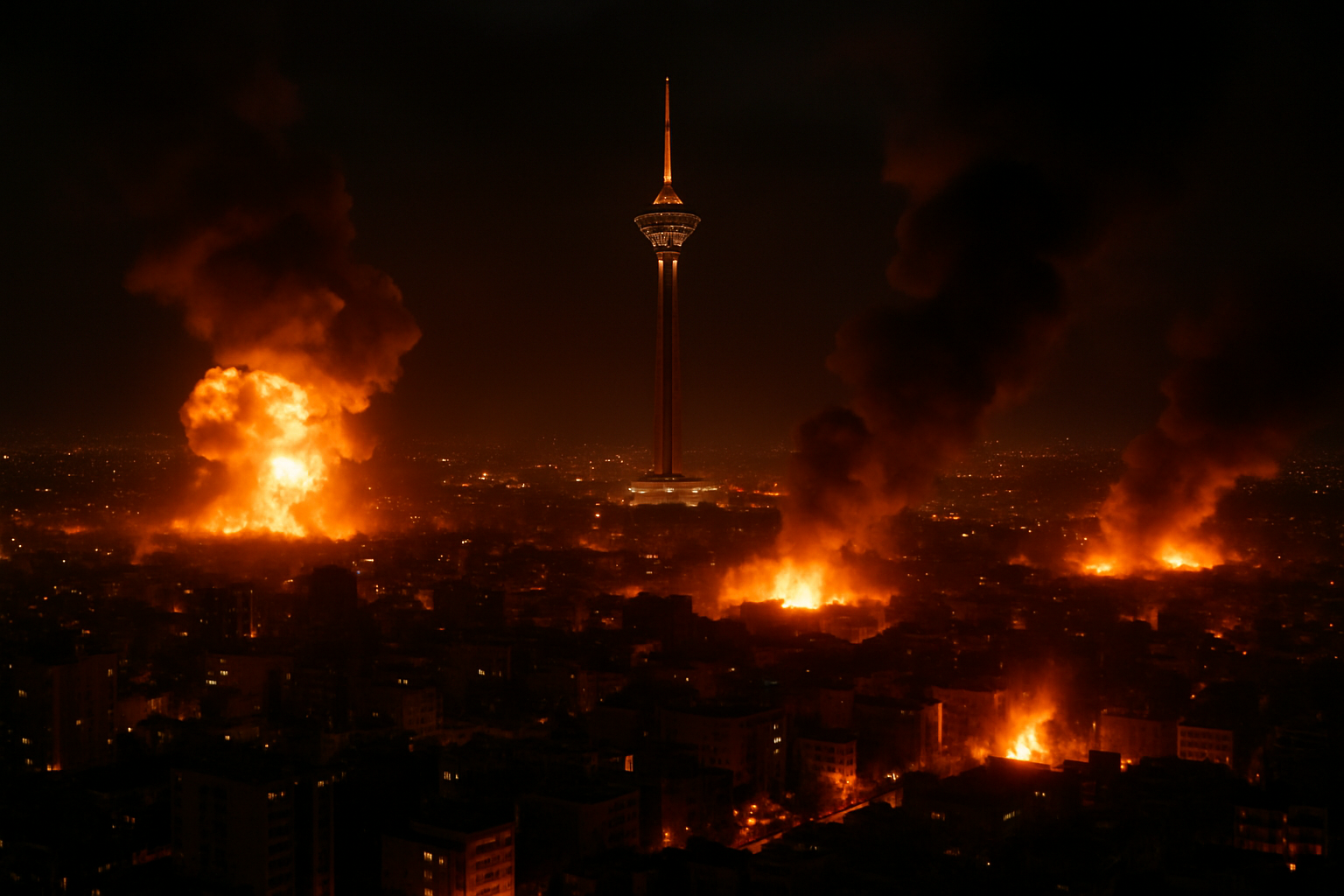
Israel launched a devastating new wave of airstrikes against Tehran and Iranian infrastructure on Friday, marking day 21 of what has become the most dangerous international crisis since the Cold War, as regional tensions reach critical levels and global markets reel from energy disruptions.
The latest assaults targeted multiple areas of the Iranian capital, with the Israel Defense Forces confirming strikes against "infrastructure of the Iranian terror regime." According to international sources, the bombardment represents the most intensive attacks on Tehran since the conflict began on March 1, following the death of Iran's Supreme Leader Ali Khamenei.
Trump's Controversial Pearl Harbor Comparison
In a startling diplomatic moment, U.S. President Donald Trump compared his administration's surprise military actions against Iran to Japan's 1941 attack on Pearl Harbor during a meeting with visiting Japanese Prime Minister Sanae Takaichi on Thursday. The remark came amid tensions over Washington's decision not to notify allies in advance of operations.
"I didn't inform our allies because I wanted it to be a surprise. Who knows better about surprise than Japan? Okay, why didn't you tell me about Pearl Harbor?"
— Donald Trump, U.S. President
The provocative comparison drew immediate criticism from diplomatic circles and underscored the strain on traditional alliance relationships during the unprecedented military campaign, dubbed "Operation Epic Fury."
Economic Warfare Intensifies
The conflict has evolved into systematic economic warfare targeting critical global infrastructure. Iran's retaliatory strikes have hit energy facilities across the Gulf region, with particular focus on Qatar's Ras Laffan Industrial City, which handles approximately 20% of global LNG exports. The facility has suffered "extensive damage" according to QatarEnergy officials.
Oil prices have surged past $100 per barrel for the first time since 2014, with some analysts warning of potential $200 levels if the Strait of Hormuz—carrying 40% of global oil transit—remains disrupted. The International Energy Agency has released a record 400 million barrels from strategic reserves, the largest intervention in the agency's 50-year history.
Global Aviation Crisis
The aviation industry faces its most severe disruption since COVID-19, with over 18,000 flights cancelled worldwide. Eight Middle Eastern countries have simultaneously closed their airspace, creating unprecedented logistical challenges. Dubai International Airport, the world's busiest hub, remains shuttered due to missile damage, while major carriers including Emirates, Air France-KLM, and Wizz Air have suspended operations indefinitely.
Revolutionary Leadership Transition
Iran is navigating its most significant political transition since the 1979 revolution under wartime conditions. Mojtaba Khamenei, son of the deceased Supreme Leader, has emerged as the likely successor in what would be the Islamic Republic's first hereditary succession. Intelligence assessments suggest this marks a fundamental shift from clerical to Revolutionary Guards military governance.
The succession crisis has complicated Iran's war strategy, with the new leadership under Mojtaba maintaining aggressive rhetoric. Iranian Foreign Minister Abbas Araghchi has warned of "zero restraint" if energy infrastructure attacks continue, while categorically rejecting any negotiations with the Trump administration.
Humanitarian and Diplomatic Costs
The humanitarian toll continues to mount, with Iran's Red Crescent reporting over 787 civilian casualties from U.S.-Israeli strikes. International attention has focused on the bombing of Iranian elementary schools, which Pentagon officials later acknowledged resulted from "outdated targeting data," killing an estimated 165-185 students.
The international community faces what UN Secretary-General António Guterres called "the greatest test of multilateral cooperation in crisis management of the modern era." The European Union has activated its ESTIA evacuation plan for Cyprus for the first time in bloc history, following Iranian drone strikes on RAF Akrotiri—the first attack on European territory since World War II.
Congressional Opposition Mounting
Domestic political pressure on the Trump administration is intensifying, with bipartisan lawmakers demanding answers about strategy, costs, and the potential for ground troop deployment. Operation Epic Fury has already cost $11.3 billion in its first week, with Pentagon officials preparing operations extending through September—far beyond the initial 4-6 week timeline.
Senator Richard Blumenthal expressed being "more concerned than ever" about the possibility of ground troops, while conflict polling shows historically low public support at just 25% approval for the military action.
Regional Coalition Under Stress
The unprecedented coalition of Saudi Arabia, UAE, Qatar, and Egypt that initially supported diplomatic solutions is fracturing under the pressure of Iranian retaliation targeting member territories. Egyptian President Abdel Fattah el-Sisi condemned attacks on "sisterly Arab countries," warning of "comprehensive chaos spreading across the region."
Multiple Gulf states have reported casualties and infrastructure damage from Iranian missile and drone attacks, forcing difficult choices between maintaining U.S. alliance commitments and avoiding further Iranian escalation.
Nuclear Diplomacy Collapse
The current crisis emerged from the complete breakdown of nuclear negotiations despite achieving what diplomats called "broad agreement on guiding principles"—the most progress since the 2018 JCPOA collapse. The fundamental disagreement proved insurmountable: Iran insisted on nuclear-only talks excluding ballistic missiles and regional proxies, while the U.S. demanded comprehensive agreements covering missiles, armed groups, and human rights.
Iran continues enriching uranium at 60% purity with over 400kg of material, approaching the 90% weapons-grade threshold. The crisis unfolds against the broader context of nuclear governance breakdown, with the New START treaty having expired for the first time in over 50 years without U.S.-Russia constraints.
Global Template-Setting Implications
The rapid transition from diplomatic breakthrough to military confrontation demonstrates what experts term "multipolar era crisis management fragility." The outcome will establish precedents for international dispute resolution, nuclear proliferation responses, and territorial sovereignty enforcement affecting global governance for decades.
The stakes extend far beyond the immediate participants, affecting global energy security architecture, aviation network resilience, supply chain vulnerabilities, and the credibility of diplomatic solutions to 21st-century conflicts.
Looking Ahead
As day 21 of the conflict concludes, the trajectory points toward prolonged regional warfare with global implications. Trump's demands for Iran's "unconditional surrender" and claims of the right to personally choose Iran's next Supreme Leader have eliminated diplomatic off-ramps, while Iran's systematic regional targeting demonstrates the expansion of conflict beyond bilateral boundaries.
The coming phase will determine whether this crisis remains a contained Middle Eastern conflict or evolves into the broader regional war that could reshape international relations for decades. With energy markets in turmoil, alliance structures strained, and nuclear governance frameworks collapsed, the world watches as March 2026 becomes a watershed moment in post-Cold War international order.