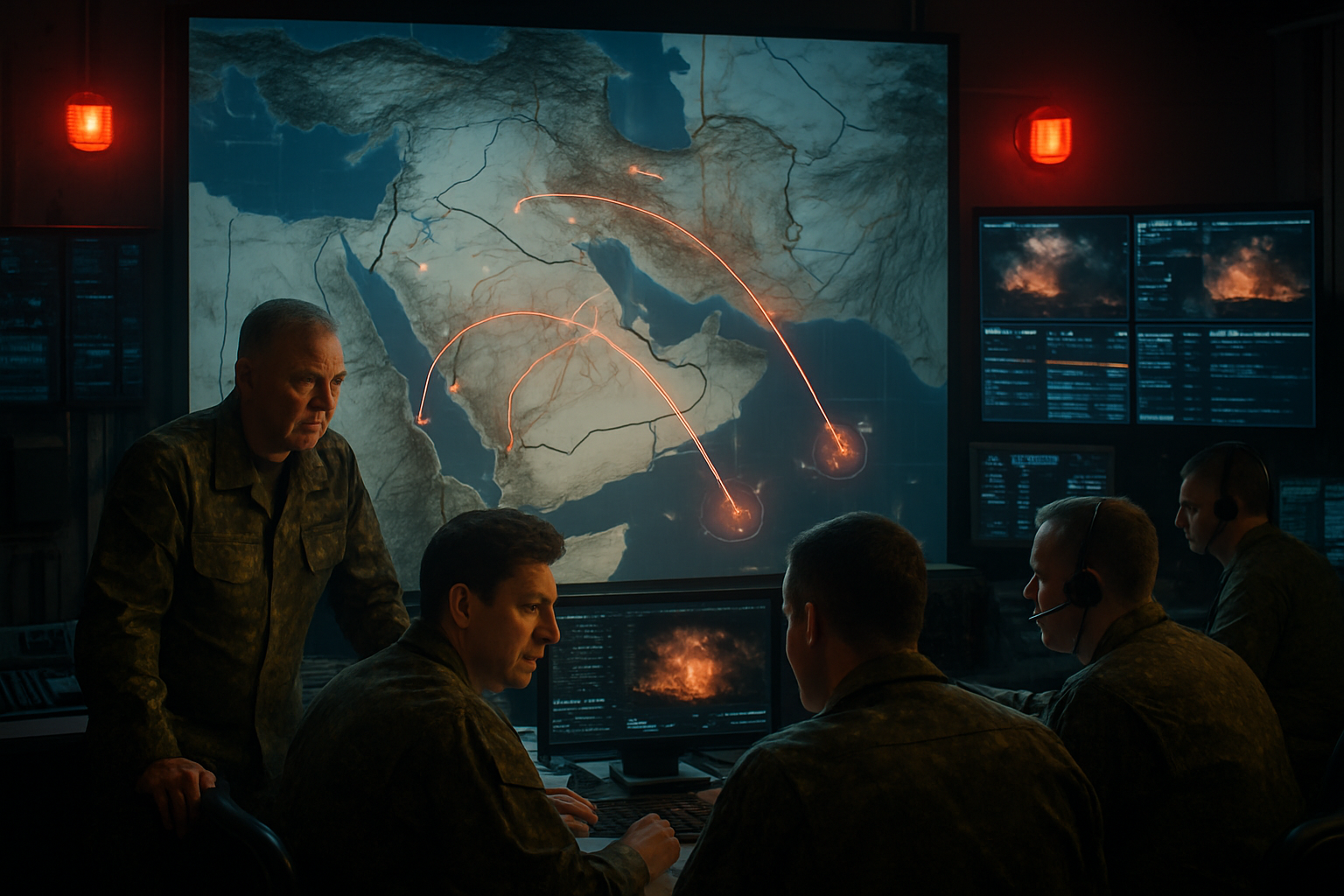
The Israel-Iran war has escalated into the most dangerous international crisis since the Cold War, with Israeli Prime Minister Benjamin Netanyahu claiming his forces have systematically destroyed Iran's nuclear enrichment capabilities and naval fleet while Tehran launches unprecedented retaliatory strikes across the Middle East.
Speaking at a live televised press conference, Netanyahu made extraordinary assertions about Israeli military achievements, declaring that Iran no longer possesses "the capacity to enrich uranium" and claiming complete destruction of the Iranian Navy in the Caspian Sea. The Israeli premier's bombshell statements come as the conflict enters a critical new phase following weeks of intensive military operations.
Netanyahu's Explosive Claims
In his most detailed public assessment of Israel's military campaign, Netanyahu outlined what he described as comprehensive degradation of Iranian strategic capabilities. "We have destroyed Iran's entire fleet in the Caspian Sea. The days of the Revolutionary Guards (IRGC) are numbered and will be very short," the prime minister declared to a global audience.
The Israeli leader's claims extend far beyond maritime operations, asserting that Israel has eliminated Iran's uranium enrichment infrastructure—a capability that has been central to international concerns about Tehran's nuclear program for over a decade. These unprecedented assertions, if accurate, would represent a fundamental shift in Middle Eastern power dynamics.
"Iran no longer has the capacity to enrich uranium. We have systematically dismantled their nuclear infrastructure."
— Benjamin Netanyahu, Israeli Prime Minister
Iranian Missile Barrage Targets Israel
Netanyahu's claims came as Iran launched a new wave of missile attacks targeting Israeli territory, with explosions reported in Jerusalem and Tel Aviv. Air raid sirens activated across Israel as Iranian ballistic missiles struck both the capital and Israel's commercial center, marking a significant escalation in Tehran's retaliation campaign.
The Israeli military confirmed detecting three waves of projectiles fired from Iran within less than an hour, while explosions were heard throughout Jerusalem and surrounding areas. Iranian missile fragments impacted northern Israel according to footage published by local platforms, demonstrating Tehran's continued strike capabilities despite Netanyahu's claims.
In a particularly tragic incident, four Palestinian women were killed in a West Bank hair salon during an Iranian missile attack, highlighting how the conflict's civilian toll continues to mount across the region.
Regional Powers Navigate Crisis
The escalating conflict has placed enormous strain on regional diplomatic relationships, with Gulf states caught between their strategic partnerships and the expanding warfare. Iran's strikes on Israeli oil refinery infrastructure in Haifa and attacks on regional energy facilities have triggered urgent calls for de-escalation from European Union leaders.
Qatar's Prime Minister and Turkey's Foreign Minister issued joint condemnations of Iran's strikes on Qatar's Ras Laffan Industrial City, warning of "serious consequences for regional stability and global energy supplies." The attack on one of the world's largest liquefied natural gas facilities underscores how the conflict threatens critical energy infrastructure.
Six nations—including the UK, France, Germany, Italy, the Netherlands, and Japan—issued an unprecedented joint statement condemning Iranian attacks on commercial vessels and civilian infrastructure in the Gulf, while also expressing concern about the closure of the Strait of Hormuz.
Trump Administration's Response Strategy
The crisis has created complex political dynamics for the Trump administration, with some analysts suggesting the war has boosted Netanyahu's position while potentially undermining President Trump's foreign policy objectives. The US president previously told Israel not to repeat strikes on Iranian natural gas infrastructure as energy prices spiral globally.
In a revealing comment, Trump compared the Iran strikes to the Japanese attack on Pearl Harbor, drawing historical parallels that underscore the administration's view of the conflict's significance. The comparison came during a press conference when asked by a Japanese reporter about the US approach to consulting with allies before military action.
According to the US Director of National Intelligence, American and Israeli goals in the Iran war "are not the same," indicating potential strategic divergence between the allies despite their coordinated military operations.
Regional Leadership Vacuum
The conflict has created a notable leadership vacuum in Iran, with parliamentary speaker Mohammad Bagher Qalibaf emerging as a central figure in Tehran's war effort. As Iran's new supreme leader remains largely out of public view following the death of Ayatollah Ali Khamenei in earlier US-Israeli strikes, Qalibaf has positioned himself prominently, giving interviews and issuing threats against Israel and the United States.
The former Revolutionary Guards commander and Tehran mayor represents a critical link between Iran's political, security, and clerical establishments during this period of constitutional transition. His prominence signals how military figures are assuming greater influence in Iranian governance during the crisis.
Hamas Exploits Shifting Focus
The widening Iran war has inadvertently benefited Hamas in Gaza, where the terror group's civil police forces are now openly operating without concealing their faces. Footage shows Hamas police units patrolling in broad daylight, controlling food prices amid shortages and reportedly suppressing critics.
The diversion of international attention from Gaza to the Iran conflict has allowed Hamas to tighten its grip on the Palestinian territory, demonstrating how regional crises can create opportunities for non-state actors to consolidate control.
Energy Market Disruption
The conflict's impact on global energy markets has been severe, with attacks on oil refineries and LNG facilities driving price volatility worldwide. Netanyahu's claims about destroying Iranian energy infrastructure, combined with ongoing strikes on Gulf facilities, have created uncertainty about regional energy production capacity.
EU leaders have called for a moratorium on strikes against energy and water facilities in the Middle East, recognizing that such attacks could have far-reaching consequences for global economic stability. The closure of the Strait of Hormuz, through which approximately 40% of global oil transit passes, remains a persistent threat.
International Diplomatic Response
The United Nations Security Council has held urgent closed meetings on what officials describe as Iran's "cowardly" attacks on Gulf energy sites. The international community faces mounting pressure to address a conflict that has implications far beyond the Middle East, affecting global supply chains, energy markets, and regional security architectures.
The crisis has also exposed divisions within international coalitions, with some European leaders calling for more aggressive responses while others emphasize diplomatic solutions. The complexity of managing a conflict involving multiple regional powers while maintaining global economic stability has tested traditional diplomatic frameworks.
Historical Context and Implications
The current escalation represents the culmination of years of mounting tensions that began with the collapse of nuclear diplomacy in early 2026. Despite achieving what negotiators described as "broad agreement on guiding principles" during Geneva talks—the most significant progress since the 2018 JCPOA collapse—fundamental disagreements over scope proved insurmountable.
Iran's insistence on excluding ballistic missiles and regional proxy activities as "red lines" while demanding nuclear-only talks conflicted with US demands for comprehensive agreements addressing missiles, armed groups, and human rights issues. The diplomatic breakdown led directly to the military escalation now threatening regional stability.
Looking Forward
As the conflict continues to expand, the international community faces difficult questions about containing a crisis that has already demonstrated its capacity to disrupt global systems. Netanyahu's claims about degrading Iranian capabilities, if accurate, could potentially alter the strategic balance, but they also risk provoking further escalation from Tehran.
The coming days will be critical in determining whether diplomatic channels can be reopened or if the conflict will continue expanding, potentially drawing in additional regional powers and threatening the broader Middle Eastern security architecture. The stakes extend far beyond the immediate participants, affecting global energy security, nuclear proliferation concerns, and the credibility of international conflict resolution mechanisms.
With both sides having crossed significant escalatory thresholds, the international community's ability to manage this crisis may serve as a template for addressing similar conflicts in an increasingly multipolar world order. The outcome will likely influence approaches to nuclear diplomacy, regional security arrangements, and the balance between military and diplomatic solutions to international disputes for years to come.