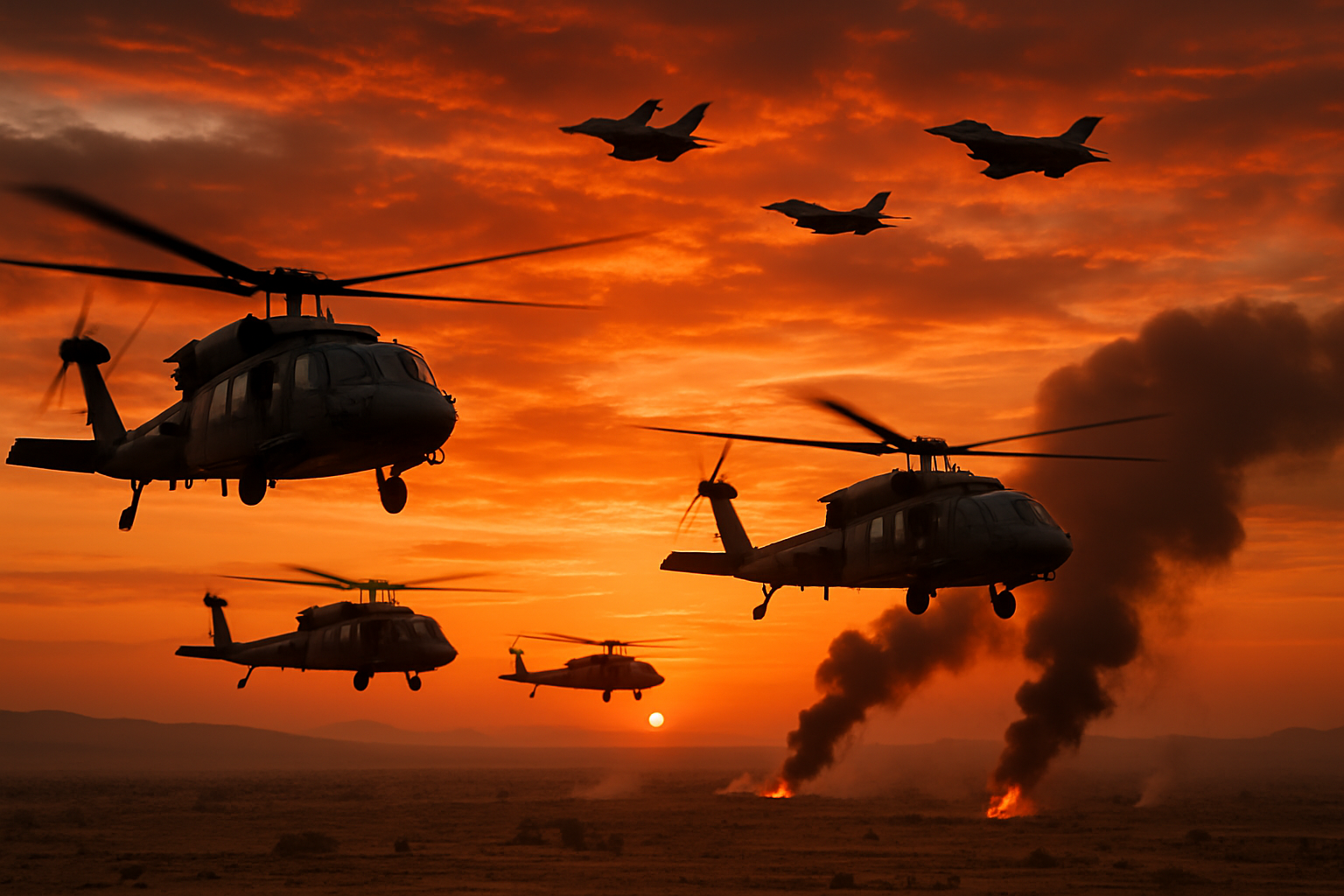
Israel launched devastating new strikes on Tehran's "heart" Friday morning while President Trump extended his ultimatum to Iran by 10 days until April 6, claiming negotiations are "going very well" despite Tehran's categorical denial of any talks as the most dangerous international crisis since the Cold War enters its fourth week.
The coordinated US-Israeli military campaign, dubbed "Operation Epic Fury," has now cost American taxpayers $11.3 billion in its first week alone, making it the most expensive Middle Eastern operation since the 2003 Iraq invasion. The Pentagon is reportedly considering deploying an additional 10,000 ground troops to the region as pressure mounts for a decisive military solution.
Trump Extends Deadline Despite Iranian Rejection
President Trump announced via Truth Social that he had extended the pause on attacking Iran's energy facilities until April 6, claiming the move came "at Tehran's request" and that diplomatic talks were progressing positively. However, Iranian officials immediately rejected this characterization, with Foreign Minister Abbas Araghchi categorically denying any negotiations with the Trump administration.
"Iran has made no such request, and we categorically reject any negotiations under the current circumstances of military aggression against our sovereignty."
— Abbas Araghchi, Iranian Foreign Minister
The conflicting accounts highlight the deepening information warfare surrounding the crisis, with both sides presenting drastically different narratives about diplomatic engagement possibilities. Trump's claim that Iran sought the extension contradicts intelligence assessments suggesting Iran has mobilized over one million civilians for potential ground conflict with US forces.
Israel Intensifies Tehran Bombardment
Israeli forces conducted their most intensive strikes on the Iranian capital since the conflict began March 1, targeting government infrastructure and military installations in what residents described as attacks on Tehran's "heart." The bombardment comes as Israel's military chief Lieutenant General Eyal Zamir warned that the army risks "internal collapse" due to severe troop shortages and mounting pressure from the prolonged campaign.
The strikes hit multiple strategic targets across Tehran, including oil storage facilities that created massive fires and toxic black rain affecting nearly 10 million residents. Emergency services reported six people killed in the holy city of Qom, bringing Iran's civilian death toll to nearly 2,000 according to the Iranian Red Crescent.
Pentagon Weighs Major Troop Deployment
According to Wall Street Journal reports citing US defense officials, the Pentagon is actively considering deploying an additional 10,000 ground troops to the Middle East. This massive deployment would give President Trump enhanced military options even as he publicly claims diplomatic progress with Iran.
The potential troop surge comes amid unprecedented Congressional scrutiny, with Senator Richard Blumenthal stating he is "more concerned than ever" about boots on the ground. The conflict has achieved historically low public support at just 25% among Americans, making it "almost unprecedented" in its early-stage unpopularity.
"The American people deserve clarity on our strategy, costs, and exit plan before we commit additional forces to this expanding conflict."
— Senator Richard Blumenthal
Global Economic Crisis Deepens
The conflict has triggered the worst global energy crisis since the 1970s oil embargo, with oil prices surging past $100 per barrel for the first time since 2014. Iran's deployment of thousands of naval mines in the Strait of Hormuz has effectively closed the waterway that carries 40% of global oil transit, stranding over 150 tankers worth billions in cargo.
The International Energy Agency has released a record 400 million barrels from strategic reserves—the largest intervention in the agency's 50-year history. Natural gas prices have spiked 24% in Europe and 78% in the United States, threatening to trigger widespread economic disruption heading into the spring season.
The aviation industry faces its worst crisis since COVID-19, with over 18,000 flights cancelled worldwide. Dubai International Airport, the world's busiest, remains completely shuttered due to missile damage, while eight Middle Eastern countries maintain simultaneous airspace closures that have severed critical Asia-Europe flight corridors.
Iran's Volunteer Mobilization Campaign
Iran has launched a nationwide volunteer initiative titled "Defenders of the Homeland for Iran," calling on civilians aged 12 and above to support the war effort. Iranian media reports suggest more than one million people have been prepared for potential ground conflict with US forces, representing an unprecedented civilian mobilization.
The massive evacuation of foreign nationals continues, with over 3,000 people evacuated from Iran via Azerbaijan amid rising tensions. Australia has 115,000 nationals trapped in the region, while Germany reports 30,000 stranded tourists as commercial flights remain suspended.
Regional Coalition Under Severe Strain
The unprecedented coalition of Saudi Arabia, UAE, Qatar, and Egypt that initially supported diplomatic engagement is fracturing under Iranian retaliation targeting their territories. Egyptian President Abdel Fattah al-Sisi condemned attacks on "sisterly Arab countries," warning of "comprehensive chaos" spreading across the region.
The United Arab Emirates has offered to join international forces to reopen the Strait of Hormuz, while Kuwait has been forced to relocate Jazeera Airways operations to Saudi Arabia due to repeated drone attacks. Qatar has suspended its massive LNG production, threatening European energy supplies just as household energy costs face increases of £160 in the UK.
Nuclear Diplomacy Completely Collapsed
The current military escalation emerged from the complete breakdown of nuclear negotiations in Geneva, despite achieving what diplomats called "broad agreement on guiding principles"—the most progress since the JCPOA collapse in 2018. The fundamental disagreement persisted: Iran excluded ballistic missiles and regional proxies as "red lines" while the US demanded comprehensive agreements including missiles, armed groups, and human rights issues.
Iran continues enriching uranium at 60% purity with over 400 kilograms of material—enough for multiple nuclear weapons if weaponized. The crisis unfolds amid the broader nuclear governance breakdown following the New START treaty's expiration on February 5, marking the first time in over 50 years without US-Russia nuclear constraints.
Humanitarian Crisis Mounting
The conflict has produced devastating humanitarian consequences, with Iran's Red Crescent reporting over 787 civilian casualties from US-Israeli strikes. The Pentagon has confirmed responsibility for an elementary school strike that killed between 165-185 students using what officials called "outdated targeting data."
In Lebanon, Hezbollah's entry into the conflict has resulted in 826 deaths and displaced 832,000 people, completely collapsing the November 2024 ceasefire that had held for over a year. Medical personnel have been systematically targeted, with 26 paramedics killed and 51 wounded in potential Geneva Conventions violations.
Historic Leadership Succession
Following the confirmed death of Supreme Leader Ali Khamenei on March 1, Iran has installed his son Mojtaba Khamenei as the new Supreme Leader—marking the first hereditary succession in the Islamic Republic's 47-year history. This unprecedented transition has consolidated Revolutionary Guards control over governance, representing a fundamental shift from clerical to military leadership during active warfare.
The succession occurred under the oversight of a three-member transitional council managing the country during the crisis, with the Assembly of Experts selecting the successor under wartime conditions unprecedented in Iranian constitutional history.
Looking Forward: Critical Juncture
The coming days represent a critical juncture for international relations, with UN Secretary-General António Guterres describing the crisis as the "greatest test of multilateral cooperation in the modern era." The rapid transition from diplomatic engagement to military escalation demonstrates what experts call the fragility of crisis management in the multipolar era.
Success in containing the crisis could provide a framework for future nuclear dispute resolution, while failure may accelerate military solutions over diplomatic approaches for decades to come. The stakes include regional war prevention, global energy security, nuclear governance credibility, and international law enforcement—all tested simultaneously in what many consider the most consequential international crisis since the Cold War's end.
As President Trump weighs deploying thousands more troops while claiming diplomatic progress that Iran denies, the world watches to see whether this template-setting moment will establish precedents for 21st-century conflict resolution or mark the beginning of a broader Middle Eastern war with global implications extending decades beyond current events.