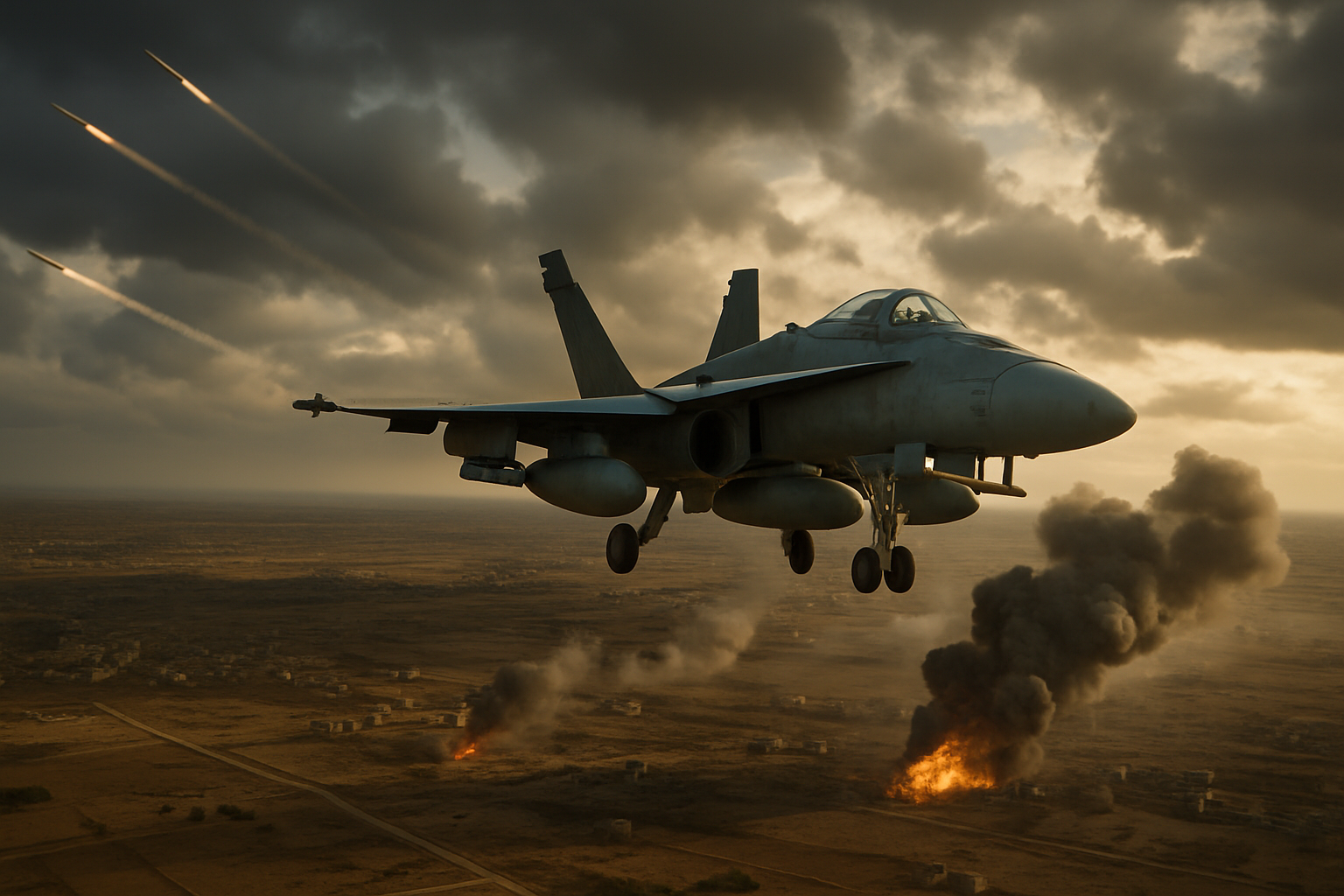
The Israel-Iran war entered its third week Friday with unprecedented escalation as Israeli airstrikes killed Iranian Revolutionary Guards Corps spokesman Ali Mohammad Naini, while Tehran launched cluster warhead missiles at Tel Aviv, killing two Israeli civilians and marking the most dangerous Middle East crisis since the Cold War ended.
Iranian state media confirmed the death of Ali Mohammad Naini, a longtime IRGC spokesman, in what Fars news agency described as "a treacherous terrorist act on the eve of the last day of Ramadan." The killing represents another significant blow to Iran's military leadership structure, which has been systematically targeted since the massive US-Israeli "Operation Epic Fury" began March 1.
Global Crisis Reaches Critical Peak
The conflict has triggered the most severe global disruption since the COVID-19 pandemic, with over 18,000 flights cancelled worldwide as eight Middle Eastern countries have closed their airspace simultaneously. Dubai International Airport, the world's busiest with 86 million annual passengers, remains completely shut down following missile damage.
Oil prices have surged past $100 per barrel for the first time since 2014, with warnings they could reach $200 as Iran continues mining the Strait of Hormuz with between 2,000 and 6,000 naval mines. The strategic waterway, through which 40% of global seaborne oil transits, has been effectively closed to commercial shipping, stranding over 150 tankers worth billions of dollars.
"The restoration of oil and natural gas supplies from the Gulf may take six months," warned Fatih Birol, head of the International Energy Agency.
— International Energy Agency Director
IRGC Vows Continued Missile Production Despite Israeli Claims
Despite Israeli Prime Minister Benjamin Netanyahu's claims that Tehran has lost its uranium enrichment and missile production capacity, Iran's Revolutionary Guards insisted Friday that missile production continues unabated. The remarks highlight sharply conflicting narratives from both sides as the war moves deeper into March.
Iranian officials rejected Netanyahu's assessment, with IRGC sources stating Iran maintains its defensive capabilities. This defiance comes as Israel has conducted what witnesses describe as the most intensive bombardment of Tehran since the war began.
Trump Compares Iran Strikes to Pearl Harbor
In a remarkable diplomatic moment, President Donald Trump on Thursday compared recent US strikes on Iran to Japan's 1941 attack on Pearl Harbor during a White House meeting with Japanese Prime Minister Sanae Takaichi. When asked why allies were not informed in advance of military operations, Trump said the element of surprise was intentional.
"We wanted surprise. Who knows better about surprise than Japan?" Trump said, referencing the historic attack that brought the United States into World War II. The comparison drew criticism from diplomatic observers who noted the sensitive nature of the reference given the venue.
Regional Energy Infrastructure Under Attack
The conflict has dramatically expanded beyond military targets to critical energy infrastructure across the Persian Gulf region. Iran launched fresh drone attacks on a Kuwaiti oil refinery Friday, with firefighters battling blazes at the facility as the Islamic Republic maintains its campaign against regional oil installations.
Natural gas prices have surged 24% in Europe and 78% in the United States, while Qatar has been forced to halt LNG production, threatening approximately 20% of global liquefied natural gas exports. Major shipping companies Maersk and MSC have suspended all Persian Gulf operations.
European Territory Attacked for First Time Since WWII
In an unprecedented escalation, Iranian drones struck RAF Akrotiri in Cyprus, marking the first attack on European territory since World War II. The assault prompted an extraordinary naval coalition response, with HMS Dragon leading Spanish, Italian, French, Dutch, and Greek vessels in the Eastern Mediterranean.
The European Union activated its ESTIA evacuation plan for Cyprus for the first time in the bloc's history, underlining the gravity of the security threat. The attack has fundamentally altered the conflict's scope, drawing NATO allies into defensive preparations.
Al-Aqsa Mosque Compound Closed
Adding to regional tensions, Israel closed the Al-Aqsa Mosque compound in Jerusalem to worshippers for the first time since 1967, according to reports from Azerbaijan. The closure of one of Islam's holiest sites represents a significant escalation in the religious dimensions of the conflict, coming during the sensitive period surrounding the end of Ramadan.
Humanitarian Crisis Deepens
The humanitarian toll continues mounting across the region. Iran's Red Crescent reports over 787 civilian casualties from US-Israeli strikes, including the devastating attack on the Minab elementary school that killed between 53 and 85 students and staff during regular school hours.
Lebanon has recorded 826 deaths and 832,000 displaced persons as Hezbollah has joined the conflict, with systematic attacks on medical facilities resulting in 26 paramedics killed and 51 wounded since early March. The November 2024 ceasefire agreement that had held for over a year has completely collapsed.
Iran Develops Vetting System for Hormuz Transit
According to Lloyd's List maritime intelligence, Iran is developing a comprehensive vetting system for ships seeking to transit the Strait of Hormuz. Multiple countries, including India, Pakistan, Iraq, Malaysia, and China, are reportedly in direct negotiations with Tehran about passage through Iranian territorial waters.
The new inspection and registration system, managed by the Iranian Revolutionary Guard Corps, has already seen at least nine vessels pass through a "safe corridor" near Iran's Larak Island. Reports suggest one tanker paid approximately $2 million for transit rights, creating a potential new revenue stream for Iran while maintaining pressure on global energy markets.
Nuclear Diplomacy Completely Collapsed
The current military confrontation emerged from the complete breakdown of nuclear negotiations that had achieved a "broad agreement on guiding principles" in Geneva – the most significant diplomatic progress since the 2018 JCPOA collapse. However, fundamental scope disagreements proved insurmountable, with Iran excluding ballistic missiles and regional proxies as "red lines" while the US demanded comprehensive agreements addressing missiles, armed groups, and human rights.
Iran continues uranium enrichment at 60% purity with over 400 kilograms of enriched uranium – sufficient material for multiple weapons if weaponized. The nuclear crisis occurs against the backdrop of the New START treaty's expiration on February 5, marking the first time in over 50 years without US-Russia nuclear constraints.
Congressional Scrutiny Intensifies
On Capitol Hill, bipartisan lawmakers are demanding comprehensive answers about strategy, costs, and potential ground troop deployment. Operation Epic Fury has cost $11.3 billion in its first week, with Pentagon officials preparing operations through September – far beyond the initial 4-6 week timeline.
Senator Richard Blumenthal expressed being "more concerned than ever" about potential boots on the ground, while the conflict maintains only 25% public support – described as "almost unprecedented" for early-stage military operations.
Historical Significance and Global Implications
UN Secretary-General António Guterres has called the crisis "the greatest test of multilateral cooperation in the modern era." The rapid transition from diplomatic breakthrough to military confrontation demonstrates the fragility of crisis management in the multipolar world order.
The conflict represents a template-setting moment for 21st-century international relations, with outcomes that will establish precedents for future territorial and nuclear disputes worldwide. Success in containing the crisis could provide a framework for diplomatic solutions, while failure may accelerate military approaches to international disputes for decades to come.
Energy Architecture Under Threat
Beyond immediate price impacts, the crisis exposes fundamental vulnerabilities in global energy architecture. Supply chains for automotive, electronics, and textile manufacturing dependent on Gulf logistics networks have been severely disrupted. Airlines are implementing emergency fuel surcharges as jet fuel costs have jumped from $85-90 per barrel to $150-200.
The Persian Gulf's role as a critical Asia-Europe trade hub has been completely compromised, with traditional monetary policy tools proving limited in effectiveness against structural geopolitical disruptions affecting physical infrastructure and international relationships.
Looking Ahead
As the war enters its third week, President Trump continues demanding Iran's "unconditional surrender" while claiming the right to personally choose Iran's next Supreme Leader – the most direct assertion of American control over Iranian internal affairs since 1979. With Ayatollah Ali Khamenei confirmed killed on March 1, his son Mojtaba Khamenei appears favored for the first hereditary succession in the Islamic Republic's 47-year history.
The stakes could not be higher: regional war prevention, global energy security, nuclear governance credibility, and international law enforcement are all being tested simultaneously in what has become the most dangerous international crisis since the Cold War ended.