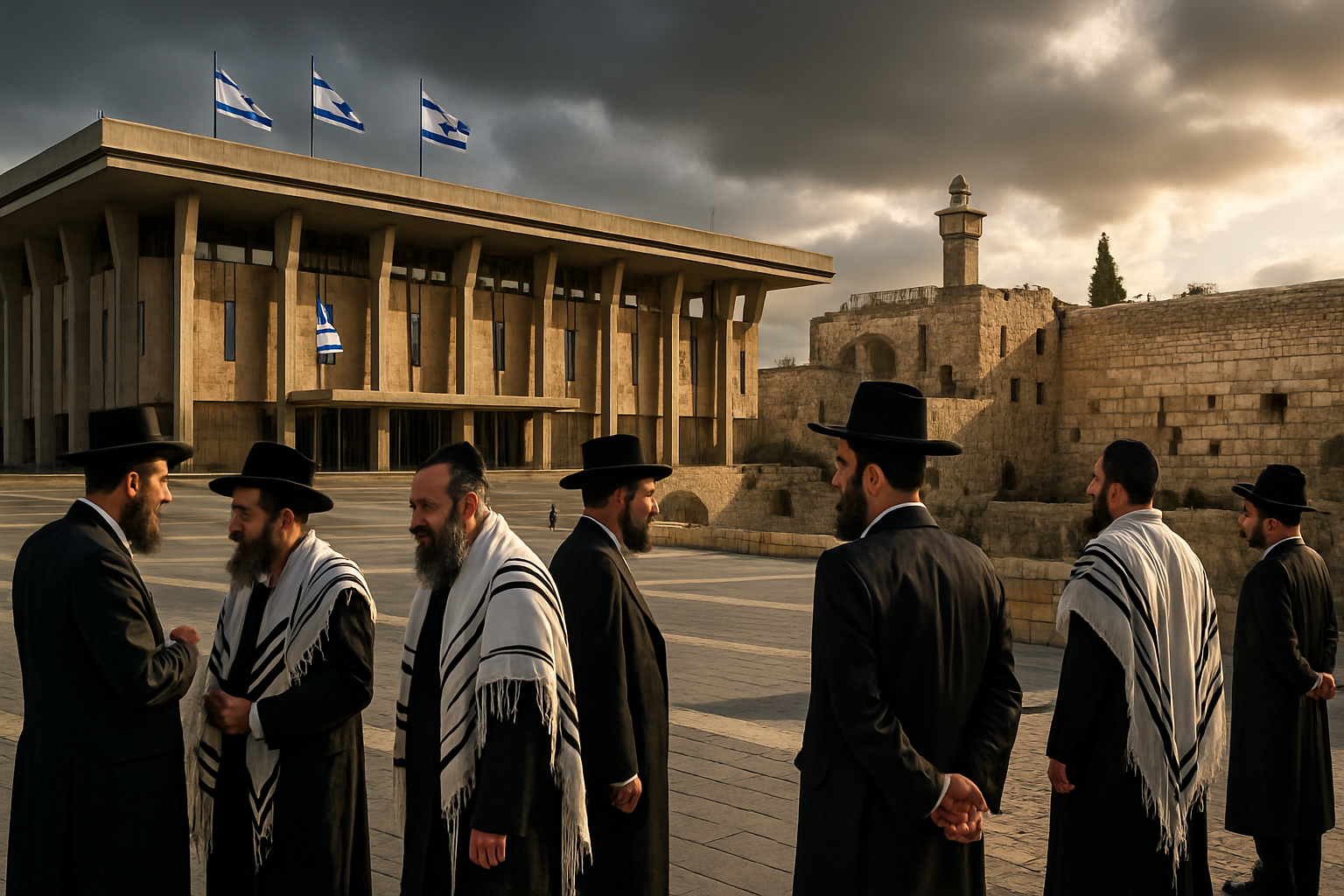
Israel's Knesset Constitution Committee has advanced controversial legislation that would significantly expand Orthodox religious control over the Western Wall Plaza, while Prime Minister Benjamin Netanyahu faces mounting opposition over his choice for a new legal adviser to the Central Elections Committee.
The bill, which has been referred to the Knesset Constitution Committee after preliminary approval, represents a major escalation in the ongoing tensions between religious and secular communities in Israel, as well as between Orthodox Judaism and other Jewish denominations worldwide.
Western Wall Controversy Deepens
The proposed legislation would grant Orthodox authorities broader control over Judaism's holiest prayer site, potentially limiting access and worship practices for non-Orthodox Jewish communities. The move has sparked fierce criticism from progressive Jewish organizations both within Israel and in the diaspora.
Women of the Wall, an organization that advocates for women's prayer rights at the Western Wall, issued a scathing statement condemning the legislation, saying Israel is "spitting in the face of Diaspora Jewry." The group has long fought for women's rights to pray at the Western Wall wearing prayer shawls and reading from the Torah, practices that Orthodox authorities have restricted.
The controversy reflects deeper tensions within Israeli society about the role of religion in public life and the relationship between Israel and Jewish communities worldwide. Reform and Conservative Jewish movements, which represent the majority of affiliated Jews in the United States, have expressed alarm at what they see as the marginalization of their religious practices.
Netanyahu's Legal Adviser Selection Faces Resistance
In a separate but related political development, Netanyahu is encountering significant opposition over his preference for the Central Elections Committee's new legal adviser position. The committee ultimately chose Yifat Siminovski, a former Intel executive with expertise in artificial intelligence and previous experience at the National Cyber Directorate, despite the Prime Minister's objections.
Siminovski's appointment represents a victory for those advocating for independent institutional decision-making, separate from direct political influence. Her background in technology and cybersecurity brings relevant expertise to an era where election security and digital threats are increasingly important concerns.
The Central Elections Committee's decision to proceed with Siminovski despite Netanyahu's preferences highlights growing institutional resistance to what critics describe as the Prime Minister's attempts to influence independent bodies. This tension reflects broader concerns about democratic governance and the separation of powers that have been central to Israel's political discourse in recent years.
Religious-Political Intersection
The simultaneous advancement of these two issues underscores the complex intersection of religious and political authority in Israeli society. The Western Wall legislation represents the growing political influence of Orthodox parties, which have become crucial coalition partners in Netanyahu's government.
Orthodox political parties have leveraged their position to advance legislation that would cement their interpretation of Jewish religious law in public spaces and institutions. This has created tension not only with secular Israelis but also with non-Orthodox Jewish communities who feel their religious practices are being delegitimized.
"This legislation represents a fundamental challenge to the pluralistic vision of Judaism that has long been part of Israel's identity as the homeland of all Jewish people."
— Reform Movement Leader
International Implications
The Western Wall controversy has significant implications for Israel's relationship with Jewish communities worldwide, particularly in North America where Reform and Conservative Judaism predominate. Many diaspora Jewish organizations have expressed concern that Orthodox control over the Western Wall undermines their connection to what they consider their most sacred site.
The timing of these developments is particularly sensitive given Israel's ongoing efforts to maintain strong ties with Jewish communities globally, especially as the country faces diplomatic challenges in other arenas. The perception that Israel is favoring one stream of Judaism over others risks alienating significant portions of the global Jewish community.
Constitutional and Legal Questions
The advancement of the Western Wall legislation through the Constitution Committee raises important questions about religious freedom and equal access to holy sites. Legal experts have noted that the bill could face challenges in Israel's High Court of Justice, which has previously ruled on issues of religious pluralism at the Western Wall.
The Siminovski appointment to the Central Elections Committee also reflects broader questions about the independence of electoral institutions and the role of technology expertise in modern democratic governance. Her background in artificial intelligence and cybersecurity may prove crucial as Israel, like many democracies, grapples with digital threats to electoral integrity.
Coalition Politics and Governance
Both developments reflect the complex coalition politics that have characterized Netanyahu's current government. The Prime Minister's reliance on Orthodox parties has given these groups significant leverage to advance their religious agenda, sometimes at the cost of broader consensus within Israeli society.
The resistance to Netanyahu's preferred legal adviser choice suggests that even within the current political framework, there remains institutional independence that can check executive influence. This dynamic will be crucial to watch as Israel continues to navigate questions about democratic governance and institutional autonomy.
Looking Ahead
As the Western Wall legislation moves through the parliamentary process, it is likely to face continued opposition from secular and non-Orthodox religious groups. The bill's ultimate fate will depend not only on Knesset votes but potentially on High Court review and international pressure.
Meanwhile, Siminovski's role as legal adviser will be closely watched as Israel approaches potential future elections. Her expertise in artificial intelligence and cybersecurity could prove valuable in addressing emerging challenges to electoral integrity in the digital age.
These twin developments highlight the ongoing struggle within Israeli society to balance religious tradition with pluralistic democracy, and the complex relationship between political power and religious authority that continues to shape the nation's development.